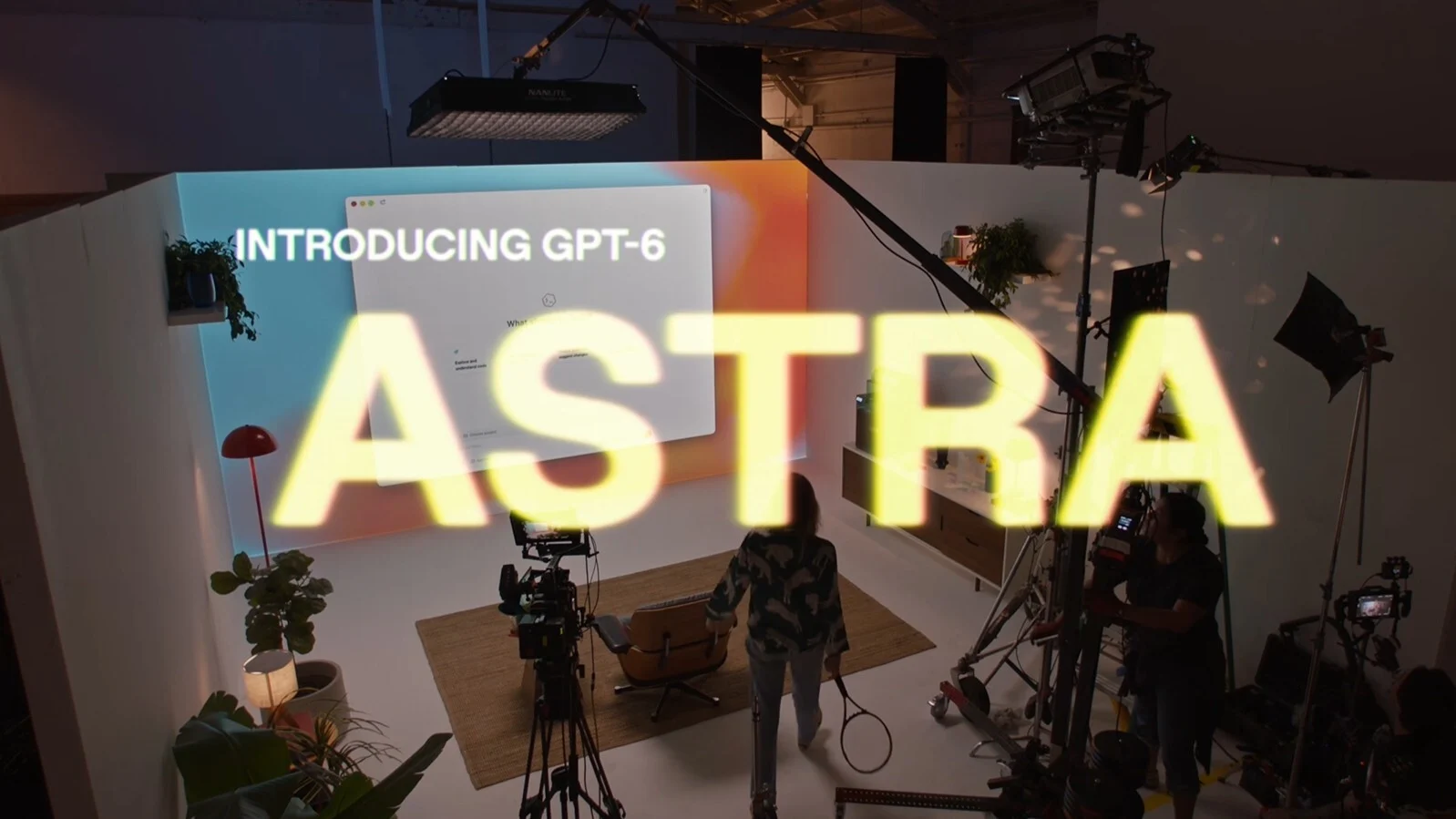
OpenAI has unveiled its flagship model, GPT-6 Astra, which, according to the company, can not only generate text and code, but also interact with computer programmes and carry out multi-step tasks. In promotional demonstrations, the system creates 3D scenes and game prototypes; initially, it is being rolled out to a limited number of organisations as part of the Trusted Access programme.
Briefly about the main points
- Astra works with 3D graphics, code and applications.
- Playco has reported fewer manual corrections to prototypes.
- OpenAI has stated that the model performed better in a series of tests.
- A wider roll-out for ChatGPT subscribers is only planned at this stage.
3D scenes in Blender and their transfer to game environments
Using a text command, Astra can develop a concept for an object, work in Blender, create a 3D scene and prepare it for further use. OpenAI It also showcased complex models and scenes that can be ported to other platforms, including Unreal Engine 5.
A demonstration means that the user can potentially delegate some of the operations in a professional 3D workflow to the model.
Game prototypes and Playco’s experience with Unity and Godot
According to the description, Astra is capable of creating working game prototypes complete with graphics, controls, physics and game logic. The company demonstrated a prototype of a racing game.
During testing, Playco created three themed prototypes using Astra and reported a reduction in the number of manual corrections by approximately 50%. The company uses the Playbot model — an AI-IDE with direct integration with Unity and Godot: the agent can edit scenes, run and test the game, review changes and detect bugs. This is an early user assessment, not an independent audit.
Workflow automation requires access control
In the demonstrations, Astra creates and edits documents, works with presentations and spreadsheets, searches for information online, and also helps with websites, web applications, legal documents and organising data. OpenAI claims that the model takes context into account more effectively, adapts to new requirements and asks clarifying questions when there is insufficient data to reach a decision.
The API supports, amongst other things, web search, file search, Code Interpreter, hosted shell, computer use, MCP, structured responses and function calls. The practical operation of such agents will depend on the permissions granted, action verification, logging, environment isolation and human oversight. In ChatGPT Additional monitoring may pause the dialogue to allow the user to check if the system suspects that the instructions have been misinterpreted.
Announced benchmarks, API rates and phased roll-out
OpenAI has stated that Astra achieved 99.9% on ARC-AGI-3, 98% on FrontierMath Tier 4 and 100% on ExploitBench. In Terminal-Bench 4.0, the company reports a score of 57.9%, compared to 37.3% for the previous GPT-5.6 Sol. The published metrics are sourced from OpenAI or its partners.
The Astra context window is 1.05 million tokens, with a maximum response length of 128,000. The base API price is set at $10 per million input tokens and $50 per million output tokens; higher rates apply for large queries. Therefore, lower token consumption in certain scenarios does not guarantee that every complex agent task will be executed more cheaply.
OpenAI plans to expand access for ChatGPT Plus, Pro, Business and Enterprise users in the coming days, as well as via the API, Microsoft Azure and AWS Bedrock. The company has also classified Astra as ‘Critical’ in terms of cyber capabilities within its own rating system. The first phase of the model’s roll-out is taking place via the Trusted Access programme.