Saudi Arabia has temporarily shut down the East-West oil pipeline as a precautionary measure following an air strike. Riyadh and Baghdad have stated that the strike originated from Iraqi territory, although those responsible have not been identified. Iraq has dismissed a military commander, whilst, according to four Yemeni government sources speaking to Reuters, the Houthis have seized the island of Perim at the entrance to the Red Sea.
Briefly about the main points
- The East-West pipeline was shut down following an air strike.
- The attack has been linked to Iraq, but the perpetrators have not been named.
- Iraq has dismissed the commander and is searching for those involved.
- The Houthis have seized Perim in the Bab el-Mandeb Strait.
- The US is prepared to share intelligence, but not to fight directly.
The strike damaged the route that bypassed the Strait of Hormuz
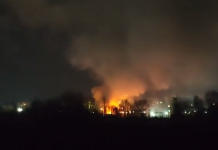
According to the Saudi Ministry of Energy, the pipeline was struck on Thursday morning in the Riyadh and Medina regions. The Kingdom’s Ministry of Foreign Affairs reported that there were casualties and damage, the extent of which is currently being assessed. Satellite images have captured black smoke rising above an area south of Medina.
The 1,200-kilometre pipeline enabled Saudi Arabia to bypass the bottlenecks for tankers in Strait of Hormuz, where shipping traffic has been reduced to a minimum due to the war between the US and Iran. According to estimates by vessel-tracking companies and analysts, between 4 and 5 million barrels per day have been transported via this route in recent months — accounting for around 4–5% of global supply.
Baghdad has launched a search for those involved and closed the border crossing
The Office of the Iraqi Prime Minister has announced the dismissal of the commander who was in charge of operations in Maysan province. The province is situated in the south-east of the country, borders Iran and has long been regarded as an area of influence for Shia groups backed by Tehran.
Two Reuters sources in the security sector have stated that a large-scale operation is under way in Iraq to track down those responsible for the attack. The government has also condemned the attacks and ordered the closure of the Shalamcheh border crossing with Iran as a precautionary measure. This crossing is used, in particular, to bring vegetables and other foodstuffs into Iraq.
The Saudi Ministry of Foreign Affairs stated that the Kingdom had not yet launched a retaliatory strike in response to the Iraqi Prime Minister’s request. At the same time, Riyadh reserved the right to take all necessary measures to protect its interests.
The capture of Perim has increased pressure on shipping in the Red Sea
Four sources within the Yemeni government told Reuters that the Houthis had taken control of the strategic island of Perim at the mouth of the Red Sea on Friday, in the Bab el-Mandeb Strait. Yemeni government forces have announced their intention to attempt to recapture the areas seized during the Houthis’ rapid advance along the Red Sea coast.
Spokesperson for the Houthis’ military wing Yahya Sari stated that maritime navigation remains safe for all vessels, with the exception of Saudi vessels, which are subject to the previously announced ban. The combined disruptions in the Bab el-Mandeb Strait and the Strait of Hormuz have increased pressure on energy supplies, and the price of oil has once again exceeded $100 per barrel.
On Friday, the International Energy Agency reported that Saudi crude oil exports had fallen to their lowest level in more than three decades. The agency cited attacks by Houthi-linked groups on ships passing through the Bab el-Mandeb Strait as one of the reasons.
Washington has offered intelligence support, but not a direct military operation
According to two well-informed sources, the Crown Prince of Saudi Arabia Mohammed bin Salman He rang US President Donald Trump at least twice on Thursday, asking for military assistance in the fight against the Houthis. Sources speaking to Reuters noted that Washington is not currently prepared to undertake a direct military operation, but will assist by sharing intelligence and identifying targets.
A senior US administration official, speaking on condition of anonymity, said that Washington is maintaining an ongoing dialogue with Saudi Arabia and the Yemeni government.
Ukrmedia previously reported that the Houthi offensive was carried out on the direct orders of the Islamic Revolutionary Guard Corps. Two Iranian sources also stated that Tehran had promised the Houthis additional funding, weapons and senior officers. Iran publicly denies providing military leadership to the Houthis, referring to them as allies rather than proxies.