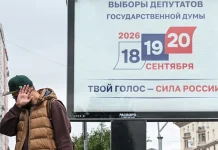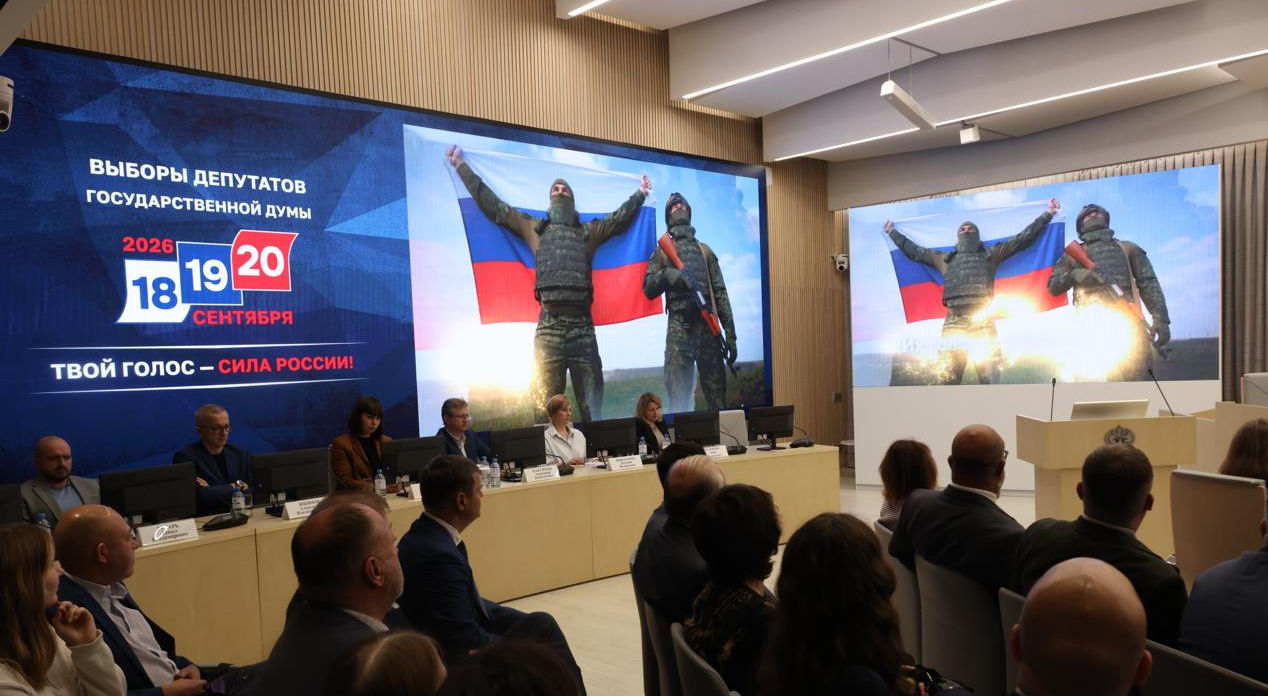
In Russia, a three-day voting period for the elections to the State Duma of the 9th convocation began on 18 September and will run until 20 September. The chair of Russia’s Central Election Commission, Ella Pamfilova, warned that disruptions to mobile communications and data transmission were possible during the voting. At the same time, independent Russian media and opposition parties are reporting that observers are being barred from polling stations, pressure is being exerted on public sector workers, and irregularities are occurring during early voting.
- The State Duma elections will take place from 18 to 20 September.
- The Central Election Commission anticipates disruptions to mobile network coverage.
- Around 400 CPRF observers were barred from entering Voronezh.
- An observer from the «Yabloko» party has been detained in the Rostov region.
- Independent media outlets are reporting that pressure is being exerted on public sector workers.
Pamfilova warned of communication problems
On the eve of the start of voting, the Chair of the Central Electoral Commission of the Russian Federation Ella Pamfilova stated that there may be disruptions to mobile phone services and data transmission during the elections. According to her, such problems will not constitute grounds for cancelling the vote.
The Russian Central Election Commission attributes the heightened security measures to military risks, cyber-attacks and possible «provocations». Special voting procedures have been introduced in some regions, and officials responsible for evacuation and safety have been appointed at each polling station.
This year, more than two thousand election campaigns at various levels are taking place simultaneously in Russia. The main campaign is for the State Duma, whilst in dozens of regions, local assemblies and governors are also being elected.
Hundreds of observers were barred from entering Voronezh
The independent publication «Versтка» reported that in Voronezh Around 400 observers from the Communist Party of the Russian Federation were barred from entering polling stations. The regional commissions cited shortcomings in the documents.
The regional branch of the Communist Party of the Russian Federation described the grounds for the refusal as contrived. According to sources within the local electoral system interviewed by «Versta», as a result, representatives of «United Russia» and the regional Public Chamber will be carrying out the main monitoring at some polling stations.
Official bodies in the Russian Federation, for their part, claim to have an extensive network of public monitoring and are prepared to receive reports of possible violations.
An observer from the «Yabloko» party has been detained in the Rostov region»
On 17 September, in the Rostov Region, security forces wearing balaclavas Boris Miklyukov, an observer from the Yabloko party, was detained. According to the party, Miklyukov was working at polling station No. 58 in the village of Yuzhny, Azov District. He was taken away by three law enforcement officers, after which all contact with him was lost. The reasons for his detention have not been officially disclosed.
«Yabloko» has suggested that the security services« interest may be linked to his social media posts. This is the party’s own version of events; there is currently no independent confirmation of the reasons for his detention. Previously, a number of candidates from ‘Apples»… were also barred from the elections following court rulings. The party challenged these rulings and described them as politically motivated.".
Reports of pressure being exerted on public sector workers
Russian media, citing regional sources, are reporting cases of coercing public sector employees into voting. Such reports came from the Altai Krai and the Novosibirsk, Sverdlovsk, Belgorod and Samara regions. In some cases, according to journalists, staff were required to report whether they had voted or registered with the remote electronic voting system.
In the Altai Region, the local branch of the Communist Party of the Russian Federation also stated that some citizens may have been included on the lists for home voting without having submitted applications. Activists claim that they telephoned people on the lists, and some of them denied having submitted the relevant applications.
These claims originate from opposition groups and independent media; the Russian Central Election Commission has publicly stated that the electoral system is ready and that it is monitoring compliance with procedures.
Elections are also being held in the occupied territories of Ukraine
Russia is also organising voting in the temporarily occupied territories of the Donetsk, Luhansk, Zaporizhzhia and Kherson regions of Ukraine. The Russian Central Election Commission has introduced special procedures there due to martial law and security risks.
Ukraine does not recognise this vote. On 17 September, the Verkhovna Rada called on foreign parliaments and international organisations not to recognise the results of the vote in the occupied Ukrainian territories. The Ukrainian side considers the holding of Russian elections there to be a violation of sovereignty and international law.
Voting in Russia will continue until 20 September. Once the polling stations have closed, the Central Election Commission will begin publishing preliminary results of the elections to the State Duma and regional authorities.