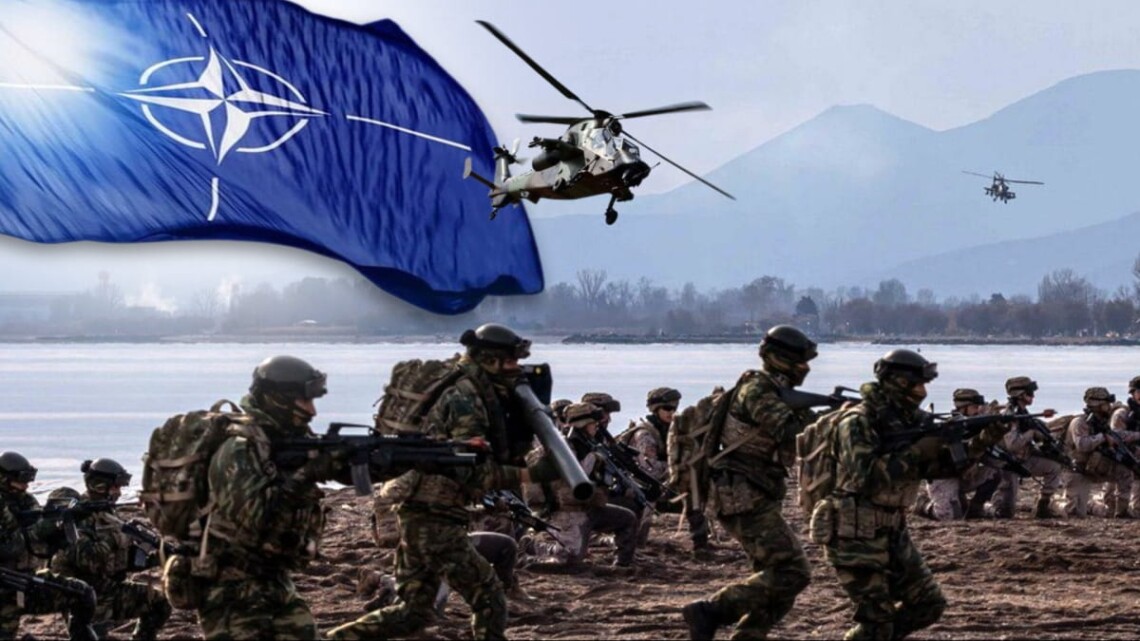
NATO has the forces, command structure, personnel and equipment to respond to a possible escalation on its eastern flank, said Admiral Giuseppe Cavo Dragone, Chairman of the Alliance’s Military Committee, on 19 September in Copenhagen. According to him, the military has drawn up around 4,000 pages of plans for various crisis scenarios.
Briefly about the main points
- Around 4,000 pages of military plans have been drawn up for NATO’s eastern flank.
- Three regional plans set out the actions and movements of forces depending on the threat.
- The scenarios cover limited crises and situations that could trigger Article 5.
- The decisions have been standardised to enable a swifter transition from threat assessment to action.
- The statement does not signify the start of a new large-scale deployment of troops.
The statement was made at a meeting of the Alliance’s defence chiefs
Dragone He spoke at a meeting of defence ministers from 32 NATO countries, which took place in Copenhagen on 18–19 September. The conference discussed strengthening collective deterrence and defence, developing military capabilities, innovation and support for Ukraine.
The Chairman of the Military Committee said that the Alliance continues to increase the size of its forces and the level of their equipment. He described the situation NATO in the words: «The alliance is ready, the structure is ready, the soldiers and weapons are ready.».
The three plans cover a range of crisis scenarios
Around 4,000 pages of documents relate to the Alliance’s eastern flank. Three separate regional plans set out possible courses of action and the movement of forces in line with developments on the ground.
The envisaged response options cover a minor crisis or limited intervention within NATO territory, as well as situations that could lead to the invocation of Article 5 of the North Atlantic Treaty. The existence of such documents signifies pre-defined scenarios and procedures, rather than preparation for a specific attack.
The procedures are intended to speed up the transition from assessment to action
According to Dragone, decision-making processes have been standardised so that allies can move as quickly as possible from assessing the situation to taking specific action. The plans link the nature of a potential threat to specific actions and the movement of forces.
NATO approved three regional defence plans in 2023 following the start of full-scale invasion from Russia into Ukraine. They formed the basis for the modernisation of the Alliance’s collective defence system.
The statement came against the backdrop of reports of Russian provocations
Dragone’s speech came against a backdrop of reports of violations of Alliance countries’ airspace and attempts at sabotage in Europe. He assessed Russia’s actions over recent weeks and months as potentially serving, amongst other things, to test the allies’ readiness and undermine trust between them, whilst emphasising NATO’s collective response.
Prime Minister of Poland Donald Tusk He had previously issued a public warning about possible Russian hybrid provocations against states that support Ukraine. The invocation of Article 5 does not occur automatically following any incident: the response depends on the nature of the specific attack and the decisions of the allies.