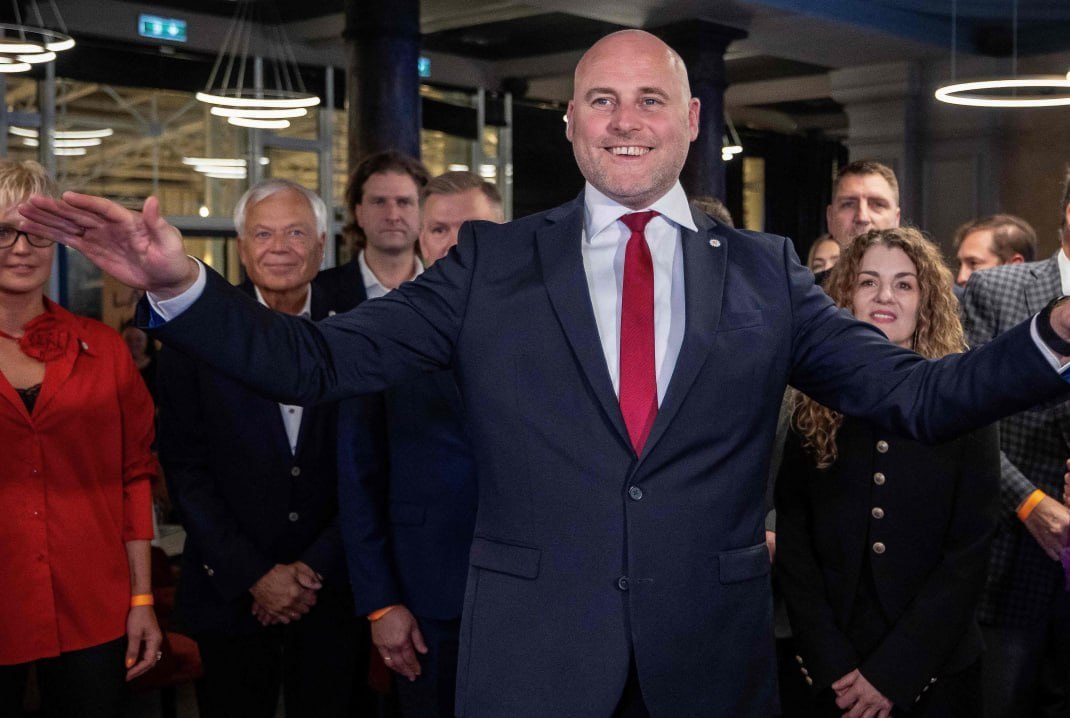
The centrist «United List» led by the Latvian Prime Minister Andris Kulbergs secured a convincing victory in the parliamentary elections. With almost all the votes counted, the political party had secured around 35.3% of the vote and wins 42 out of 100 seats in the Sejm — This is the best result achieved by any single political party since Latvia regained its independence in 1991. The victory puts Kulbergs in a strong position to form a new pro-European and pro-Ukrainian government.
- «Andris Kulbergs» ‘United List’ received around 35.3% votes.
- The party has won 42 out of 100 seats in the Sejm — a record result since the restoration of independence.
- Kulbergs advocates continued support for Ukraine and a tough stance towards Russia.
- One of the campaign’s key points was to maintain defence spending at 5% of GDP.
«The »Joint List’ won 42 seats
The Sejm elections took place on 3 October. According to preliminary results, the «United List» was well ahead of its rivals and secured the largest parliamentary group in the new parliament.
According to Reuters, after 97% votes had been counted, Kulbergs’ party had 35.3% votes, which secured her 42 seats. Euronews, having counted over 99.9% of the votes, reported a figure of around 35.4%. The final official results are to be confirmed by the Latvian Central Election Commission at a later date.
This result was the best ever achieved by a single political party in Latvia’s parliamentary elections since the country regained its independence. However, the «United List» did not secure an absolute majority: to gain control of the 100-seat Saeima, at least 51 MPs.
Support for Ukraine was one of the key issues of the campaign
Kulbergs built his campaign around issues of national security, the threat from Russia and the need to strengthen the country’s defence capabilities.
The Prime Minister has promised to maintain Latvia’s defence spending at around 5% GDP, to develop anti-drone systems and to continue providing military and political support to Ukraine. He is also opposed to a return to economic dependence on Russia, describing it as a risk to the country’s security.
Latvia It is a member of NATO and the EU and shares a border with Russia and Belarus, which is why the issues of the war in Ukraine and possible Russian hybrid aggression became central themes during the election campaign.
Kulberg needs to form a coalition
Despite this historic result, 42 seats are not enough to form a government on its own. One of the possible partners mentioned is National Association, which also takes a hard line on Russia and supports a policy of strengthening defence. According to the provisional allocation of seats, an alliance between the two parties could potentially secure a parliamentary majority.
At the same time, populist parties have also increased their representation. «Latvia First» won around 13%, but the victory of the «United List» leaves Kulbergs as the leading contender to form the next government. AFP
Consequently, the election results do not alter Riga’s fundamental foreign policy course: Support for Ukraine, membership of the EU and NATO, and deterring Russia remain key areas of the country’s policy.