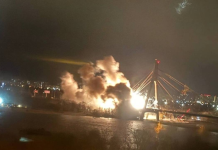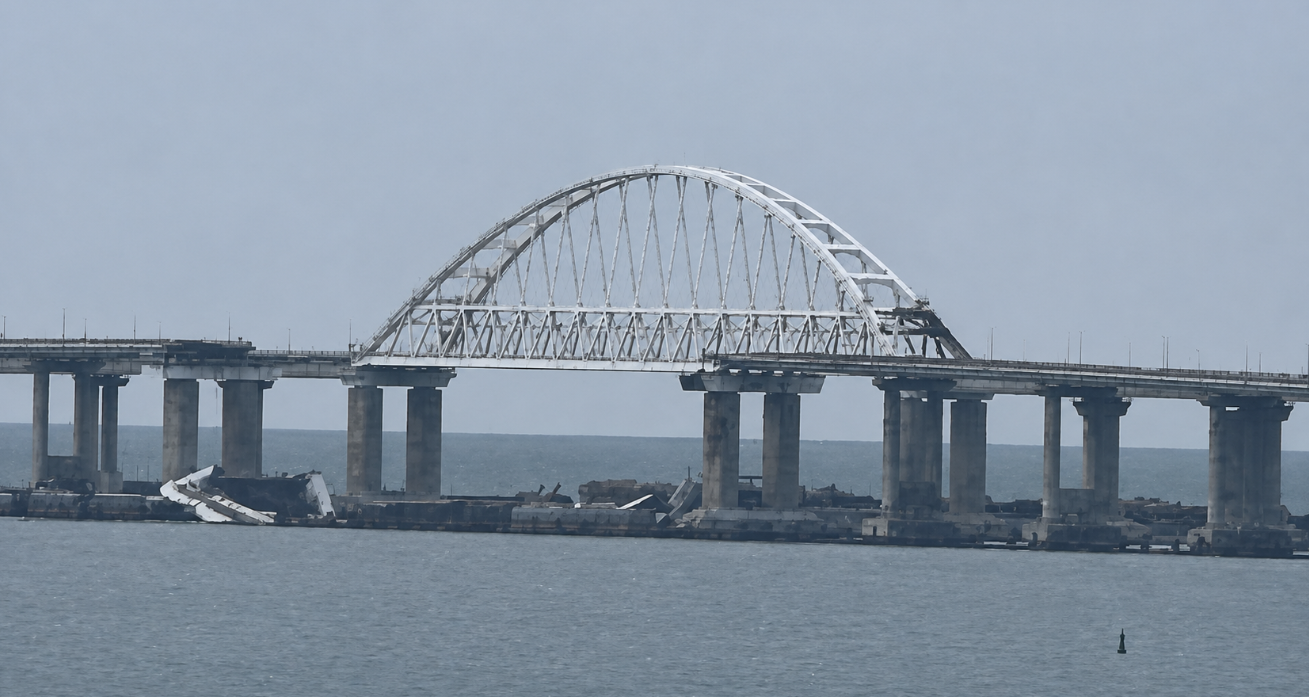
The Crimean Bridge suffered extensive damage as a result of a second attack on the night of 17 November. New footage released by the monitoring channel Exilenova+ shows the destroyed road span, the structures of which have ended up in the water. The railway arch of the bridge remains standing.
Key points at a glance:
- New footage shows the collapse of the Crimean Bridge’s road arch.
- The wreckage of the bridge span ended up in the waters of the Kerch Strait.
- The crossing has come under two major attacks over the past 24 hours.
- The occupying authorities have confirmed a second attack and the closure of the bridge to traffic.
Footage has emerged showing the extensive damage to the Crimean Bridge
Photographs and video footage released this morning show serious damage to the bridge. At the site of the road arch, fragments of metal structures can be seen that have fallen into the water.
Even after the first attack On 16 November, satellite images revealed deformation of the arch and damage to the road surface in at least two places.
In the evening, Russian officials reported that road traffic had been partially restored in both directions. However, the bridge came under attack again during the night.
Russia has lost a significant part of its transport corridor
Crimean bridge It is approximately 19 kilometres long and consists of a road section and a railway section. Russia uses it to provide transport links to the temporarily occupied peninsula, in particular to meet the needs of its troops.
The destruction of the road span is significantly hampering the occupiers’ logistics. Unlike previous damage to the road surface, the collapse of the arch structure will require much more extensive repair work.
There is currently no information available on when road traffic will resume or on the condition of the railway section of the bridge following the night-time attack.
Not even a multi-layered defence system could save the Crimean Bridge
The Crimean Bridge is considered one of Russia’s most heavily defended infrastructure assets. Over the years of the peninsula’s occupation, the Russians have deployed a multi-layered defence system to protect it, comprising S-400 systems, «Pantsir», «Tor» and «Buk» systems, electronic warfare equipment, mobile fire support units and FSB patrol vessels.
To protect against maritime drones, the occupying forces have deployed barges, boom barriers and other engineering obstacles. Despite these extensive security measures, the road section of the crossing has suffered critical damage.