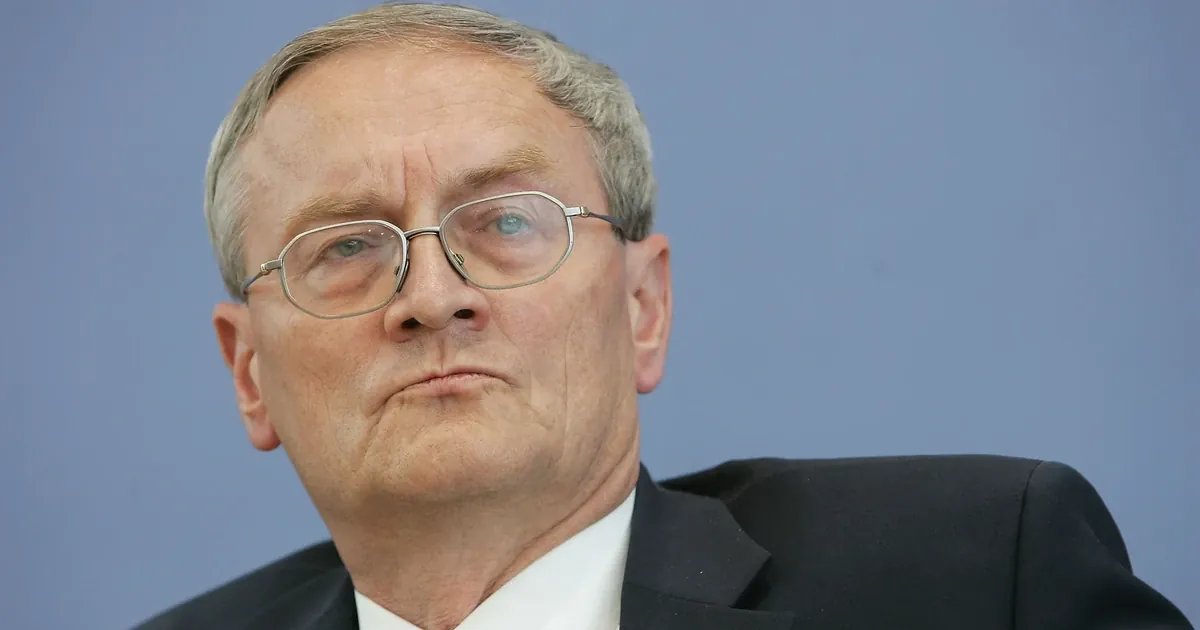
On 6 October, the former president of the Federal Intelligence Service, August Hanning, and his former chief of staff, Manfred D., were arrested in Germany. The Federal Public Prosecutor’s Office suspects Hanning of espionage, obtaining state secrets, attempted treason and acting in the interests of a foreign intelligence service. Investigators believe he may have used classified BND material and passed information to contacts abroad.
Briefly about the main points
- Hanning and his former chief of staff were arrested under warrants issued by a judge.
- Investigators are looking into the possible acquisition of classified BND material.
- According to the prosecution, Manfred D. handed over documents in exchange for money.
- The Public Prosecutor’s Office outlines two possible avenues of contact with foreign organisations.
- No decision has yet been announced regarding his continued detention.
Allegations and the legal status of those detained
The arrests were carried out on the basis of warrants issued by an investigating judge of the German Federal Court. Manfred D. previously headed the secretariat Hanning, and after his term of office ended, he continued to serve at the BND under subsequent directors.
The prosecution accuses Hanning, in particular, of obtaining state secrets and acting in the interests of a foreign intelligence service. This relates to a pre-trial investigation and does not constitute a court-established finding of guilt.
The investigation’s version of events regarding the transfer of internal BND documents
According to the prosecution, in the spring of 2010, Hanning and Manfred D. agreed to a regular exchange of intelligence material in return for money. Investigators believe that the former chief of staff had access to classified information due to his continued employment with the service.
By June 2022, Manfred D. had, according to the investigation’s preliminary assessment, passed on nearly 2,000 documents to Hanning. A significant proportion of these were intended for internal use only BND, in particular to prepare the service’s management for regular meetings of representatives from ministries and law enforcement agencies at the Chancellor’s Office.
The public prosecutor’s office believes that Hanning intended to use this information in his private consultancy work. After stepping down as head of the BND, he served as State Secretary at the Federal Ministry of the Interior and subsequently worked as a security adviser.
Two instances of possible contact with foreign intelligence services
In one instance, according to the prosecution, Hanning used the classified information he had obtained to prepare an analytical report for an employee of a foreign intelligence service. Investigators have not yet established whether this report reached its intended recipient.
Separately, the public prosecutor’s office reports that Hanning had been in close contact with a representative of another state security service for many years. According to the investigation, he passed on political information to that person, some of which was based on BND material.
The German authorities did not name any countries or agencies that might have been linked to these incidents. Ines Peterson, a spokesperson for the public prosecutor’s office, confirmed in a comment to RTL that there were two separate possible channels through which the information may have been passed on.
The evidence for the case was found during previous searches
The new proceedings began following searches carried out at Hanning’s premises in September 2025, which took place as part of another criminal case. The evidence uncovered at that time was handed over to the federal authorities, and in early May 2026, the investigation was taken over by the Federal Public Prosecutor’s Office.
The case is being investigated jointly by the Federal Criminal Police and the BND. WDR, NDR and the *Süddeutsche Zeitung* reported that the seized documents may have included material relating to the Iranian nuclear programme, the Russian army and information from partner intelligence services. The public prosecutor’s office did not disclose the specific content of the documents in its statement.
The investigating judge must determine the next preventive measure
At the same time as the arrests, law enforcement officers carried out searches in Bavaria, North Rhine-Westphalia and Berlin. The suspects are to be brought before an investigating judge, who will read out the warrants to them and decide on their continued detention.
As of the evening of 6 October, no public decision had been made regarding the precautionary measure. Hanning did not comment on the allegations, whilst the German government, according to Reuters, declined to comment on the ongoing investigation.