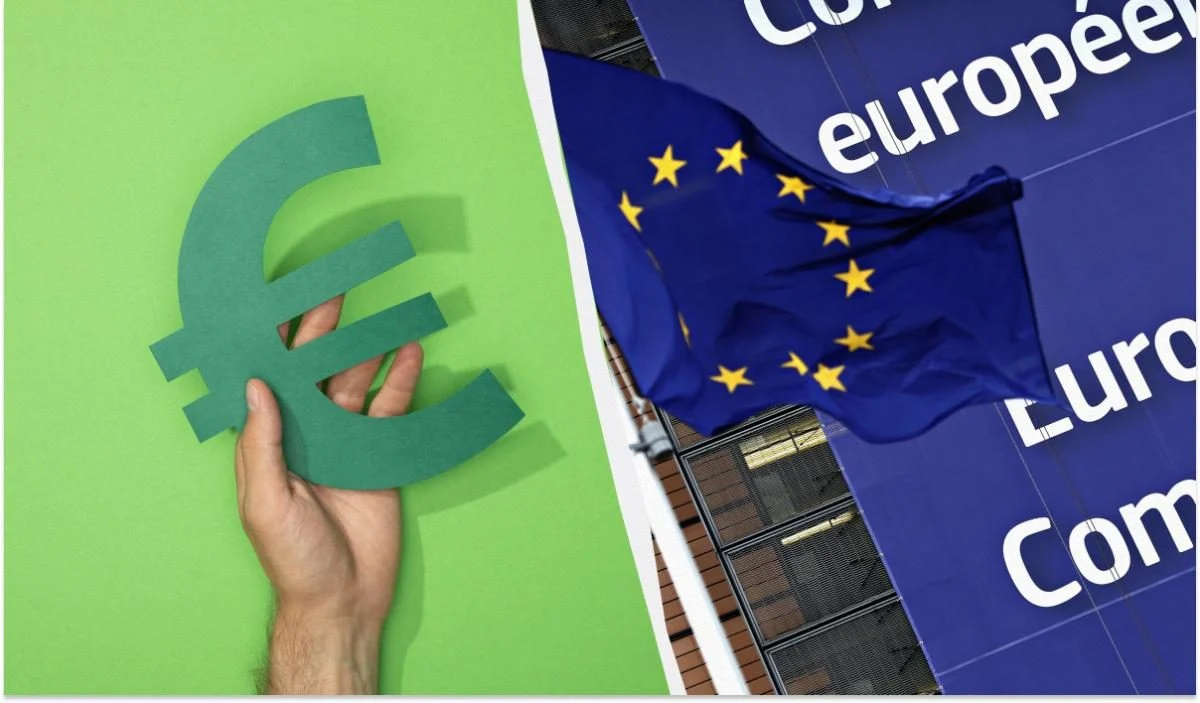
The European Union is seeking around 70 billion euros in additional funding for Ukraine for 2027, according to Euronews. Brussels is considering issuing new joint debt instruments and utilising frozen assets of the Central Bank of Russia. Both scenarios face political, legal and financial constraints.
Briefly about the main points
- Ukraine is forecast to have an additional funding requirement for 2027.
- Zelenskyy estimated the cost of continuing the war at 155 billion euros.
- New borrowing is made more difficult by the rising cost of servicing the debt.
- In Belgium, there are concerns about the risks associated with the use of Russian assets.
- The European Commission is drawing up proposals, and Brussels is counting on the support of its partners.
The current loan was calculated on the basis of a different war scenario
During the European Council summit On 16 October, the President Volodymyr Zelenskyy stated that the continuation of the war in 2027 could cost 155 billion euros. Additional resources are needed for defence, the procurement of weapons and ensuring the country’s resilience, in particular to ramp up production drones and strengthening the defence industry.
The EU has already approved a loan of 90 billion euros for 2026–2027. When planning the programme in Brussels, the possibility of the war ending in 2026 was taken into account. €45 billion from this loan is earmarked for 2027, whilst the new funding shortfall is estimated to be in addition to this amount and other international support.
Joint loans could expand the scheme, but they are becoming more expensive
EU diplomats and officials cite this as one of the realistic ways of expanding the current programme through new joint debt obligations on the financial markets. Such a mechanism is already being used to finance the agreed loan to Ukraine.
At the same time, the rising cost of borrowing increases governments’ expenditure on servicing public debt, making it more difficult to secure political consensus on new commitments. Hungary, Slovakia and the Czech Republic have been granted exemptions from participating in the financial obligations under the previous loan. According to Euronews, the governments of Slovakia and Hungary plan to maintain a similar stance going forward.
Russian assets: Belgium demands guarantees from its partners
Around 210 billion euros of the Russian Central Bank’s assets have been frozen in the European Union. Approximately 185 billion euros of this amount is held at the Belgian depository Euroclear. Some EU member states support the use of these funds to finance Ukraine’s defence.
Belgium has raised objections on the grounds of potential legal and financial risks. The Prime Minister Bart de Weever called on other EU countries to share the potential risks and provide guarantees in the event of claims against Russian assets; he reaffirmed this position at the October summit.
Ukraine is proposing the creation of a special depository under EU supervision, which would ensure the preservation of assets and reduce the risk of them being returned to Russia. Belgium does not support this option either.
The European Commission is preparing proposals for the EU and its partners
Brussels is counting on the UK, Norway, Canada and Japan to help meet these needs. It has not yet been determined exactly what share the EU is to provide and what share is to be provided by Ukraine’s other allies.
The President of the European Council, António Costa, announced that the leaders of the Member States had tasked the European Commission with drawing up specific proposals. The European Council is also awaiting an updated assessment of Ukraine’s needs from the European Commission and the International Monetary Fund. Once the mechanisms have been presented, the EU Member States will determine the procedure for their approval.