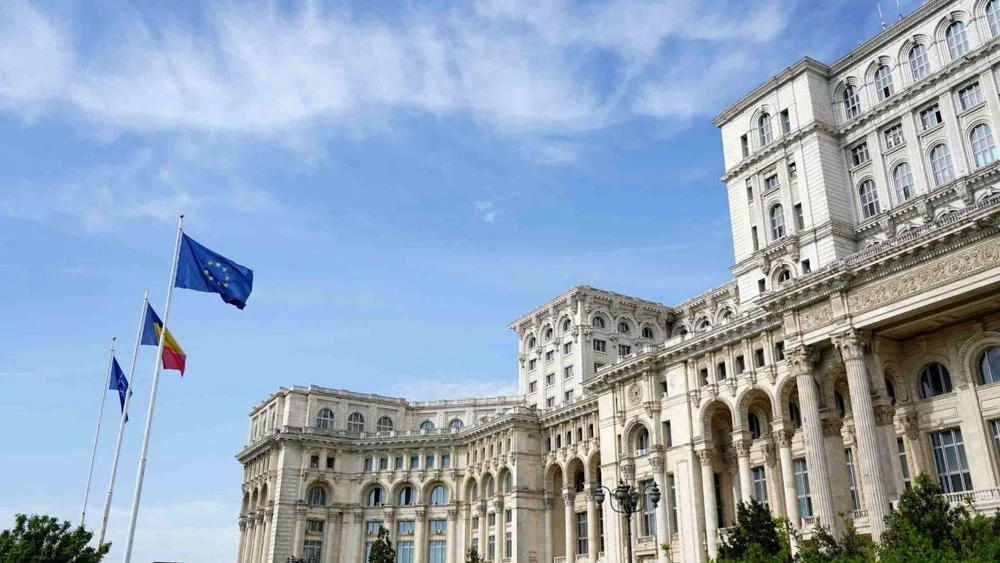
On 20 October, the Romanian Parliament approved a government led by 55-year-old independent diplomat Luca Niculescu, bringing to an end a period of almost six months of political instability. The cabinet was approved by 280 MPs, with 58 voting against; on the same day, the ministers were sworn in at the Cotroceni Presidential Palace in Bucharest.
Briefly about the main points
- Luca Niculescu’s government was backed by 280 MPs, with 58 voting against.
- A total of 338 MPs and senators took part in the vote, with a minimum of 233 votes required.
- The Cabinet comprises 18 ministerial posts: 12 held by the PSD and six by independents.
- The European Commission forecasts Romania’s deficit at 6.2% of GDP in 2026.
Voting and the Cabinet’s first decisions
A joint session of the two houses of parliament approved the composition of the government by a substantial margin: at least 233 votes were required for the vote of confidence. According to Radio România Actualități, 338 MPs and senators took part in the vote.
Following the parliamentary decision, the President Nikushor Dan signed a decree appointing the government. On the evening of 20 October, the members of the cabinet were sworn in at Kotrochen Palace, and subsequently held their first meeting at Victoria Government House.
On what political basis was the government formed?
Dan Nikushor put forward Niculescu for the post of Prime Minister on 5 October. Prior to his nomination, he served as State Secretary at the Romanian Ministry of Foreign Affairs and coordinated the country’s accession to the Organisation for Economic Co-operation and Development; he had previously worked as a journalist and diplomat. Niculescu became the fourth candidate for the post of head of government during the crisis.
The government crisis began on 5 May 2026, when Parliament passed a motion of no confidence in the Cabinet Ilya Bolozhana. The new government comprises 18 ministerial posts: 12 are held by members of the Social Democratic Party, and six by independents. Niculescu himself is an independent prime minister and is not included in this distribution of posts.
The cabinet is described as a minority government, although it enjoys temporary political support. Reuters reports that the PSD plans to review its support in six months’ time, whilst the two centre-right parties have agreed not to table a motion of no confidence until March 2027.
The 2027 Budget will be the main test
Niculescu cited budgetary consolidation and energy security as among the most pressing priorities. One of the main political and economic tests for the cabinet will be the preparation and passage of the 2027 budget through parliament.
According to the European Commission’s forecast, Romania’s general government deficit will stand at 6.2% of GDP in 2026. Under the EU procedure, the country must exit the excessive deficit by 2030, so reducing the budget deficit will be a key priority for the new government.
Romania is a neighbour of Ukraine and a member of EU and NATO. The available reports on the formation of the cabinet do not mention any specific new decisions regarding aid to Ukraine; the most immediate indicator of the stability of the Niculescu government will be its ability to push through budgetary decisions under a temporary parliamentary agreement.