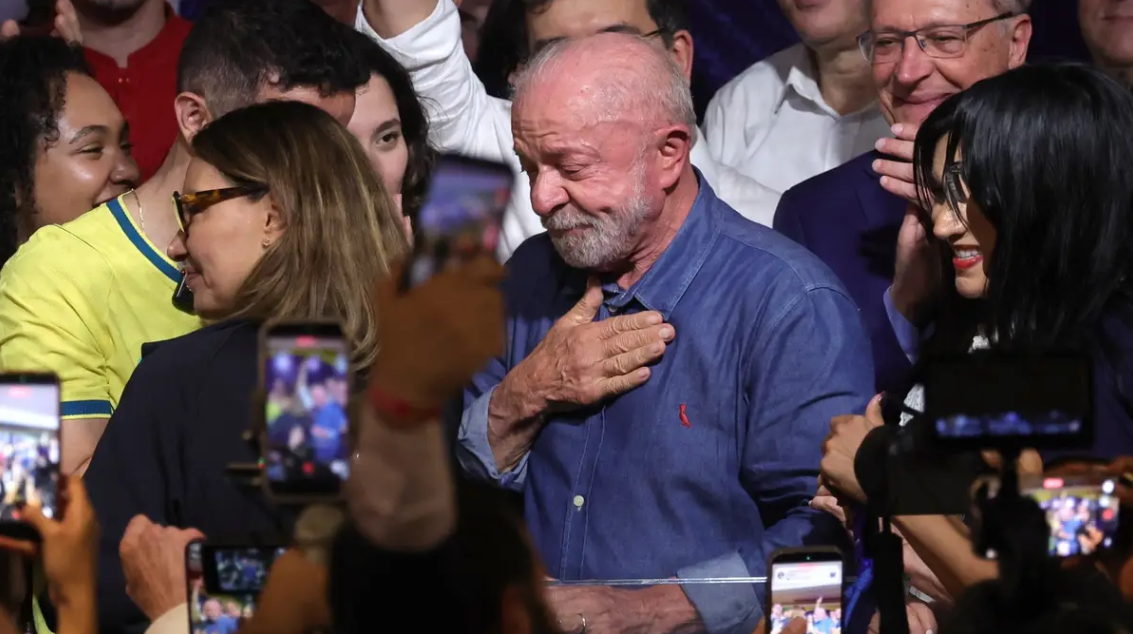
Brazilian President Luís Inácio Lula da Silva won the second round of the presidential election on 25 October 2026 and secured a historic fourth term. According to official figures from the country’s Supreme Electoral Court, he received 51.79% of the vote, beating Senator Flávio Bolsonaro by more than 4.4 million votes. The incumbent president’s rival refused to accept the results and announced his intention to seek their annulment on the grounds of the court’s decision to extend voting by two hours.
- Lula da Silva won the Brazilian presidential election, securing 51.79% of the vote.
- Flavio Bolsonaro received 48,21% and lost by a margin of over 4.4 million votes.
- Bolsonaro has refused to concede defeat and plans to challenge the results.
- For the first time in Brazil’s modern history, Lula won the second round after losing the first.
Results of the Brazilian presidential election
Brazil’s Supreme Electoral Court has officially announced the re-election Luli da Silva following the counting of votes in the second round. The incumbent president, representing the Labour Party, secured 64,256,232 votes. His opponent Flavio Bolsonaro received 59,826,041 votes on behalf of the Liberal Party.
Approximately 128.2 million voters took part in the ballot. Turnout was higher than in the first round: the proportion of those who did not turn out at polling stations fell from 21.08% to approximately 19.2%.
Lula’s victory was unprecedented in modern Brazilian history. Since the restoration of democratic elections in the 1980s, no candidate had ever managed to win the presidential race after finishing second in the first round.
In early October, Flávio Bolsonaro unexpectedly overtook the incumbent president. However, within three weeks, Lula managed to mobilise additional supporters and turn the election campaign around.
Why did Flávio Bolsonaro refuse to accept the results?
Shortly after Lula’s victory was announced, his rival Flavio Bolsonaro has stated that he will not recognise the election results. The politician announced his intention to apply to the court to have the results of the presidential election annulled.
He cited the decision by Supreme Court judge Cristiano Zanini to extend polling station opening hours by two hours as the grounds for his appeal. The decision was taken on polling day due to heavy rain, which had made it difficult for voters to reach polling stations, particularly in the south of the country.
At the same time, according to Reuters, Bolsonaro’s own team also requested that voting be extended due to adverse weather conditions. Political analysts consider it unlikely that the results will be annulled, given the significant gap between the candidates.
Flavio Bolsonaro is the eldest son of the former President of Brazil Jair Bolsonaro. Following his defeat in the 2022 elections, his father also refused to recognise Lula’s victory. Subsequently, the Supreme Court sentenced the former president to 27 years’ imprisonment in connection with a case concerning the plotting of a coup d’état.
Lula’s victory led to a fall in Brazilian assets
The re-election of the incumbent president came as a surprise to some investors, who had been counting on a victory for the right-wing candidate and a change in the country’s economic policy.
Following the announcement of the results, a Tokyo-listed exchange-traded fund tracking Brazil’s Bovespa index lost around 15% of its value. Brazilian real futures fell by 10% during Asian trading.
In the run-up to the second round, the financial markets showed contrasting trends. Brazilian shares rose by almost 7% compared with the period before the first round, whilst the national currency strengthened by almost 5% against the US dollar.
Investors had expected that Bolsonaro’s victory would lead to a reduction in public spending and tighter budgetary discipline. The financial markets are now focusing on the re-elected president’s economic programme and the future composition of his government.
What challenges await Lulu during her fourth term?
Despite the victory at presidential elections, Luli will have to work with a Congress in which right-wing political forces have gained significant representation. Bolsonaro’s Liberal Party, together with its allies, could control more than 280 seats in the lower house and up to 50 seats in the Senate.
This will make it more difficult to take budgetary decisions and implement the President’s economic programme, which provides for the continuation of social support for low-income citizens.
High interest rates and public debt, which has exceeded 82% of GDP, remain among Brazil’s main economic challenges. The government forecasts economic growth of 2.3% in 2027.
Lula’s re-election also has international significance. During the campaign, his opponent maintained close ties with the US presidential administration Donald Trump. A victory for the incumbent Brazilian leader would mean a continuation of a political course that has on numerous occasions diverged from Washington’s position.
Lula’s fourth presidential term is due to begin on 5 January 2027.