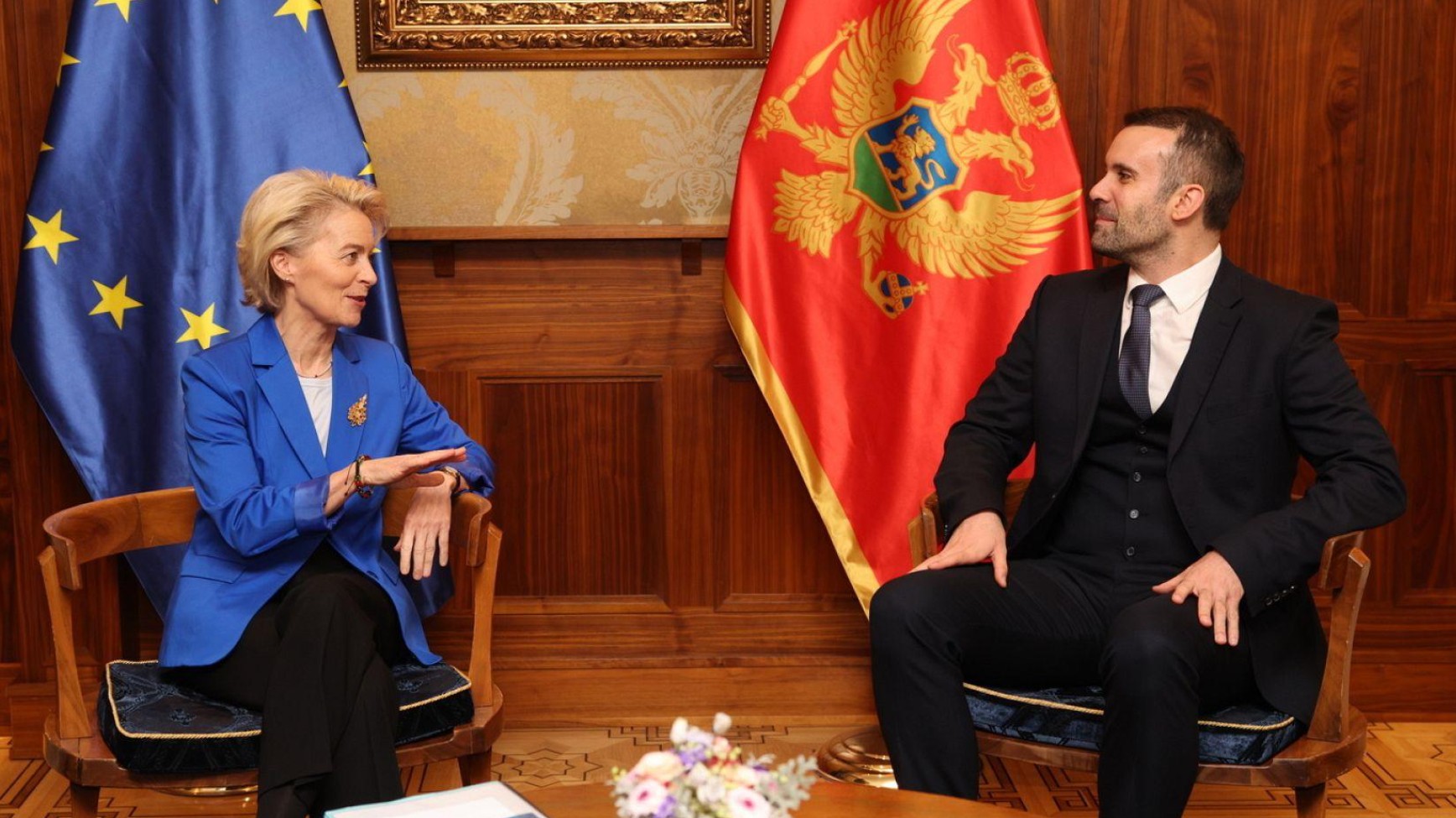
Montenegro could conclude negotiations on accession to the European Union by the end of 2026 and sign the accession treaty as early as June next year. This scenario was outlined by the European Commission in its latest report on EU enlargement. The Balkan country, which has been negotiating with Brussels for over 14 years, hopes to become the 28th member of the European Union in 2028.
- Montenegro may conclude its EU accession negotiations by the end of 2026.
- The European Commission anticipates that the accession treaty could be signed as early as June 2027.
- The country has provisionally closed 21 of the 33 negotiation chapters with the European Union.
- The Montenegrin Government is aiming to achieve full EU membership in 2028.
Montenegro may conclude negotiations with the EU by the end of the year
The European Commission considers Montenegro to be the most prepared for membership among the candidate countries. Brussels has noted progress in implementing reforms and aligning national legislation with EU standards.
As of early November, the country had opened all 33 negotiation chapters and provisionally closed 21 of them. According to the European Commission’s assessment, the remainder could be finalised by the end of 2026, provided the current pace of reforms is maintained and Member States continue to offer their support.
In October, Montenegro closed a further three chapters relating to economic and monetary policy, statistics, and social policy and employment. This enabled the process to move on to the final stage of the negotiations.
The European Commission has already begun preparing the accession treaty and the financial package, which will set out the terms of future membership.
The agreement may be signed in June 2027
The European Commission’s new timetable provides for the possibility of signing Montenegro’s accession treaty as early as June 2027. However, this date remains indicative and depends on the conclusion of the negotiations.
Prime Minister of Montenegro Milojko Spajić He had previously stated that his government was aiming to conclude all chapters of the negotiations by the end of this year and to proceed to the signing of the agreement as soon as possible in 2027.
However, even the conclusion of negotiations and the signing of the document will not mean automatic membership. The treaty must be ratified by all 27 EU Member States in accordance with their national procedures.
That is why the Montenegrin government has set 2028 as its target date for accession. If this timetable is met, the country will become the 28th member of the European Union.
What obstacles remain on the path to membership?
Despite the European Commission’s positive assessment, Montenegro must continue to implement reforms in the areas of the rule of law, the fight against corruption and the functioning of public institutions.
Brussels also emphasises the need for broad political support for the European path within the country. Without this, the conclusion of the negotiations may prove difficult, even after the technical requirements have been met.
Relations with neighbouring Croatia, which is already an EU member state, remain a separate issue. Disputes persist between the two countries over a number of historical and bilateral issues. Resolving these will be important for the further progress of the accession process.
Montenegro applied for membership of the European Union in 2008, was granted candidate status in 2010, and began negotiations in June 2012. Since then, no other country in the Western Balkans has made such progress in the negotiation process.
Ukraine and Moldova have been given further guidelines on accession
As part of the same enlargement package, the European Commission presented roadmaps for Ukraine, Moldova and Albania.
According to Brussels’ assessment, Moldova could conclude negotiations in early 2028. For Albania, the target remains the end of 2027, although the European Commission stresses the need to speed up reforms.
Ukraine also aims to complete negotiation process by the end of 2028. The European Commission acknowledges Kyiv’s progress even in the midst of a full-scale war, but calls for reforms to be accelerated in the areas of the judiciary, public administration and the rule of law.
Unlike Montenegro, Brussels has not yet set any possible dates for Ukraine and Moldova to sign their accession treaties.
The next step for Montenegro will be for the EU Member States to agree on the provisional closure of the remaining negotiation chapters. It is this that will determine whether the country will be able to proceed to the signing of the treaty in the first half of 2027.