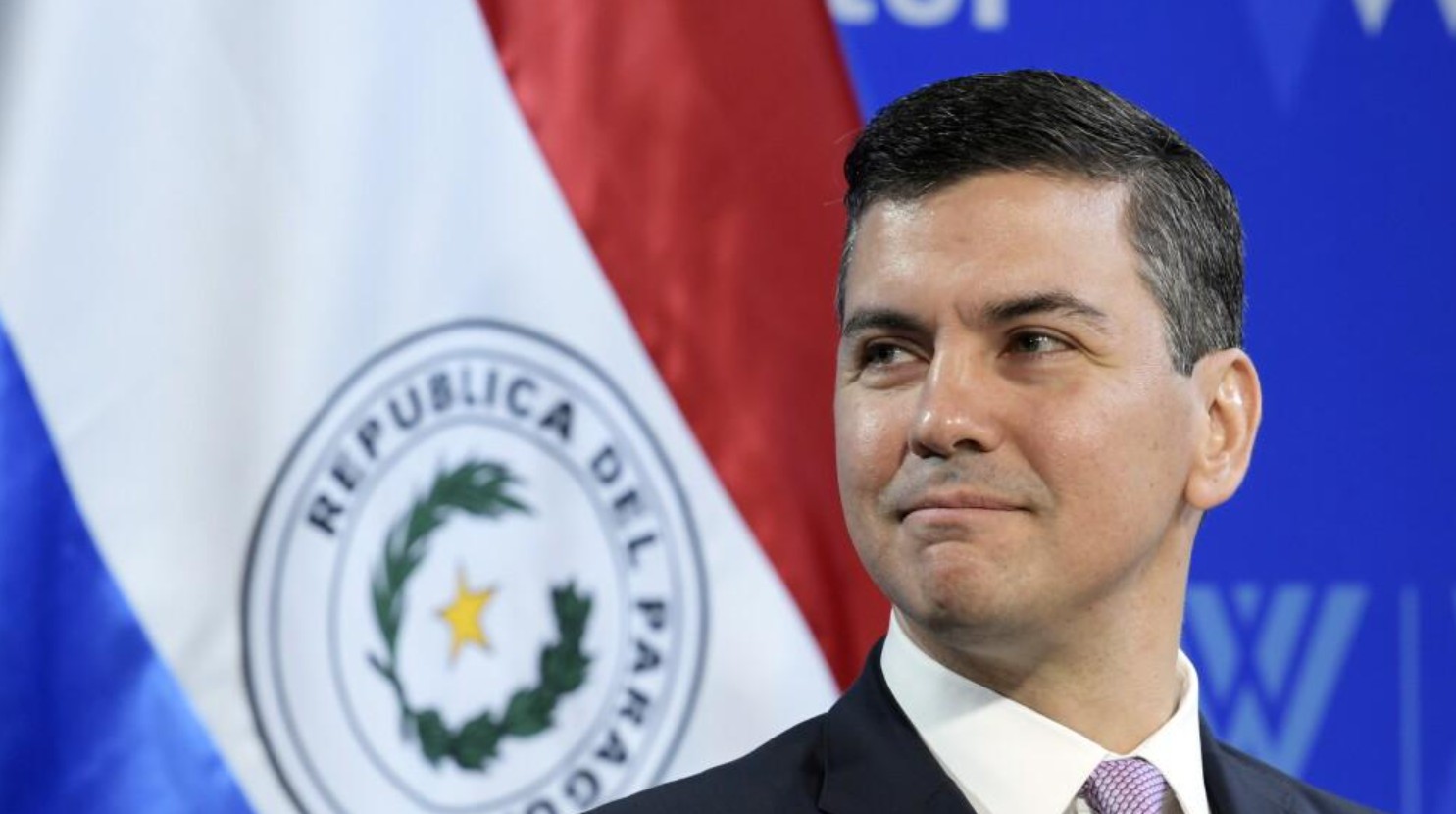
In Paraguay, parliament removed President Santiago Peña from office following a major financial scandal linked to the collapse of the digital bank Ueno. Shortly after his impeachment, the police detained the former head of state and placed him under house arrest. Vice-President Pedro Aliana became the new president, taking the oath of office on 6 November. The political crisis unfolded after the accounts of millions of citizens were frozen, leaving them unable to access their own money.
- The Paraguayan Senate has removed President Santiago Peña from office following a banking scandal.
- Following his impeachment, the former president was arrested and placed under house arrest.
- The collapse of Ueno Bank has left millions of customers unable to access their money.
- The investigation is looking into the use of public funds and political influence over the bank.
- Pedro Aliana has been elected as the new president and will lead the country until 2028.
Parliament removed the president following the collapse of a major bank
On 6 November, the Paraguayan Senate voted to suspend Santiago Peñi from office. The motion was supported by 44 out of 45 senators; one senator was absent. The President was accused of dereliction of duty amid an investigation into his links with Ueno Bank, which came under the regulator’s control following the discovery of financial irregularities.
The day before, Peña had attempted to resign voluntarily, citing the need to preserve political stability. However, parliament rejected his resignation and completed the impeachment proceedings. His removal from office deprived the former president of the legal safeguards he would have been entitled to had he resigned voluntarily.
Shortly after the vote, law enforcement officers arrived at Peña’s residence in Asunción and informed him of his arrest. The Public Prosecutor’s Office is investigating possible breaches of trust, trading in influence and the use of a public office for personal gain. The politician himself denies any wrongdoing.
Almost three million customers have lost access to their money
The political crisis was triggered by the collapse of Ueno Bank — one of Paraguay’s largest digital banks. The financial institution had been rapidly expanding its operations, attracting private clients and public funds. Following intervention by the central bank, its operations were suspended, leaving around 2.9 million customers unable to access their accounts, cards and savings.
According to the investigation, Ueno received over $800 million in public funds, notably through pension funds. Law enforcement agencies are investigating whether the bank’s management’s political connections facilitated this. Some of the allegations relate to the appointment of Ueno’s former chief executive, Carlos Carvalho, as governor of the central bank, which subsequently oversaw this financial institution.
Peña previously held a stake in a company linked to Ueno, but sold it in 2025. He maintains that the investment was purely private in nature. The public prosecutor’s office is also investigating the activities of the bank’s executives: charges have been brought against 27 individuals.
The freezing of funds sparked protests in Asunción and other cities. Businesses were unable to make payments, whilst citizens demanded the return of their savings. The central bank began making compensation payments to small depositors and stated that the deposit guarantee scheme covers approximately 97 per cent of Ueno’s customers.
Pedro Aliana has become the new President of Paraguay
Following Peña’s removal from office, his former vice-president was sworn in as president Pedro Aliana. He will lead the country until the end of the current presidential term in August 2028.
The new head of state took office at the height of a financial and political crisis. Among his top priorities are restoring the public’s access to their bank accounts and ensuring that state institutions continue to function. Meanwhile, Alyana himself is also under investigation in a case linked to Ueno Bank.
Santiago Peña remains under house arrest pending further procedural decisions. He is due to meet with the prosecution on 7 November, when they are to determine the next steps in the criminal proceedings.