New figures have been released in Germany regarding those involved in the mass riots in Frankfurt am Main, which broke out on 31 October following youth protests. Around 75 per cent of the identified suspects are foreign nationals, some of whom also hold German citizenship. During the riots, 180 law enforcement officers were injured and dozens of retail premises were damaged.
- In Frankfurt, around 75 per cent of those suspected of rioting are foreign nationals.
- Some of the individuals involved hold both a German passport and foreign citizenship.
- According to the German newspaper *Bild*, 180 police officers were injured during the riots.
- Seventeen shops in the town were damaged, five of which were looted.
- The authorities have detained 54 men and set up a special investigation team.
The police have established the nationality of 55 suspects
According to Frankfurt law enforcement authorities, the investigation has identified 55 people suspected of involvement in the riots. Around three-quarters of them are foreign nationals, including those who also hold a German passport.
Around half of those implicated hold German citizenship, although roughly one in two of this group also holds a passport from another country. Consequently, approximately 25 per cent of the suspects hold German citizenship alone.
Previously, the Minister of the Interior of the federal state of Hesse Roman Posek suggested that 80–90 per cent of those involved in violence may be of migrant background. At the same time, this preliminary estimate differs from citizenship statistics: having a migrant background does not necessarily mean that a person does not hold a German passport.
The data published relates to suspects in specific criminal proceedings, not to all participants in the youth demonstrations.
Five shops were looted in Frankfurt and 180 police officers were injured
Mass protests On 31 October, the youth movements Gen Z regelt and Generation Aufbruch organised a demonstration. The demonstrators called for increased investment in education and healthcare, and protested against the introduction of compulsory military service.
The demonstration began peacefully. According to police reports, around 8,000 people gathered in the centre of Frankfurt during the day. Later, some of those present began setting off fireworks, and by the evening the situation had escalated into large-scale clashes with the police.
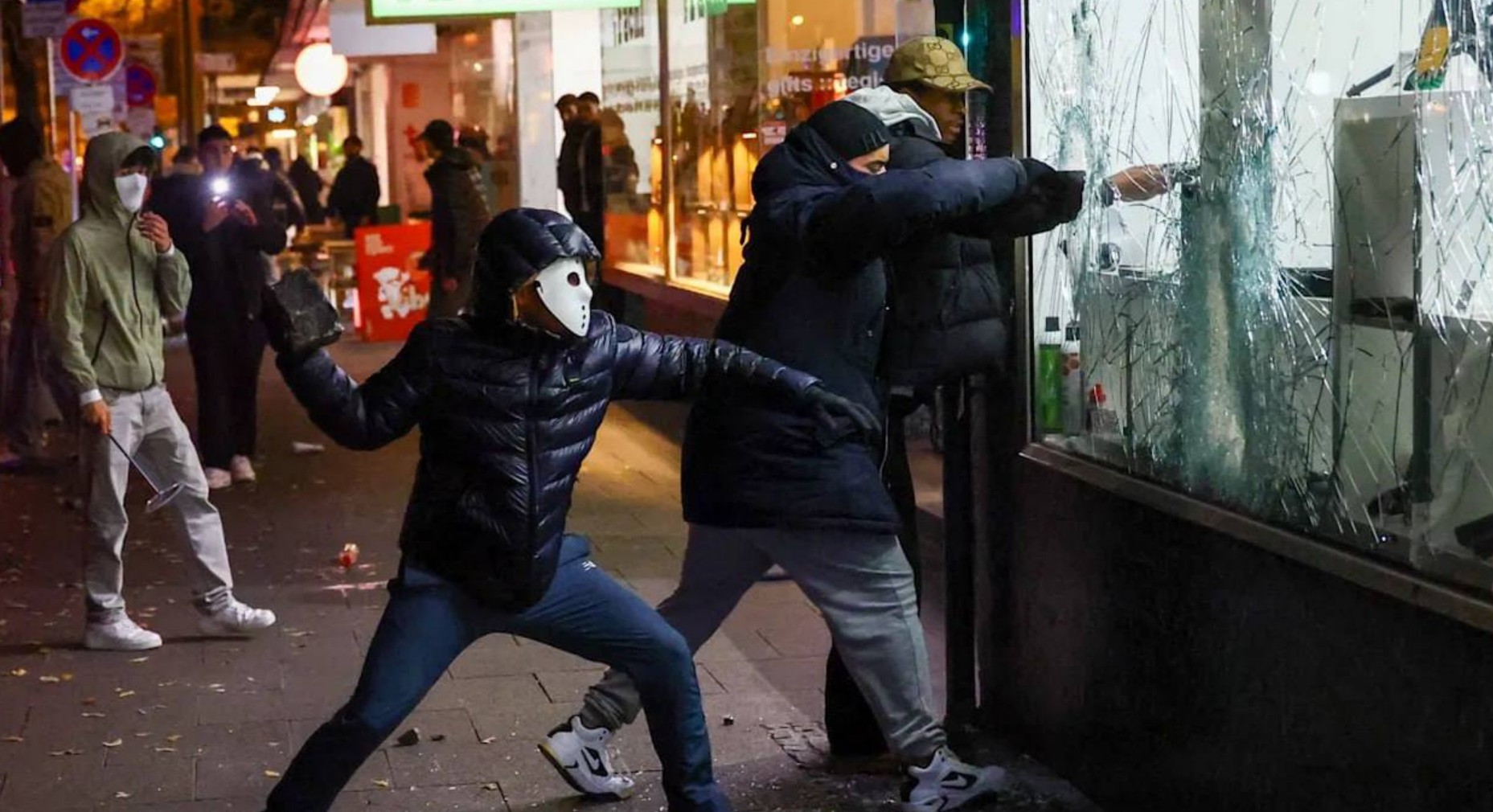
Groups of masked people smashed shop windows, looted shops, set fire to barricades and pelted police officers with stones, bottles and firecrackers. A gun shop was among the retail outlets targeted.
According to updated figures cited by *Bild*, 180 law enforcement officers were injured during the riots. The police arrested 54 men. A total of 17 shops were damaged, five of which were looted.
German law enforcement agencies have launched dozens of criminal investigations. Following the riots in Frankfurt, a special investigation team was set up to identify those involved in the attacks and bring the perpetrators to justice.
Among those detained is an 18-year-old Syrian national
One of the individuals involved in the case is an 18-year-old Syrian national. He was taken into custody on suspicion of stealing weapons from a shop during the riots. The investigation is looking into the circumstances of the theft and the possible involvement of other individuals.
The riots in Frankfurt have sparked a debate on public safety, youth crime and integration policy. Jochen Koppelke, head of the German police union GdP, stated that the violence had highlighted problems not only with migration policy but also with youth policy. He called for a tougher response to repeat offences.
At the same time, the police noted that there was no clear political motivation behind the actions of a significant proportion of those involved in the riots. Law enforcement agencies are therefore examining specific incidents of violence and looting separately from the stated aims of the protest organisers.