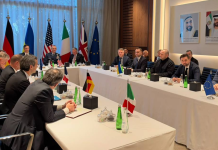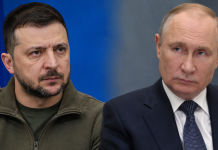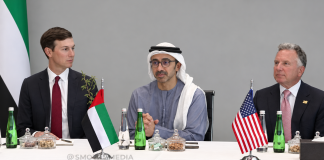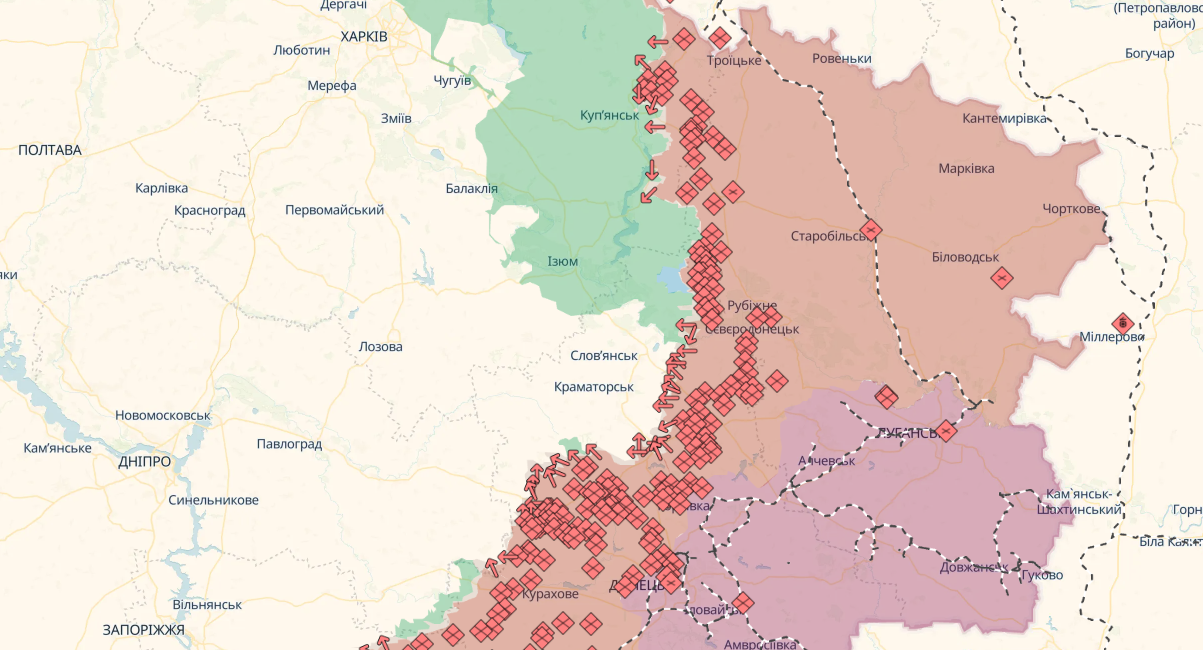
American negotiators are considering an unusual option for a territorial compromise between Ukraine and Russia, which would allow the Kremlin to claim it has seized the whole of the Donbas without actually exercising control over its entire territory. The idea involves changing the administrative boundaries of the Donetsk and Luhansk regions in such a way that Russia could declare it has achieved its objective, whilst Ukraine would retain control over the cities still held by the Defence Forces. The proposal is being discussed ahead of a new round of peace talks in Abu Dhabi.
- The US is considering a change to the administrative boundaries of the Donbas as a possible compromise in the negotiations.
- Russia could announce that it had taken control of the region without capturing all the towns.
- Washington is also discussing economic incentives for Moscow, particularly in the area of energy cooperation.
- Ukraine insists on reliable security guarantees and rejects any territorial concessions.
The US is proposing to change the administrative boundaries of the Donbas
According to the publication The Economist, the American side is looking for ways to persuade Vladimir Putin to agree to an end to the war without the complete occupation of the Donetsk and Luhansk regions.
One option involves a kind of cartographic compromise: changing the administrative boundaries of Ukraine’s regions so that Russia could claim control over the entire territory of the Donbas under the new administrative definition. In this scenario, Ukrainian towns that remain under Kyiv’s control would not have to be handed over to the Russian side.
The publication notes that the idea is being discussed by those involved in the negotiations. However, it is not known whether it has been formalised as an official US proposal, nor whether Ukraine and Russia are prepared to consider such a scenario.
Washington is offering Russia economic incentives
Changing administrative boundaries is not the only idea that American negotiators are considering in order to reach a peace agreement. The US has also proposed allowing Russia back into European energy markets.
This option involves restoration economic cooperation with Moscow, but it contravenes current European Union restrictions. Both the Ukrainian and European sides are opposed to such a decision, particularly until hostilities have ceased.
The publication notes that Washington is keen to reach a diplomatic solution as soon as possible, whilst the Kremlin shows no sign of being prepared to back down from its key demands.
Security guarantees remain the main obstacle
Security guarantees for Ukraine remain the most complex issue in the forthcoming agreement. US negotiators are open to the possibility of arrangements modelled on Articles 4 or 5 of the NATO Treaty, which provide for consultation with allies in the event of a threat and a mechanism for collective defence.
At the same time, the Ukrainian side doubts that such guarantees will be sufficient without specific mechanisms to ensure their implementation. Russia, for its part, opposes the deployment of international security forces in Ukraine and continues to demand that the country remain neutral and reduce the size of its army.
On the eve of talks in Abu Dhabi US officials have stated that the parties have shown some flexibility on the territorial issue. However, Kyiv publicly rejects the transfer to Russia of territories that remain under Ukrainian control.
Trilateral talks between Ukraine, the US and Russia are scheduled for 10–11 November. No final territorial compromise has yet been agreed.