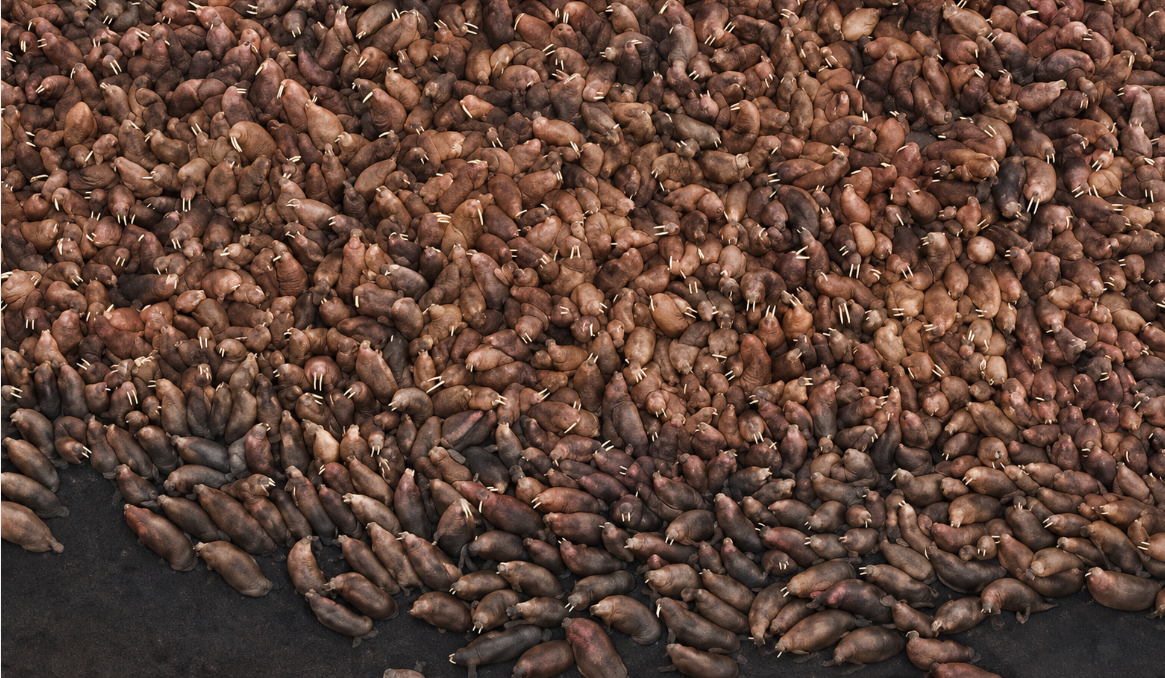
In north-western Alaska, near the settlement of Point Lay, the largest Pacific walrus haul-out site in North America has formed. Every autumn, more than 200,000 animals, mainly females and their calves, use this area. Due to climate change and the shrinking of Arctic sea ice, walruses are increasingly forced to rest on land.
Why do walruses come ashore in large numbers?
- Over 200,000 walruses use the haul-out site near Point Lay.
- The melting of Arctic ice is forcing marine mammals to come ashore.
- Large gatherings of animals pose a threat to the survival of young walruses.
- A permanent nature reserve covering an area of 192 km² is being established in Alaska.
Pacific walruses traditionally use floating ice floes to rest, rear their young and stay close to their foraging grounds.
However, as a result of global warming Towards the end of summer, the sea ice retreats beyond the shallow continental shelf of the Chukchi Sea. In deeper waters, it is more difficult for animals to forage for molluscs and other benthic organisms.
Large gatherings of walruses near Point Lay began to be observed in 2007. Initially, several thousand animals came ashore, but their numbers subsequently increased significantly.
Why are huge gatherings of walruses dangerous?
Due to the extremely high density of the rookeries, even the slightest noise, the approach of a vessel or the appearance of a predator can cause panic.
During mass movements towards the water, adult walruses can trample the young. According to the US environmental protection agencies, such incidents are one of the major factors contributing to natural mortality among walruses.
A sanctuary for walruses is being established in Alaska
On 18 November, the conservation organisation The Conservation Fund announced that it had secured the permanent protection of an area of over 19,000 hectares near Point Lay.
The agreement will restrict industrial development of the land and help to reduce the impact of human activity on wildlife, whilst safeguarding the traditional way of life of Alaska’s indigenous peoples.