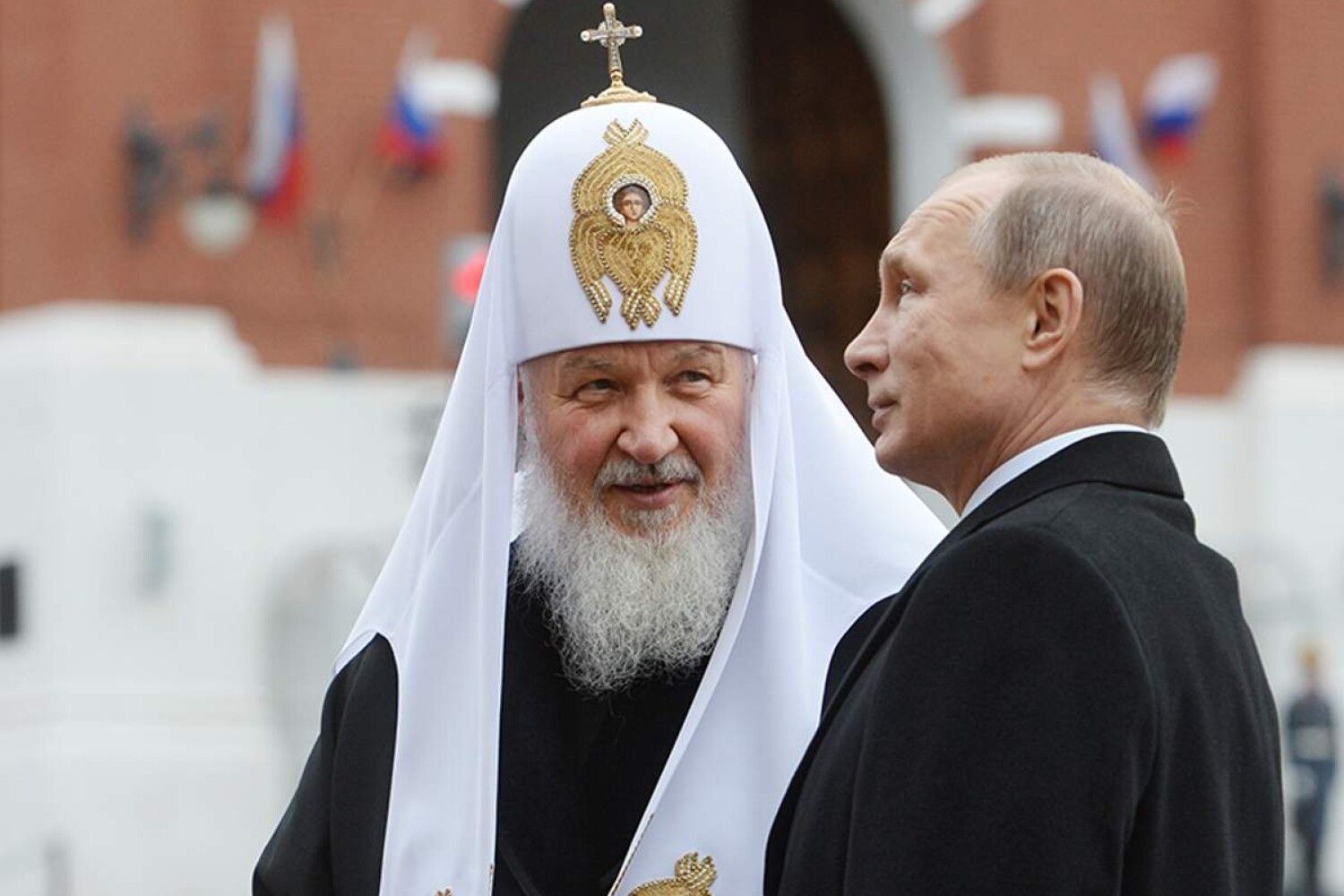
Russia's full-scale war against Ukraine is accompanied not only by military operations and information operations, but also by the active use of religion as an instrument of influence. In Ukraine, attention is increasingly drawn to the role of the Russian Orthodox Church in shaping the ideology of war, justifying aggression and militarising young people. Ombudsman Dmytro Lubinets stressed that the Kremlin uses church structures as part of a broader system of hybrid influence.
Religion as an element of state propaganda
According to Dmytro Lubinets, in modern Russian ideology ROC performs not only a spiritual function. At the centre of this model is the concept of the so-called «Russian world», where religion is combined with the language, history, culture and political influence of Russia.
It is because of this model that the full-scale invasion of Ukraine is presented in some Russian church circles as a «holy war» or «spiritual mission». According to human rights activists, this creates a dangerous basis for justifying violence and aggression.
Lubinets emphasised that such rhetoric goes far beyond religion and turns into a tool for political mobilisation of society.
Militarisation of children and youth
One of the most disturbing aspects that the Ukrainian authorities are paying attention to is Involvement of children in militarised programmes under the guise of «spiritual» or «patriotic» education.
According to the ombudsman, youth organisations are being set up in Russia and the temporarily occupied territories to teach children how to handle weapons, military discipline and promote the cult of war.
Some of these initiatives operate with the support or participation of church structures. As a result, the religious environment is used to foster loyalty to state policy and justify military action.
Human rights experts stress that this practice may violate international norms on child protection and freedom of conscience.
«Holy war» as an element of hybrid aggression
Analysts point out that Russia has been using not only military or economic instruments of influence for many years, but also humanitarian and cultural mechanisms.
Religion in this system has become one of the important components of the so-called hybrid warfare. Through church messages, the Kremlin is trying to:
- to create an image of «historical unity» between Russians and Ukrainians;
- to discredit Ukrainian statehood;
- justify the invasion and occupation;
- create an ideological basis for supporting the war inside Russia.
Against this background, Ukraine has increased its attention to the activities of structures that may be linked to Russian influence through religious organisations.
Why the ROC issue has become part of security policy
After the outbreak of a full-scale war, the issue of the activities of churches affiliated with Russia became not only a social or religious topic, but also a matter of national security.
In recent years, the Security Service of Ukraine has repeatedly reported Identification of pro-Russian literature, The Russian Federation is also a source of propaganda materials and contacts of some representatives of the church environment with the Russian Federation.
According to Ukrainian officials, the Kremlin uses the religious factor to maintain its influence even outside Russia.
At the same time, human rights activists emphasise that the fight against propaganda should not violate freedom of religion. A key challenge remains the distinction between religious activity and the political or informational influence of the aggressor state.
Freedom of religion and the risks of manipulation
Dmytro Lubinets said that where faith is replaced by propaganda, there is a threat to the whole society. That is why, according to him, it is important not only to respond to such manifestations at the level of security and legislation, but also to protect freedom of conscience.
Analysts believe that the use of religion in war will remain one of the key elements of the information confrontation between Ukraine and Russia. This is especially true given the Kremlin's attempts to use historical, cultural and spiritual narratives to justify its policies.