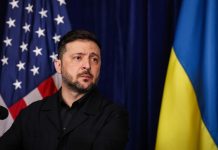
President Volodymyr Zelenskyy has stated that this winter, Ukraine will either face a new escalation of the war or enter into negotiations with Russia. He said he expected new Russian attacks as autumn approaches and criticised the regions’ preparations for winter, particularly the implementation of resilience plans.
Briefly about the main points
- Zelenskyy believes there could be an escalation of the war or negotiations with Russia this winter.
- The President is expecting further Russian attacks as autumn approaches.
- According to the Ukrainian side, Russia may be preparing a further mobilisation.
- Zelenskyy is dissatisfied with the regions’ preparations for winter.
- The Prime Minister’s experience in the energy sector was a key factor in the appointment decision.
Two scenarios for the winter period
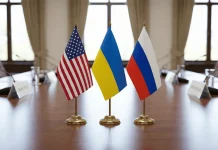
According to Vladimir Zelensky, Ukraine must prepare for two possible scenarios this winter: a further escalation of the war or the start of negotiations with Russia. He did not specify the possible format, timing or conditions of such negotiations.
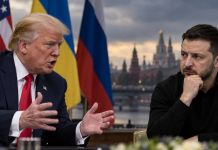
The President also stated that, with autumn approaching, Vladimir Putin is preparing new ones attacks on Ukraine and the escalation of the war. According to the Ukrainian side, Russia is also preparing for a further mobilisation. At the same time, diplomatic efforts continue: on 22 July, Zelenskyy held talks with representatives of the US President By Stephen Witkoff і Jared Kushner stepping up diplomatic efforts to bring about peace. No specific agreements or a date for the new negotiating format have been publicly announced.
The President is not satisfied with the regions’ preparations
Zelenskyy said he was completely dissatisfied with the regions’ preparations for winter. This is not just about the energy sector: among the priorities, he cited logistics, grain, agriculture and resilience plans.
The President said that he had seen the figures for the work completed and believed that work needed to begin very soon. There is currently no open data showing a breakdown of these figures by region or a list of regions that are lagging behind.
Back in March, the National Security and Defence Council approved regional energy resilience plans. These plans provide for the restoration of damaged key power generation facilities, the protection of infrastructure, equipment reserves and the build-up of gas stocks. In April, the President had already pointed out that not all regions and local authorities were implementing the necessary measures.
Energy has become one of the criteria for the Prime Minister
The President explained that, when selecting the Prime Minister, he had given particular consideration to the candidate’s expertise in the energy sector. In his view, appointing a head of government with a sound understanding of this sector is a sound decision.
New Cabinet of Ministers led by Serhiy Koretskyi He took up his post on 16 July. Among his professional experience, the President highlighted his work at state-owned energy companies, notably at «Ukrnafta». The combination of this appointment with criticism of the regions’ preparedness suggests that the authorities regard preparations for the winter of 2026–2027 as one of their key administrative and security priorities.
What makes it difficult to carry out the winter plan
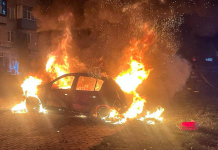
Preparations for the season are taking place against a backdrop of the risk of further attacks. On 19 July, Zelenskyy stated that Russia was relying on ballistic missiles and had been stockpiling them for several days prior to the strike on Kyiv and the surrounding region. This means that the defence and restoration of energy infrastructure are parallel tasks, rather than sequential stages of work.
In June, the European Commission announced €100 million in guarantees to stabilise Ukraine’s power system, restore renewable energy generation and improve energy efficiency. At the same time, signatories to the Kyiv Security Forum’s statement noted that the manufacture and installation of some critical equipment could take between 10 and 24 months. Therefore, the approved plans and funding do not, in themselves, mean that the country is actually ready for winter.