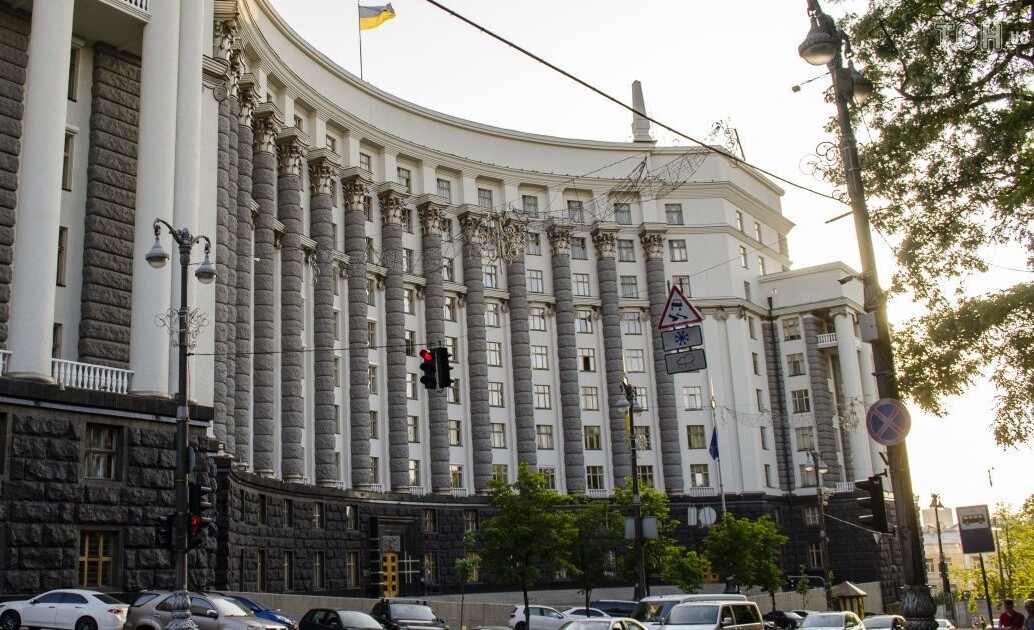
On 23 October, the Cabinet of Ministers reduced the maximum quota for reserving employees subject to military service at defence-industrial and fuel-and-energy enterprises from 100% to 95%. At the same time, the government established a Coordination Centre to assess the criticality of companies and increase the quotas. The Ministry of Economy, Environment and Agriculture announced the changes on 24 October.
Briefly about the main points
- The booking limit for the defence and energy sectors has been set at 95%.
- Key personnel required for production and emergency operations will be fully reserved.
- The Centre will recommend decisions, but will not revoke criticality status on its own initiative.
- The criticality criteria will be reviewed within ten days of the amendments coming into force.
- The government is only preparing the new model for full booking by 1 December.
Who will be affected by the new limit and how will the lists be drawn up?
The standard quota applies to enterprises in the fuel and energy and defence-industrial sectors, which were previously able to reserve all personnel liable for military service. At the same time, the restriction should not affect employees without whom the continuous operation of such enterprises would be impossible.
They must have book specialists who are directly involved in production, in particular the manufacture of armaments, who carry out state defence contracts, undertake operational and maintenance work, or are involved in emergency repair and restoration work on critical infrastructure.
Company managers will draw up the lists themselves within the established quota. When calculating the quota, they will take into account employees who have been granted a deferral on other grounds, in particular parents of large families and carers.
What powers will the Coordination Centre have?
The new body will operate as a temporary consultative and advisory body to the Cabinet of Ministers, co-chaired by the Deputy Ministers of Economy and Defence. Representatives from the bodies responsible for defence, the economy, security and critical infrastructure will be involved in its work.
The Centre will approve sectoral and regional criticality criteria, consider applications for the granting of such status and for increases in quotas above 50%. It will also be able to recommend that the status be revoked, in particular on the basis of information provided by law enforcement agencies.
Up to one month is allowed for the consideration of an application, and up to seven working days for urgent matters. At the same time, the final decision on whether to grant or revoke the status of a critically important enterprise will be taken by the authorised state bodies.
How the status of critical businesses will be reviewed
Central executive authorities and regional military administrations must review their sectoral and regional criteria within ten days of the amendments coming into force. The updated requirements will be agreed with the Coordination Centre.
A review does not automatically result in the loss of a status that has already been granted. Businesses whose criteria remain unchanged will retain that status; for all other companies, compliance with the updated requirements will be the deciding factor, and this will be assessed by the relevant authorities.
The creation of the centre does not, in itself, cancel employees’ existing bookings.
The government is drawing up a separate model for full booking
Prime Minister Sergey Koretsky He stated that the aim of the decision was to combat abuse: according to him, the number of bookings is increasing by tens of thousands each month, and some companies were set up specifically to arrange payment deferrals. He stated that the government has no plans to restrict the operations of arms manufacturers or companies that ensure the functioning of critical infrastructure.
The Cabinet of Ministers is also preparing a separate mechanism for full staff retention for companies that will fulfil their mobilisation obligations and, under certain conditions, regularly and voluntarily send some of their staff into military service. The Ministry of Defence and the Ministry of Economy are to develop the model in consultation with the business community by 1 December 2026.
This initiative is still at the development stage and does not currently constitute a valid basis for automatic 100% bookings.