The President of Ukraine, Volodymyr Zelenskyy, has stated that the quickest way to bring the active phase of the war to an end is to declare a ceasefire along the current line of contact and move on to diplomatic negotiations with Russia. According to him, discussions on the final terms of peace could take months or even years, but a halt to hostilities would save lives and allow economic activity to resume. At the same time, the head of state ruled out the possibility of ceding the Donbas to Russia, warning that territorial concessions would not guarantee an end to Russian aggression. Zelenskyy made these remarks in an interview with the Danish broadcaster DR Nyheder, extracts from which were published on 10 November.
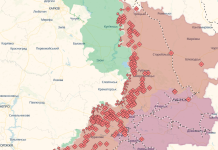
- Zelenskyy proposed a ceasefire along the current front line.
- Peace talks following the cessation of hostilities may go on for years.
- The President rejected the idea of handing over the Donbas to Russia as a guarantee of lasting peace.
- In his view, cutting aid to Ukraine will exacerbate the threats to Europe.
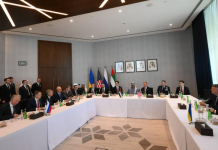
- The statements were made against the backdrop of the trilateral talks in Abu Dhabi.
Zelenskyy has set out the condition for ending the active phase of the war
The President proposed dividing the process of ending the war into two stages. First, the parties must cease hostilities whilst remaining in their current positions, and only then move on to discussing political, territorial and security issues.
«We will halt our advance, cease fire and move to the diplomatic track,» Zelenskyy emphasised.
According to him, the negotiations could last a month, two months, a year or even longer. However, people must not continue to die on the front line throughout this time. A cessation of hostilities would also make it possible to slow the pace of mobilisation and create the conditions for economic recovery.
The President acknowledged that implementing such a scenario would require complex arrangements. In particular, it is necessary to define the procedures for monitoring the ceasefire, the powers of the international monitoring mission, possible demilitarised zones, the role of European partners and the sources of funding for reconstruction.
In the opinion of Zelensky, Russia’s demand Agreeing on a comprehensive peace plan first, and only then declaring a ceasefire, would indicate Moscow’s unwillingness to halt the fighting.
The President has ruled out making any territorial concessions regarding the Donbas
Separately, the head of state commented on the possibility of ceding Ukrainian territories to Russia in exchange for an end to the war.
Zelenskyy is convinced that Ukraine’s relinquishment of the Donbas will not ensure lasting peace. He pointed out that Moscow’s initial territorial demands subsequently escalated into a full-scale invasion and an attempt to capture Kyiv.
According to the president, the Russian leader Vladimir Putin may use territorial concessions to buy some time, after which it will resume its aggression in one, two or five years’ time.
Consequently, the ceasefire along the current front line proposed by Zelenskyy does not imply recognition of the occupied territories as Russian. It refers to a cessation of hostilities pending a final political settlement.
Zelenskyy warned of the threat to Europe should aid to Ukraine be cut off
The President also warned European partners against cutting back on military and financial support for Ukraine. He believes that weakening Ukraine’s defences would create additional risks for the entire continent.
According to Zelenskyy’s assessment, Russia may significantly step up its hybrid operations against European states. Among the potential targets, he named Moldova, Romania, Bulgaria, Germany, Finland and Denmark.
According to the President, the most dangerous scenario involves a further expansion of Russian influence over the countries of the former Soviet Union, particularly the Baltic states. This would create the risk of a direct confrontation between Russia and NATO.
Zelenskyy also suggested that Moscow might attempt to block the Baltic Sea, using methods similar to those it employs against Ukraine’s maritime traffic in the Black Sea.
The statements were made against the backdrop of the talks in Abu Dhabi
The President’s interview was published on 10 November, when the event began in Abu Dhabi a new round of tripartite talks between Ukraine, the US and Russia.
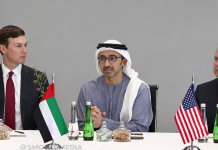
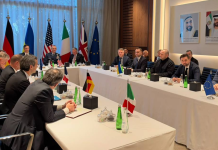
Ahead of the meeting, the Ukrainian delegation held consultations with its American and European partners. The main issues discussed included de-escalation, security guarantees and possible mechanisms for ending hostilities.
During a conversation with the President of Finland Alexander Stubb Zelenskyy confirmed that negotiations had begun and stated that Ukraine expects the Russian side to show the same willingness to engage in constructive dialogue.
The first round of talks is scheduled for 10–11 November. At the time of the President’s statement, no ceasefire agreement had been reached.