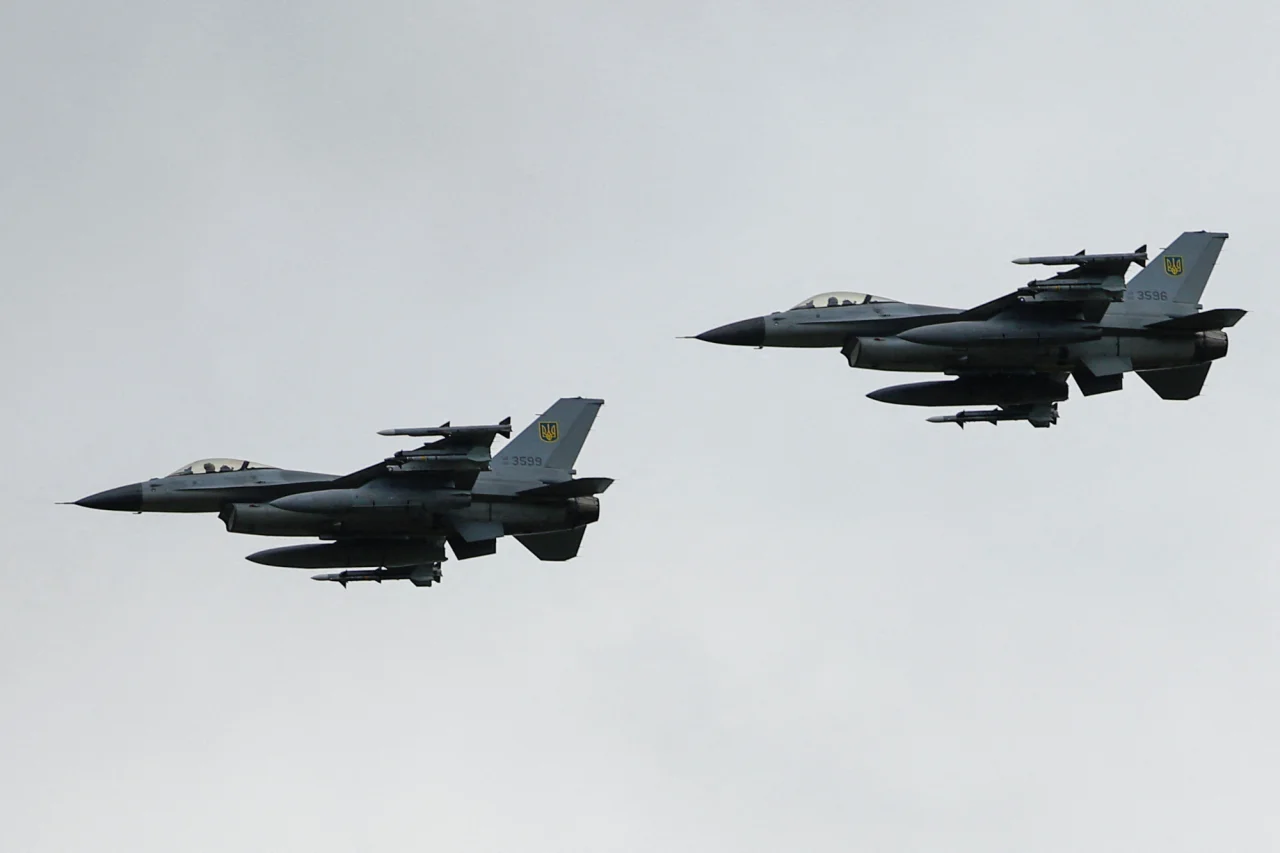
More than half of Ukraine’s fleet of F-16 fighter jets is currently unable to carry out combat missions due to delays in maintenance, according to The Wall Street Journal. Major maintenance work is carried out in Belgium, where scheduled maintenance on individual aircraft can take up to 40 weeks. Given the current flight intensity, Ukraine risks facing a critical reduction in the number of serviceable F-16s by the end of the year.
- The WSJ reports that more than half of Ukraine’s F-16s are undergoing maintenance.
- Delays in repair work in Belgium are cited as the main problem.
- A scheduled inspection of individual aircraft can take up to 40 weeks.
- These lead times are affected by intensive use and a shortage of components.
Most of the F-16s are out of action — WSJ
In an editorial, *The Wall Street Journal* writes about a serious problem with keeping Ukraine’s F-16 fighter jets in combat-ready condition. According to a Western source cited by the publication, More than half of the aircraft are currently in a sort of «suspended state whilst undergoing repairs» — they are awaiting the completion of maintenance and cannot be used in combat operations.
The WSJ itself describes the situation in even broader terms: the delays have left the majority of Ukraine’s fleet F-16 out of service. A spokesperson for the Ukrainian Air Force declined to comment to the publication on the specific number of aircraft available. It is therefore impossible to determine from open sources the exact number of serviceable and unserviceable F-16s.
Benefits in Belgium can be paid for up to 40 weeks
The WSJ identifies the speed of repairs as one of the key issues. After approximately After 300 hours of flight time, the F-16 requires what is known as a phase inspection — a comprehensive technical inspection. During this inspection, specialists check the engine, avionics, hydraulic systems, fuel lines and other critical components.
According to a retired Rear Admiral of the US Navy Mark Montgomery, as quoted by the WSJ, in the US such a procedure usually takes about between two and six weeks. In Belgium, in some cases, it can be stretched up to 40 weeks.
Maintenance of Ukrainian aircraft is carried out, amongst others, by the Belgian company Sabena Engineering. The company has over 50 years’ experience working with the F-16 and operates its own European maintenance centre for these fighter aircraft.
Why are the repairs taking so long?
Ukrainian F-16s are being used much more intensively than fighter jets are in peacetime. Flying in combat conditions may require additional inspections and repairs.
Another problem is — availability of individual spare parts and components. It is precisely the shortage of components that can increase the length of time an aircraft remains grounded.
Problems with the capacity of Belgian maintenance facilities had been reported previously. In the spring, it was reported that some of the F-16s transferred by Norway to Ukraine had been at the Sabena facility in Belgium for over a year, awaiting the completion of work.
Sabena itself declined to answer the WSJ’s detailed questions regarding the Ukrainian aircraft, citing operational security and the sensitive nature of military support.
By the end of the year, the problem could become critical
The most worrying assessment concerns the coming months. A Western source quoted by the WSJ believes that At the current rate of operation and maintenance, Ukraine may have exhausted the service life of the F-16s that are currently airworthy by the end of the year. This is a forecast by a source cited by the publication, not an official assessment by the Ukrainian Air Force.
It is not a question of the aircraft being lost for good. The problem lies in the possibility of a significant number of aircraft accumulating at the same time, all requiring scheduled or unscheduled maintenance. For Ukraine, this is a particularly sensitive issue against the backdrop of a sharp increase in the number of Russian jet drones.
F-16s are needed to combat jet-powered drones
The WSJ notes that the F-16s have become one of the key tools in the fight against Russia’s new high-speed UAVs. According to the publication, in September alone, Russia deployed around 2,000 jet-powered drones, whereas in June there were around 350 of them. Some of the new aircraft are capable of reaching speeds of around 600 km/h, which makes it much more difficult for conventional interceptor drones to intercept them.
That is precisely why a reduction in the number of available fighter aircraft could affect not only air operations but also the air defence of cities and critical infrastructure.
On 10 September, the Ukrainian Ministry of Defence separately highlighted Belgium’s role in repairs and the supply of spare parts for the F-16, and also reported a need for additional ammunition to combat jet-powered drones.
Belgium is to transfer a further three F-16s to Ukraine
Against this backdrop, Belgium is preparing to expand Ukraine’s fighter jet fleet.
On 29 September, President Volodymyr Zelenskyy announced that Belgium is to hand over to Ukraine a further three F-16s by the end of 2026. Kyiv is also trying to speed up their delivery. However, the sheer number of aircraft delivered does not solve the problem: for them to operate reliably, a fully-fledged system is needed, comprising a supply of spare parts, trained technicians and sufficient maintenance capacity.
Therefore, the situation described by the WSJ relates not so much to the number of F-16s Ukraine has received as to the allies’ ability to keep this fleet in a state of combat readiness at all times.