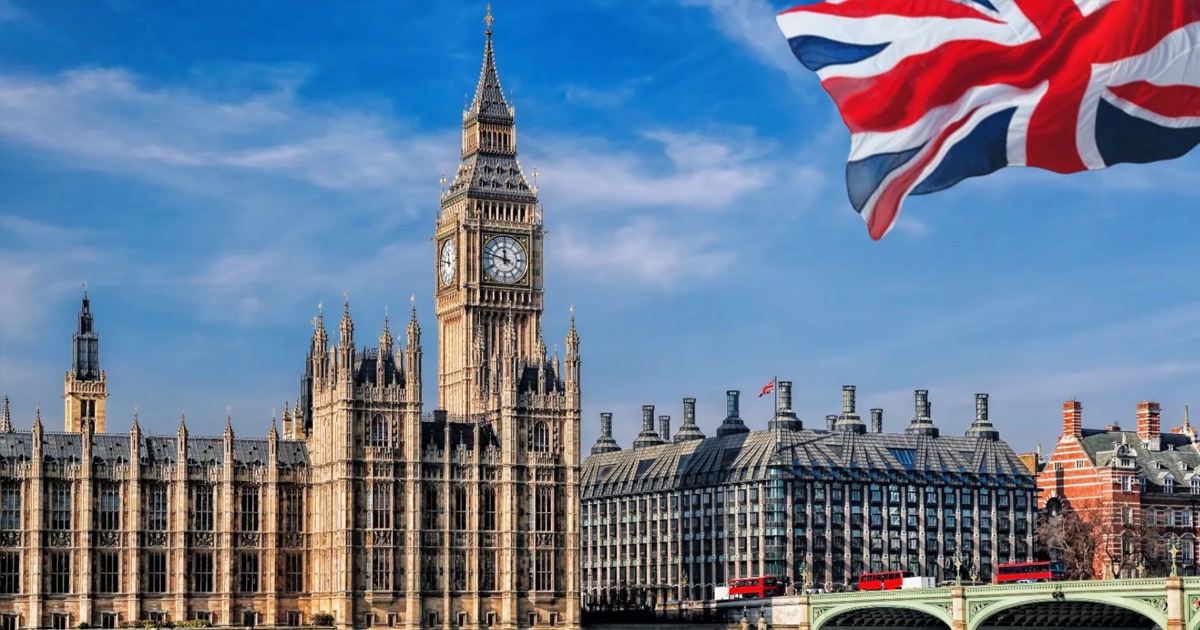
The First Ministers of Scotland, John Swinney, Rune Ap Yorwerth of Wales and Michelle O’Neill of Northern Ireland are to meet in Cardiff on 14 September to sign a declaration on the right of their nations to determine their constitutional status through a referendum. The document does not trigger a withdrawal from the United Kingdom, but is intended to increase collective pressure on the government in London, which currently refuses to agree to further referendums.
Briefly about the main points
- The first three ministers will meet in Cardiff on 14 September.
- The declaration will call for the recognition of nations’ right to a constitutional referendum.
- Scotland requires Westminster’s approval for the referendum to be legally valid.
- The Belfast Agreement sets out the procedure for a referendum on the unification of Ireland.
- London is prioritising economic issues over new constitutional referendums.
A united front of the three autonomous governments
Following the 2026 general election, the devolved governments of the three parts of the United Kingdom are, for the first time, simultaneously led by representatives of the SNP, Plaid Cymru and Sinn Féin. The SNP is campaigning for Scottish independence, Plaid Cymru supports Welsh independence, and Sinn Féin advocates the unification of Northern Ireland with the Republic of Ireland.
According to *The Telegraph*, the declaration will contain a joint call on the British Government to recognise the right of each of the three nations to determine their constitutional status by referendum. The newspaper described the agreement as the start of a campaign that could potentially lead to the break-up of the United Kingdom.
The Scottish referendum depends on Westminster
In the 2014 referendum, the majority of Scottish voters supported remaining part of the United Kingdom. After Brexit The SNP has repeatedly called for a new vote, citing a significant change in the political landscape.
In 2022, the UK Supreme Court ruled that the matter of the union between Scotland and England falls within the remit of the UK Parliament. Edinburgh therefore cannot organise a legally valid referendum on its own; this requires a Section 30 Order approved by Westminster.
On 10 September, Svinn called on Prime Minister Andy Bernam to agree on a clear legal framework for a new vote.
Wales is talking about a choice, not an immediate exit
Ap Yorwert, who took the helm of the Welsh Government following Plaid Cymru’s victory, supports the expansion of Cardiff’s powers and the opportunity for the Welsh people to determine the country’s future status for themselves.
In a comment to *The Guardian*, he rejected the claim that his immediate aim was to «break up» the United Kingdom. The politician described independence as a possible future outcome of a process aimed at strengthening Wales and ensuring the people’s right to self-determination.
A separate procedure applies to Northern Ireland
The possibility of a referendum on unification with the Republic of Ireland is provided for in the Belfast, or Good Friday, Agreement. It must be called by the British Secretary of State for Northern Ireland if he considers it likely that a majority of voters would support unification.
O’Neill and Sinn Féin are calling for such a vote and claim that the political momentum is moving towards a united Ireland. The government in London, however, believes that the conditions for holding a referendum have not yet been met.
London proposes decentralisation instead of new referendums
In July, Downing Street stated its intention to further decentralisation and to cooperate with Edinburgh, Cardiff and Belfast, but identified practical economic issues as its priority. At the same time, Burnham conceded that a new referendum in Scotland was theoretically possible if there were a clear public majority; the SNP interpreted this as a softening of the government’s stance.
The three devolved governments are seeking to enshrine the principle that the central government should not be able to indefinitely block a referendum once a certain democratic threshold of support has been reached. The declaration will have no immediate legal consequences, but it transforms individual constitutional campaigns into a coordinated form of political pressure on Westminster.