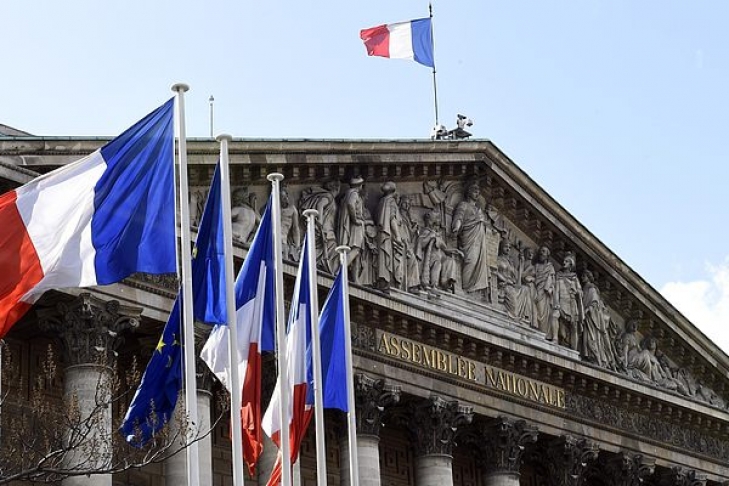
On 17 July, the French Ministry for Europe and Foreign Affairs summoned Russia’s chargé d’affaires over malicious cyber activities on French territory. Paris links this, in particular, to the FSB’s 16th Centre. The French side stated that these were unacceptable acts of espionage, which were also directed against the country’s European partners.
Briefly about the main points
- On 17 July, France summoned the Russian Federation’s chargé d’affaires.
- Paris links cyber espionage to the FSB’s 16th Centre.
- France has described Russia’s actions as unacceptable.
- The EU has imposed sanctions on nine individuals and four entities.
- The UK has aligned its own cyber sanctions with those of the European Union.
A diplomatic protest following the official attribution
At the French Ministry of Foreign Affairs, the Russian representative was received by the Director of the Department for Continental Europe. The aim of the meeting was to condemn «in the strongest possible terms» Russia’s malicious cyber activities in France, the Foreign Ministry stated.
An important clarification: it was not the ambassador who was summoned to the ministry, but the chargé d’affaires of the Russian embassy. France emphasised that the operations it links to Russia also affected a number of its European partners.
What operations does France link to the FSB?
On 13 July, Paris officially stated that the ongoing cyber-intelligence activities targeting France were linked to the FSB’s 16th Centre and Unit 61240, which, according to French assessments, specialises in French targets.
Among the incidents cited are attacks on the email accounts of the French Ministry of the Armed Forces since 2017, the compromise of the French Embassy’s network in Moscow in 2018, and unauthorised access to a server belonging to a judicial body in 2019. France also reported an attack in February 2025 on a research institute working on sensitive technologies for the French defence industry, and the theft of a significant amount of data.
Europe’s response to the Russian cyber ecosystem
On the same day, 13 July, the Council of the EU imposed restrictions against nine individuals and four entities linked to the Russian cyber ecosystem. These measures include the freezing of assets, a ban on EU citizens and companies providing funds or economic resources, and, for individuals, a ban on entry into and transit through the EU.
Brussels has stated that the FSB’s 16th Centre controls a number of cyber groups, including Turla. The EU statement also mentions cyber-espionage targets in Germany, Poland, Cyprus, the Netherlands, Austria, Slovakia, Romania and Finland.
A combination of diplomatic pressure and sanctions
The French Foreign Ministry described such actions as unacceptable and stated that, together with its partners, it would use all means available under international law to prevent, deter and respond to destabilising activities.
The diplomatic demarche in Paris was a continuation of the EU’s public attribution and sanctions response. The restrictions cover not only individuals and entities linked to the FSB, but also a wider network of Russian state and non-state cyber operators. The UK has aligned its own sanctions with those of the EU; the Council of the EU described this as the first simultaneous application of the respective EU and UK sanctions regimes.