The Guatemalan authorities have imposed a 30-day state of emergency in the eastern departments of Sacapú and Isabál following a wave of drug-related armed violence. President Bernardo Arévalo made the decision on 14 November 2026, and Government Decree No. 8-2026 was officially published on 15 November. The measures involve restrictions on freedom of movement and assembly, as well as an expansion of the powers of the police and the army. This was reported by the Guatemalan Ministry of the Interior, Reuters and the Associated Press.
- A 30-day state of emergency has been declared in the Guatemalan departments of Sacapa and Izabal due to a rise in drug-related violence.
- President Bernardo Arevalo’s decision was set out in Government Decree No. 8-2026, published on 15 November.
- The police and the military have been granted extended powers to make arrests, carry out searches without a warrant and restrict public gatherings.
- The imposition of a state of emergency was preceded by armed attacks, including the murder of MP Julio César Portillo and three police officers.
Why did Guatemala declare a state of emergency?
According to the Ministry of the Interior, special measures were introduced following a series of attacks on civilians, government officials and military personnel.
The government has stated that transnational criminal groups linked to illicit drug trafficking, pose a direct threat to public safety and the functioning of government bodies.
One of the most high-profile incidents was the attack on 6 November in the municipality of Río Onda, in the department of Sacapa. Armed assailants attacked a member of parliament Julio César Portillo and his security detail. The lawmaker and three police officers were killed.
According to Vatican News, on 13 November, in the La Mahada area, armed men in camouflage killed five civilians and wounded three others. On the same day, two men were shot dead in Puerto Barrios, the administrative centre of Isabela.
At present, the police have not established any publicly confirmed link between all these attacks.
What restrictions have been introduced in Sakapi and Isabali?
Government Decree No. 8-2026 grants the police and the armed forces additional powers to combat organised crime. In particular, law enforcement agencies may carry out searches without prior court authorisation, detain suspects and disperse unauthorised gatherings.
The document also allows for restrictions on vehicle traffic in certain areas and at specific times. These measures do not constitute a complete ban on movement for all residents.
The Ministry of the Interior has emphasised that the public may continue with their daily activities whilst complying with the temporary restrictions. The actions of the security forces must comply with the principles of necessity, proportionality and non-discrimination.
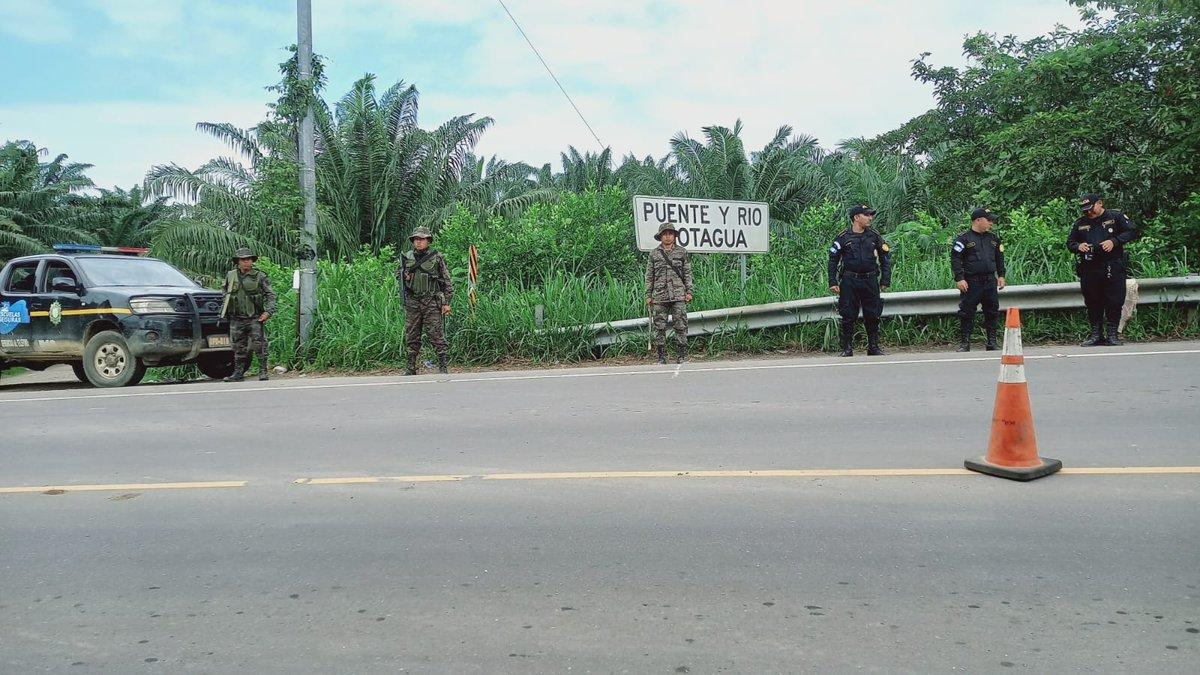
The army has been deployed to assist with the operations. According to Vatican News, around 400 soldiers have been sent to Sacapa and 600 to Isabalu. Patrols and checks are also being carried out in the neighbouring department of Chiquimula.
Which drug cartels are active in eastern Guatemala?
Departments Sakapa and Isabál are situated near the border with Honduras and are of strategic importance for illicit drug trafficking routes through Central America.
According to AFP, the Lorenzan family’s gang, which is linked to the Mexican Sinaloa cartel, is active in Sacap. In Isabela, the Mendoza family’s criminal network wields considerable influence.
In the run-up to Guatemala’s decision, the United States added these groups to its list of terrorist organisations due to their involvement in international drug trafficking.
At the same time, the police have not yet established who exactly organised the recent armed attacks. The presence of drug cartels in the region does not prove that they are responsible for every crime.
What the President of Guatemala said
President Bernardo Arevalo explained that emergency powers are necessary to carry out operations against organised crime groups and to restore state control over the affected areas.
According to the Associated Press, the head of state stated that the measures introduced are aimed at apprehending members of drug gangs and dismantling their criminal networks.
The authorities’ decision has also sparked debate regarding restrictions on civil liberties. A security expert Walter López In a comment to *El País*, he noted that temporary measures would not address the root causes of violence without lengthy criminal investigations.
As of 16 November 2026, special measures are in force in Sakapi and Isabali. These measures have been introduced for 30 days, and the police and military are conducting joint operations against criminal groups. The outcome of these measures and the possibility of further extending the restrictions will depend on the security situation.