Iran has threatened to damage key undersea internet cables in the Strait of Hormuz. This could disrupt up to 15% of global data traffic and affect the economies of three continents.
Strait of Hormuz: a critical point for the internet
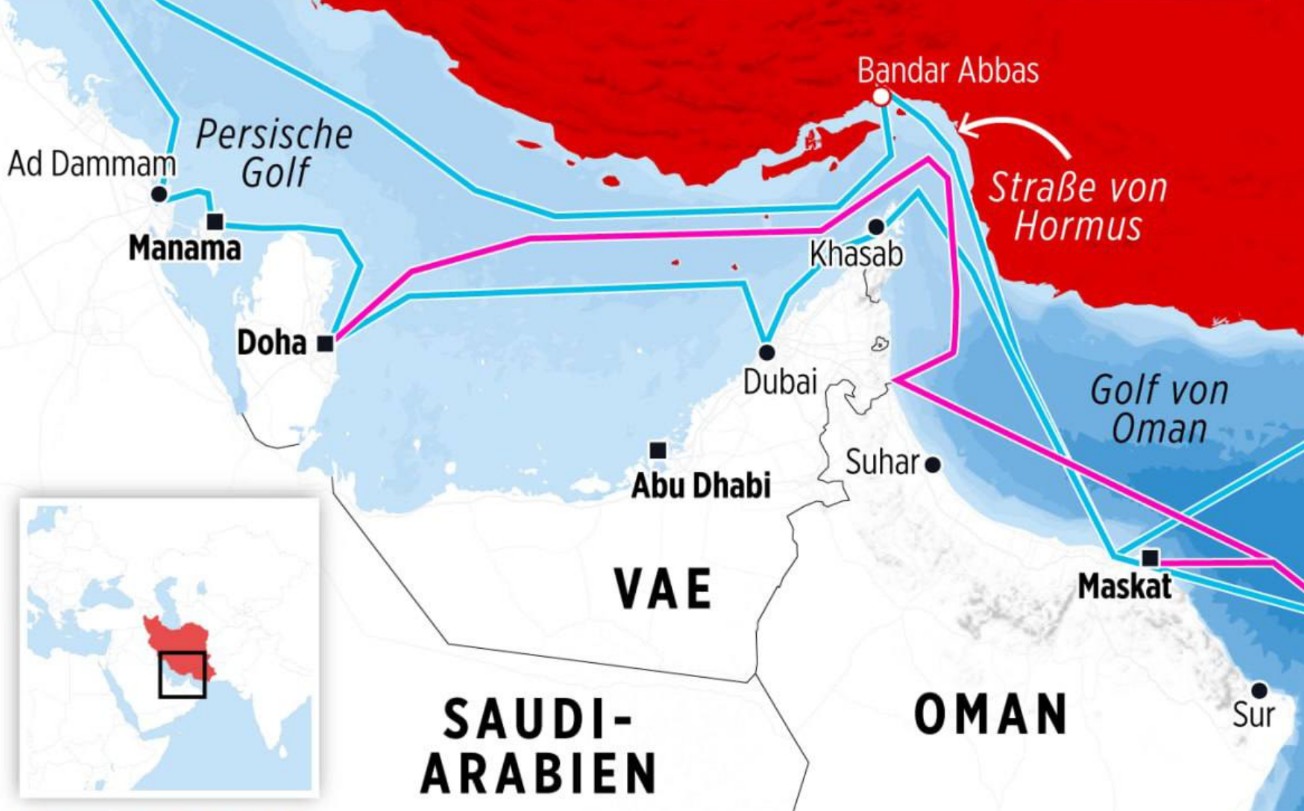
Seven major telecommunications cables run along the bottom of the Strait of Hormuz, which is currently blocked. They carry much of the world's internet traffic between Europe, Asia and Africa.
The Falcon, AAE-1, TGN-Gulf and SEA-ME-WE systems connect the Gulf countries with data centres around the world. Damage to these cables could lead to global data outages.
Economic implications for the region and the world
The Gulf countries, including the UAE, Qatar, Bahrain, Kuwait, Saudi Arabia and Iraq, are heavily dependent on these cables. Millions of financial and banking transactions are carried out through them every day.
A disruption in Internet connectivity could paralyse the operation of data centres for artificial intelligence in the Emirates and affect the global financial centre in Dubai.
Global vulnerability and Iran's position
Damage to the cables will affect not only neighbouring countries but also Europe, Africa and Asia. Up to 15% of global data traffic is at risk.
Iran could also suffer from a cable break, but the country is less dependent on this infrastructure, making it less vulnerable to the possible consequences.