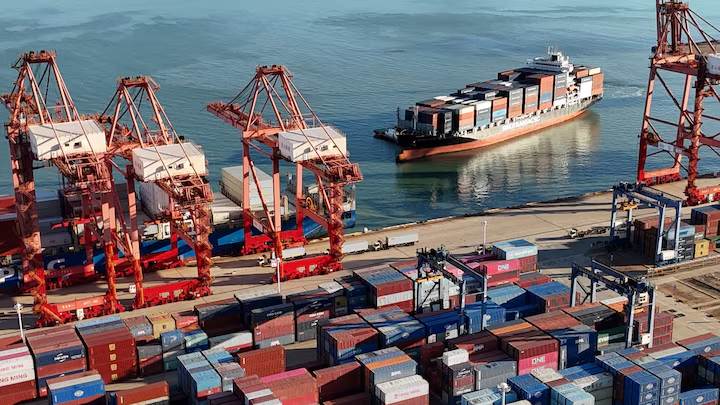
On 9 November 2026, China announced a two-month extension of the suspension of the additional 24 per cent tariff on imports from the US. The decision will come into force on 10 November and will help to maintain the trade truce between the world’s two largest economies. However, the 10 per cent additional duty will remain in force.
- China has extended the suspension of the additional 24 per cent tariff on goods from the US for a further two months.
- The additional 10 per cent tariff on US imports remains in force.
- The preferential scheme will come into effect on 10 November 2026.
- Beijing has extended the suspension of special port charges for US-linked vessels until 10 January 2027.
- The US and China are discussing a package of mutual tariff cuts worth $60 billion, but no final agreement has yet been reached.
Which trade restrictions has China continued to lift?
The State Council’s Customs Tariff Commission China She announced that the additional 24 per cent tariff on US imports would remain suspended for the next two months.
The decision will come into effect on 10 November at 13:01 Beijing time. At the same time, the additional 10 per cent tariff will continue to apply.
Beijing has also announced the extension of a number of other trade concessions until 10 January 2027. Specifically, these include:
-
the suspension of special port charges for vessels linked to the US;
-
the extension of export control exemptions relating to certain critical minerals and associated technologies;
-
the continuation of the suspension of restrictive measures against 11 US companies on the list of unreliable organisations and 16 companies on the export control list;
-
the suspension of the investigation into supply chain security in the shipping and shipbuilding industries.
In addition, Chinese Ministry of Commerce has extended the suspension of sanctions against five US-linked subsidiaries of the South Korean shipbuilding company Hanwha Ocean.
Beijing has therefore decided to uphold several agreements at once, thereby avoiding a further escalation in trade relations.
The US and China are discussing a $60 billion trade deal
The extension of the trade truce is linked to the agreements reached following the US President’s meeting in September Donald Trump and the President of the People's Republic of China Xi Jinping in Washington, DC.
According to Reuters, both sides have proposed a package of reciprocal tariff cuts totalling around $60 billion.
The proposal covers, in particular, US agricultural products worth approximately $17 billion — the exact amount that China imported from the US in 2024.
No final agreement has yet been reached on the package.
US Secretary of the Treasury Scott Bessent He had previously explained that a two-month extension of the truce would give Washington and Beijing extra time to explore opportunities for economic cooperation.
Next week Trump and Xi Jinping, ... are expected to meet again at the Asia-Pacific Economic Cooperation (APEC) summit in China. If the summit goes ahead, this will be their third meeting in 2026.
Does China’s decision mark the end of the trade war?
Despite the extension of the truce, trade disputes between Washington and Beijing remain unresolved.
The Chinese Customs Tariff Commission has taken note of the US side’s statements regarding its intention to replace the duties imposed under the International Emergency Economic Powers Act (IEEPA) with other tariff measures under Section 301 of US trade legislation.
Beijing has stated that it will closely monitor Washington’s next moves and, if necessary, adjust its own measures accordingly.
The Chinese authorities have explained that the extension of tariff concessions is intended to ensure more predictable operating conditions for businesses in both countries.
At the same time, the suspension of additional duties does not mean the complete removal of trade barriers. Some tariffs remain in place, and future decisions will depend on negotiations between the US and China.
As of 9 November 2026, China had officially extended the trade concessions until January 2027. A final agreement on the mutual reduction of tariffs remains under negotiation, and the meeting between Trump and Xi Jinping at the APEC summit could mark the next important stage.