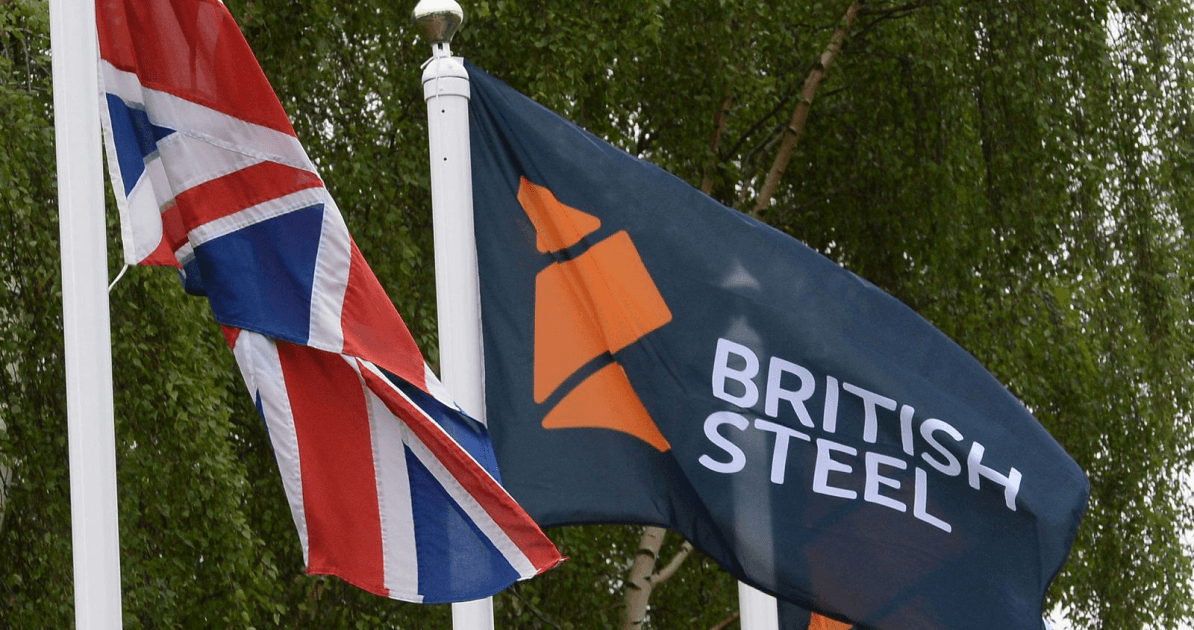
China has expressed its strong opposition to the British government’s decision to nationalise the loss-making British Steel. The Chinese Ministry of Commerce believes that the company’s transfer to state ownership infringes upon the legitimate rights of its Chinese owner, Jingye Group, and undermines Chinese businesses’ confidence in investing in the UK.
Briefly about the main points
- China has condemned the British government’s nationalisation of British Steel.
- Beijing has claimed that the rights of the company’s owner — Jingye Group — have been infringed.
- Jingye is seeking compensation for the transfer of the asset to state ownership.
- An independent valuer is to determine the potential amount of compensation this autumn.
- The British Government wants to keep the blast furnaces at Scunthorpe in operation.
Beijing cited the investment treaty
China’s Ministry of Commerce stated on Friday that London’s decision had «seriously infringed» upon the legitimate rights and interests of Jingye Group. The ministry also said that this move had significantly undermined the confidence of Chinese companies investing in United Kingdom.
The Chinese side has called on the UK to fulfil its obligations under the bilateral investment treaty between the two countries in good faith. This legally binding agreement was signed in 1986 to promote and protect mutual investment.
Beijing’s statement claims that the British side forcibly took control of the company, citing national security and failing to take into account Jingye’s contribution to the country’s economy and society. The Ministry said it would monitor developments and support Chinese companies in defending their rights.
How British Steel came under state control
On Wednesday, Parliament passed legislation allowing the government to nationalise the steel industry if it meets the public interest test. The following day, the government announced that the nationalisation of British Steel was intended to protect jobs and preserve a «vital national capability».
The British authorities took control of the company’s operations in Scanthorpe last year, but Jingye Group remained the owner. According to the BBC, this limited the government’s ability to determine the company’s future.
Jingye is seeking compensation. The company had previously reported that the business was losing 700,000 pounds sterling a day. Blair MacDougall, Minister for Small Businesses, told the House of Commons that an independent valuer would be appointed in the autumn to determine the appropriate compensation; this amount could be zero.
The government is keen to keep steel production going at Scanthorpe
Following its transfer to state ownership, the government gained the ability to determine the plant’s future independently and to maintain the operation of the blast furnaces. The company directly employs around 2,700 people in Scanthorpe and also supports thousands of jobs in its supply chains.
In March, the National Audit Office estimated the government’s expenditure on the plant at approximately 1.3 million pounds a day. The Business Secretary Peter Kyle told the BBC that the government would cover operating costs in the immediate future.
The UK imports most of its steel. The Scunthorpe plant produces grades of steel that are not yet manufactured elsewhere in the country; some of the output is used by Network Rail and the construction industry. The government’s long-term strategy envisages a transition of domestic production to electric arc furnaces; however, London does not wish to halt production at Scunthorpe until alternatives become available.
The decision could complicate relations between London and Beijing
The nationalisation of British Steel could heighten tensions in relations between London and Beijing. According to the BBC, this is happening on the eve of the entry into force Andy Bernama for the post of Prime Minister on Monday.
The new head of government will have to decide on an approach to the dispute with Jingye, whilst taking into account the economic benefits of ties with the world’s second-largest economy. China’s statement shifts the British Steel issue from a purely domestic matter of British industrial policy into the realm of bilateral investment relations.