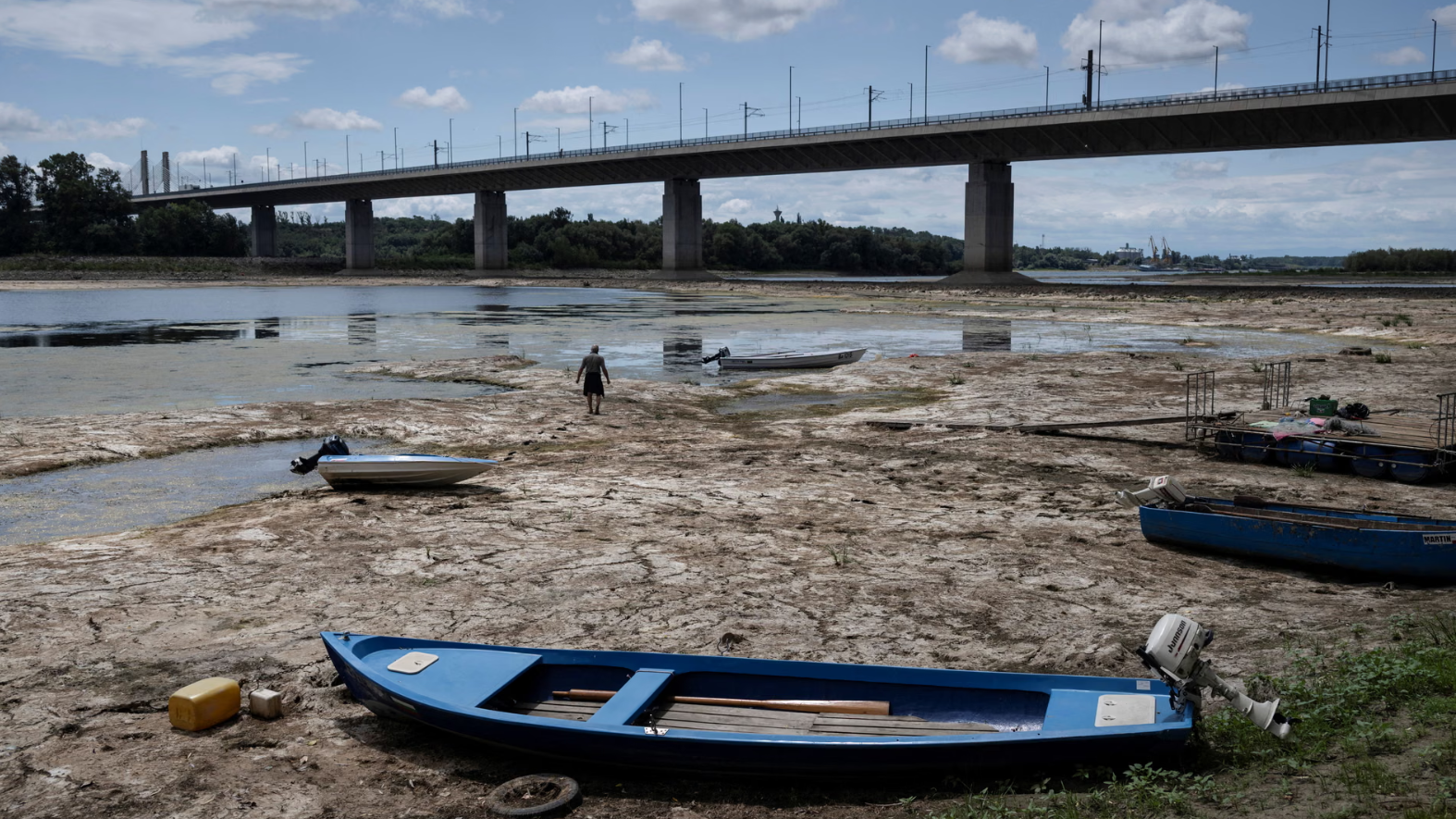
Extreme heat, exacerbated by the climate crisis, is rapidly evaporating water from Europe’s rivers, lakes, soils and plants, worsening the drought. An analysis by the World Weather Attribution consortium has found that human-induced climate change made the 2026 drought more severe in both the western and eastern parts of the continent.
Briefly about the main points
- The heat has caused a sharp increase in the evaporation of water from the soil and bodies of water.
- In Western Europe, the current drought is classified as extreme.
- Europe could lose around 9 million tonnes of grain.
- Low river levels are hampering hydropower generation and freight transport.
- Researchers are warning of an increased risk of further dry summers.
The drought has changed its pattern
Drought is traditionally associated, first and foremost, with a lack of rainfall. However, in Western Europe, the previous winter was wet, whilst high temperatures were the key factor during the summer. Hot air has a greater capacity to absorb moisture, and therefore dries out soil, vegetation, rivers, lakes and reservoirs more quickly.
According to the researchers’ estimates, conditions conducive to intense evaporation due to global warming have become 80 times more likely in Western Europe and 40 times more likely in Eastern Europe. Soil dryness linked to pollution from fossil fuels has become five times more likely in the west and 11 times more likely in the east.
The study covered the period from April to June in Western Europe, specifically England, France, Spain, Portugal and Italy. For the eastern part of the continent, where there had been a lack of rainfall throughout the year, the last 12 months were analysed across 15 countries — from Belgium to Estonia.
Water, crops and transport are already suffering losses
The effects of the drought are already being felt, although the WWA’s assessment was completed at the end of June. Many countries have introduced emergency restrictions on water use; a ban on the use of garden hoses is in force across most of southern England.
Farmers are working under some of the driest soil conditions ever recorded. Europe is expecting a loss of around 9 million tonnes of grain; France is forecasting its worst maize harvest in 50 years; and Romanian farmers have lost over a million hectares of crops.
Low river levels are reducing hydroelectric power generation and hampering the movement of cargo ships. The water level of the Rhine at Lobit in the Netherlands has fallen below the low recorded during the hot summer of 1976. This could put further pressure on food and energy prices, hitting low-income households the hardest.
An early start to the season increases the risk of fire
According to Dominik Schumacher, a researcher at ETH Zurich, the drought of 2026 arrived two months earlier than in 2022. He noted that abnormal soil drying is now noticeable as early as spring — even before the start of summer.
Conditions for forest fires have also become particularly dangerous in Western Europe this year. The shift from relatively wet weather to very dry conditions is fuelling the growth of vegetation, which may subsequently serve as fuel for the fires. Deadly fires have already swept through Spain and France.
The risk may increase as temperatures rise further
Mariam Zaharia, a researcher at Imperial College London, emphasised that the current circumstances arise because global warming by approximately 1.4°C. If emissions cause temperatures to rise to the projected 2.8°C, the likelihood of such intense evaporation could double.
This is not a forecast of a specific drought, but the analysis points to a clear link between human-induced climate change and the drying up of European summers. Simon Still, head of the UN’s climate programme, described the increase in droughts as a signal of the need to reduce the burning of coal, oil and gas more rapidly and to transition to renewable energy.