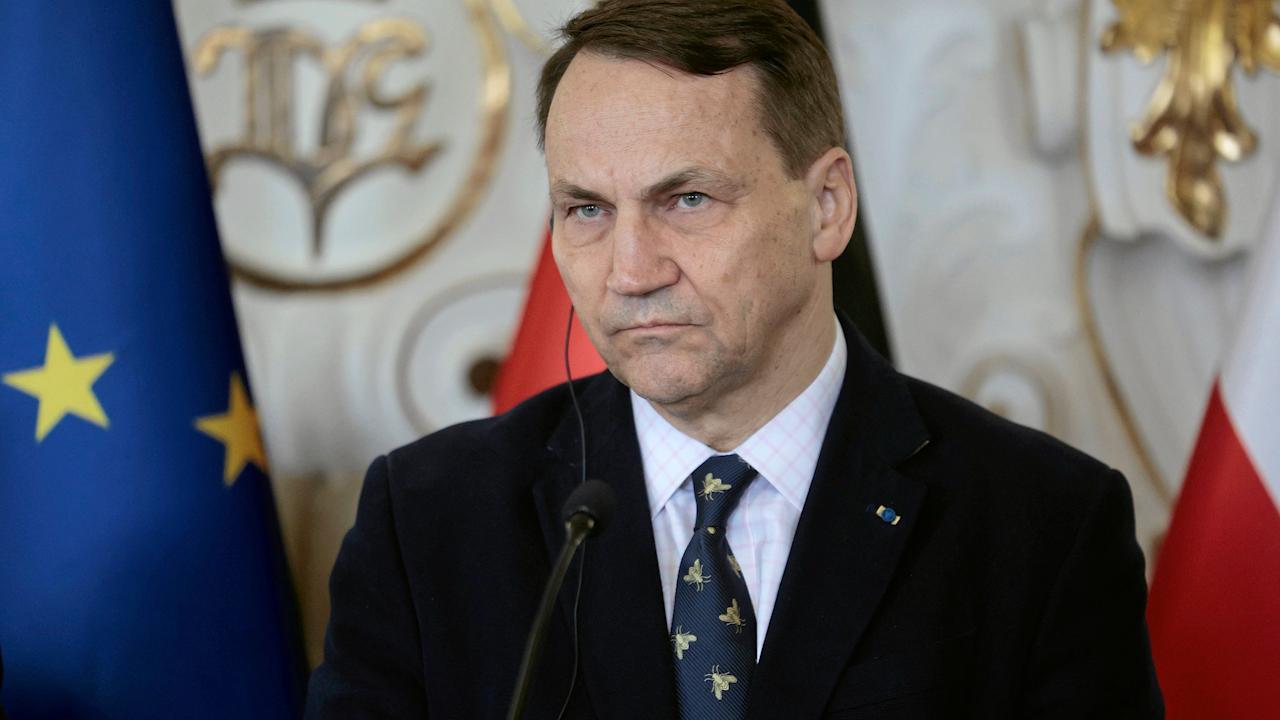
Poland’s Foreign Minister Radosław Sikorski stated in an interview with the Financial Times, as reported by «European Truth» and the Polish publication XYZ, that as the number of hybrid incidents – which he links to Russia – increases, so does the risk of casualties. In his view, NATO should discuss a political response to a possible fatal incident.
Briefly about the main points
- Sikorsky stated that the risk of casualties is increasing due to hybrid incidents.
- The minister did not specify what form NATO’s response should take.
- Poland and Estonia have previously invoked Article 4 of the NATO Treaty.
- Sikorsky also backed the restrictions on Russian diplomats and tourists.
Statement on a possible escalation threshold
Sikorsky said that the question of when Russia’s actions had «gone too far» was a matter of judgement and that there was no pre-determined criterion. According to a quote reported in the media, if people start dying, the allies will have to hold «another very serious discussion within NATO».
The minister did not disclose exactly what form the Alliance’s response might take. His comments relate to a hypothetical fatal incident, rather than a report of an attack that has already taken place with casualties or a new NATO decision.
What does Article 4 of the NATO Treaty provide for?
The Polish Foreign Minister pointed out that Poland and Estonia had already initiated consultations on Article 4 of the North Atlantic Treaty following violations of their airspace. NATO confirmed Poland’s request on 10 September 2025, whilst Estonia sought consultations following an incident on 19 September of that year.
Article 4 allows the Allies to hold consultations when a Member State considers its territorial integrity, political independence or security to be under threat. It does not provide for the automatic invocation of the collective defence mechanism under Article 5.
Diplomatic and visa restrictions
Separately, Sikorski called on European allies to limit Russia’s diplomatic presence and expressed his support for a reduction in the number of tourist visas for Russian citizens. In September, the EU’s foreign policy chief Kaya Kallas She also spoke of the possibility of tightening controls on the movements of Russian diplomats within the Schengen Area and reviewing visa restrictions.
On 12 October, the Council of the EU is due to discuss Russia’s war against Ukraine and the intensified hybrid campaign directed against the EU and its Member States. However, the agenda currently available does not contain any specific decision on a complete ban on Russian diplomats leaving the country of their accreditation.