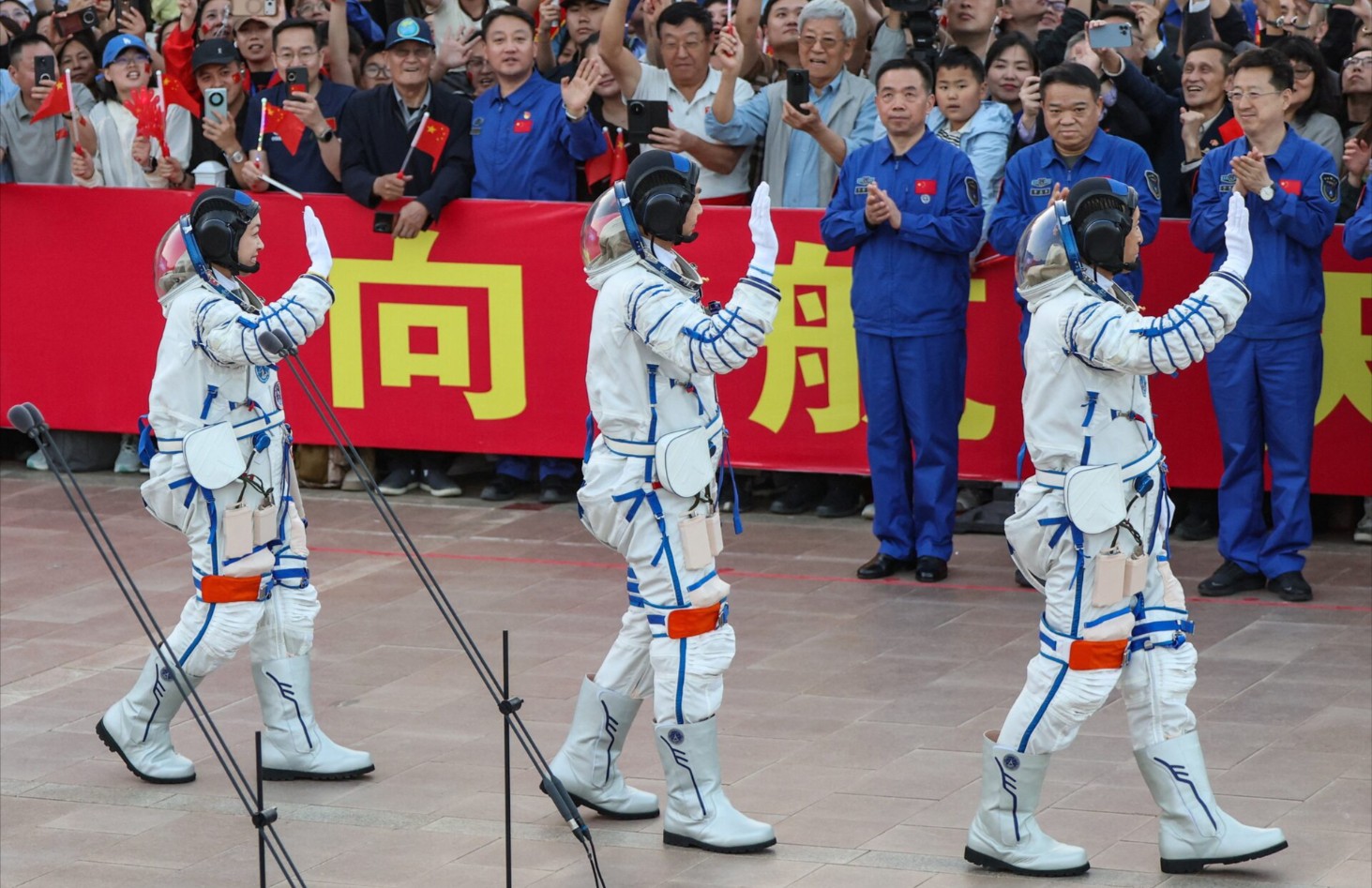
China has sent three astronauts to the Tiangong orbital station as part of the Shenzhou-23 mission. One of them will spend a whole year in space, which is a record for the country, preparing for an ambitious lunar landing in 2030.
Basic context
Spacecraft Shenzhou-23 was launched from the Jiuquan Cosmodrome on 24 May at 23:08 local time. There are three astronauts on board: commander Zhu Yanzhu, pilot Zhang Yuanzhi and a cargo specialist Li Jiaying - is the first astronaut from Hong Kong to participate in the Chinese space programme.
One of the three astronauts will spend a full year in space, which will be a record for China. This mission will allow us to study physiological changes in humans during prolonged spaceflight, which is an important step towards the planned lunar landing in 2030.
Technical features and scientific research
During the Shenzhou-23 mission, an autonomous quick docking with the Tiangong core module of the space station will be performed for the first time. This should prepare the technical basis for future lunar expeditions, including automatic docking between the Mengzhou capsule and the Lunar Module Lanyue.
The flight will also investigate the effects of space radiation, bone loss and psychological stress during prolonged weightlessness. The Chinese programme includes a unique experiment with artificial human embryos, samples of which were delivered to the station during the previous Shenzhou-22 mission. This experiment is intended to explore the possibility of long-term survival and reproduction of human cells in space.
The global context of space competitions
China is strengthening its position in the space race with the United States, which plans to land astronauts on the Moon in 2028. Beijing denies accusations of intentions to colonise and extract resources on the Moon.
In April, NASA made a historic flight around the Moon as part of the Artemis II mission, and SpaceX conducted a test launch of the Starship rocket for future flights and satellite launches. Chinese scientists and engineers are actively testing new Long March-10 rockets, Mengzhou spacecraft, and the Lanyue lunar lander to achieve the 2030 goal.
These events demonstrate the seriousness of China's approach to the exploration of the Moon, its desire for a long-term presence in space and the preparation of humanity for further interplanetary missions, in particular to Mars.