In recent weeks, the Russian Federation has changed its tactics for air strikes on Ukraine, shifting from massive air raids to combined attacks involving new drones.
- Russia is changing its tactics for drone attacks due to the effectiveness of Ukraine’s air defence.
- The speed of the new jet drones, which can reach up to 500 km/h, makes them difficult to intercept.
- Drones are now being used in frontline areas where air defence coverage is less dense.
- Large-scale attacks on Ukraine’s energy infrastructure are expected this autumn.
- Ukraine must scale up its use of the latest interception capabilities.
A change of tactics: Russia’s new approaches
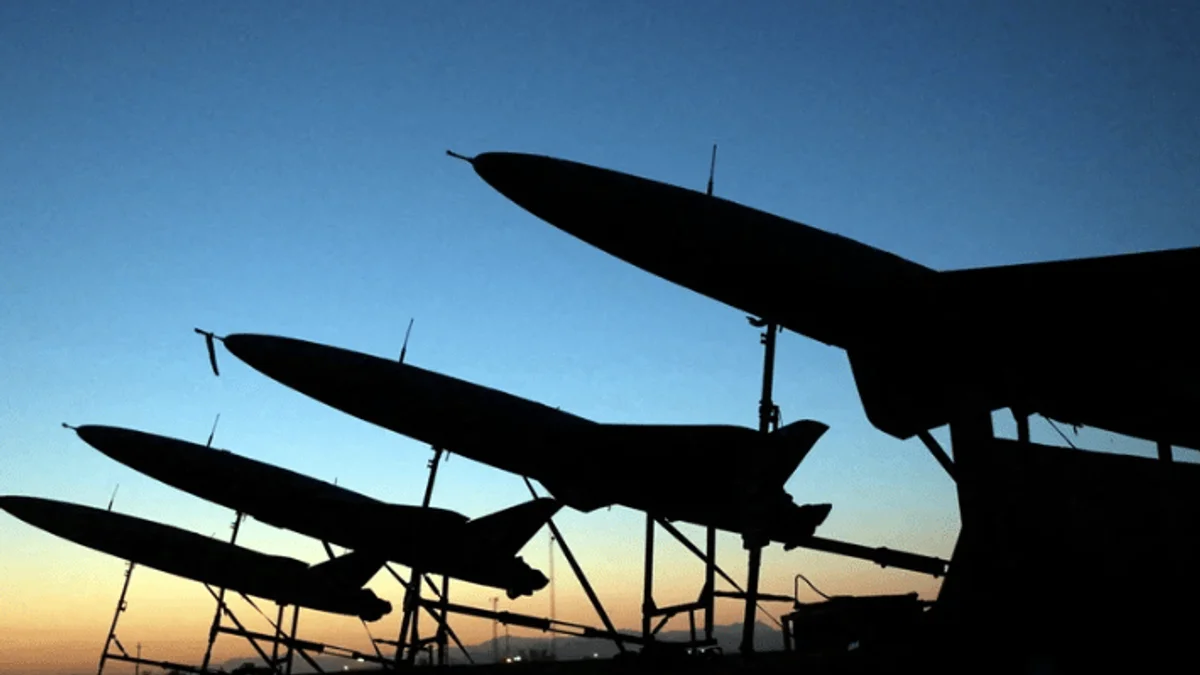
In recent weeks, the nature of the Russian Federation’s air strikes on Ukrainian cities has undergone significant changes. The classic, large-scale raids involving relatively slow, loitering munitions such as Shahed are giving way to more complex, combined attacks utilising high-speed and ballistic components.
Military analysts note that the enemy’s change in approach is a direct response to the adaptation of Ukraine’s air defence. The occupiers are forced to look for new loopholes as their previous tactics have become less effective.
The era of «cheap Shahids» is drawing to a close
The main driver of change was a sharp rise the effectiveness of Ukraine’s air defence and mobile fire teams. To date, the interception rate for standard Iranian kamikaze drones has approached the 90–95% mark. For the Russian command, launching dozens of «Shaheds» deep into the rear has become economically and strategically unviable — most of them are being shot down whilst still approaching key areas.
As a result, Russia has reoriented the operational theatre for these UAVs: shifting them towards the front line, where Ukrainian air defence is less dense and the response time of mobile units is minimal. The shift in focus in the deep rear has centred on combined strikes, in which drones play a diversionary role in conjunction with ballistic and cruise missiles.
The main threat: jet-powered drones
The most dangerous aspect of the Kremlin’s new tactics is the introduction into production and deployment of jet-powered drones. These aircraft are capable of reaching speeds of up to 500 km/h, which fundamentally changes the rules of the game on the battlefield.
High speed jet drones This makes them virtually invulnerable to standard mobile fire teams, which take down targets using machine guns or anti-aircraft systems such as the «Cheetah». Intercepting them requires either expensive anti-aircraft missiles or fundamentally new technical solutions, placing an additional strain on the budget and arsenal of the Ukrainian Air Force.
Challenges ahead of the autumn-winter campaign
It is clear that the enemy’s current experiments are in preparation for large-scale strikes against Ukraine’s energy and critical infrastructure during the autumn and winter months. To counter this new threat, Kyiv and its allies must take pre-emptive action. The key task for Ukraine in the coming months is to scale up the deployment of the latest interception capabilities. This involves the development and mass production of its own anti-aircraft FPV drones («interceptor drones») and electronic warfare systems capable of engaging high-speed aerial targets without using scarce and expensive missiles for the systems Patriot or NASAMS.