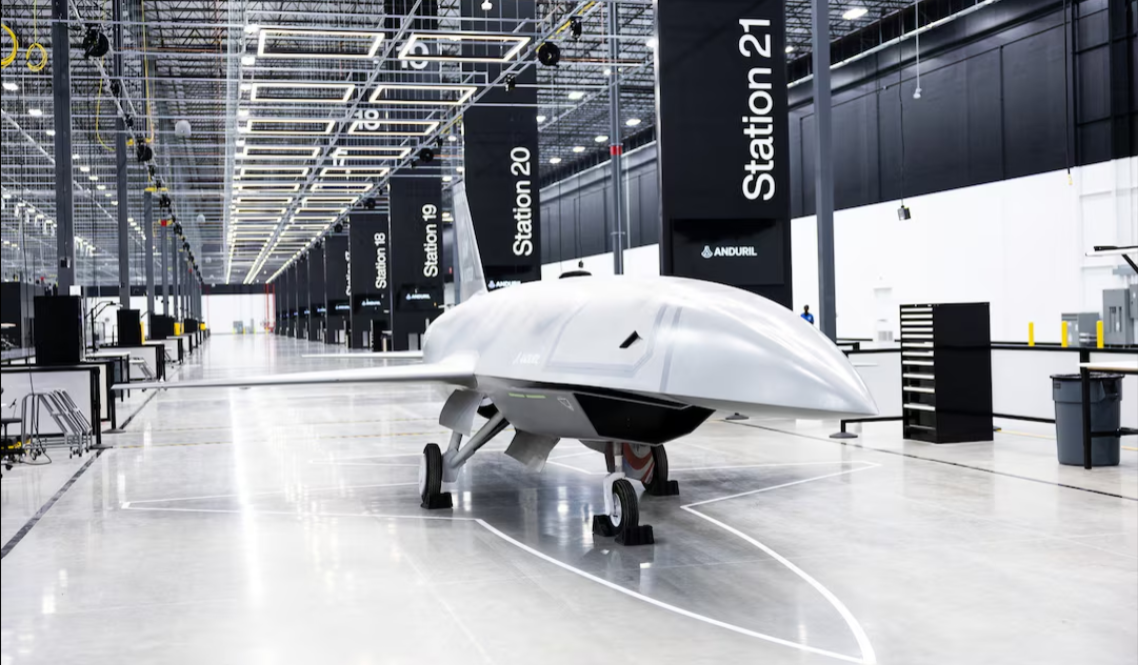
The Pentagon has awarded contracts to Anduril Industries and General Atomics for the production of the first semi-autonomous combat aircraft, which will operate in tandem with manned fighter jets. The Collaborative Combat Aircraft programme was launched over two years ago and is now moving from the prototype stage into full-scale production. Production is scheduled to reach over 150 units by the end of the decade, indicating that development is accelerating and that the aircraft are ready for combat deployment.
- The Pentagon has awarded contracts to Anduril and General Atomics for the production of combat drones.
- The Collaborative Combat Aircraft programme began over two years ago.
- There are plans to produce around 1,000 semi-autonomous aircraft by the end of 2030.
- Production will begin earlier than planned.
- The programme is supported by contracts for standalone software from six companies.
Manufacturing contracts for new US combat drones
Pentagon has officially signed contracts with General Atomics and Anduril Industries for the production of the first batch of semi-autonomous combat aircraft as part of the Collaborative Combat Aircraft (CCA) programme. General Atomics will be responsible for producing the FQ-42 model, whilst Anduril will be responsible for the FQ-44. The scope and value of the contracts have not been disclosed.
US Air Force Development Strategy
The CCA programme is a key element of the US Air Force’s strategy for integrating manned aircraft with autonomous systems. These drones are intended to enhance the capabilities of fighter aircraft in complex combat environments, increasing their range, situational awareness and survivability. The military plans to acquire around 1,000 such aircraft in the long term, encouraging competition among manufacturers to reduce costs and enhance combat capabilities.
Accelerated implementation and software
Pros. information According to Reuters, the contracts were signed ahead of schedule, confirming that both models are ready for mass production and combat operations. Alongside the hardware, the US Air Force has signed agreements for the development of autonomous control software with six companies, including Anduril, General Atomics, Lockheed Martin, Northrop Grumman, Collins Aerospace and Shield AI. This approach, whereby software is procured separately from the airframe, is a first for the US Department of Defence.
The impact on the future of combat aviation
This step reflects a paradigm shift in military aviation, where humans and machines work in close collaboration. The introduction of CCA could significantly enhance the effectiveness of air operations, reducing risks to pilots and expanding the range of combat missions. The US Air Force’s strategic objective is to secure a technological advantage in the face of growing competition and threats in the airspace.
Competition and technological development
The approach of separating the procurement of hardware and software stimulates innovation and enables faster adaptation to new challenges. Competition between leading aviation and technology companies will ensure optimal solutions and reduce costs. This lays the foundation for the further development of semi-autonomous systems in the US military aviation sector and their potential impact on the global military balance.