A statement by Yaroslav Filimonov, CEO of Kvertus, regarding the possibility of intercepting ballistic missiles using electronic warfare (EW) systems has sparked a wave of debate. Let’s examine how this works from the perspective of physics and the technical characteristics of electronic warfare systems.
Technical description and operating principles
A ballistic missile (such as the «Iskander-M») employs sophisticated guidance systems during the terminal phase of its flight path. When we talk about «deflection» using electronic warfare, we are referring to the effect on trajectory correction systems.
Principles governing the operation of electronic warfare systems against targets of this class:
-
Satellite navigation (GNSS): Ballistic missiles use an inertial navigation system (INS), which is fine-tuned in the final stages using GPS/GLONASS/BeiDou data to achieve an accuracy of within a few metres. REB generates powerful «white noise» or simulated interference (spoofing) at the frequencies of navigation signals. The missile «loses» its reference point and reverts to using only its inertial navigation system, which is prone to accumulating error.
-
Radio-command control: Certain types of missiles receive correction signals from command centres. Powerful broadband jamming blocks this communication channel.
-
Active radar homing heads (GSN): If a missile uses a radar seeker for final target acquisition, electronic warfare (EW) can employ the principle of creating false targets or masking the real target (by «burning out» the missile’s radar receiver with a powerful pulse).
Characteristics of effective electronic warfare systems
To engage targets moving at hypersonic speeds (ballistics), an electronic warfare system must have the following parameters:
-
Frequency range: A wide range (from the L-band for navigation to millimetre waves for radar).
-
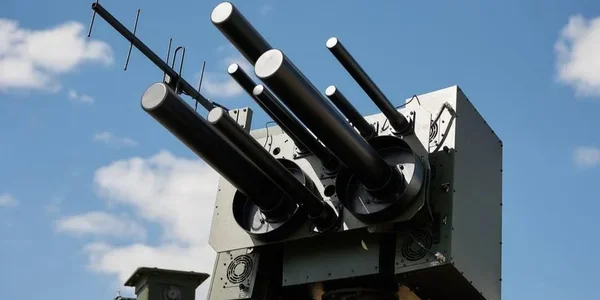
Response time (Latency): The system must automatically recognise the type of radiation (signature) emitted by the missile and instantly activate the directed beam.
-
Radiation power: Units and tens of kilowatts, which requires a significant power supply.
-
Digital Signal Processing (DRFM): A technique for storing and repeating radio signals to create complex jamming.
Is it effective? Technical limitations
Will this be a «panacea»? Experts point to several «bottlenecks»:
-
Inertiality: A ballistic missile is not a drone. Even if it completely loses its GPS signal, it continues to fly using its inertial navigation system. If electronic countermeasures are activated too late (a few seconds before impact), the missile will hit the target with a slight deviation, which may not be critical.
-
Missile protection: Modern Russian missiles are equipped with anti-jamming systems (zero-range antennas, spoofing-resistant algorithms).
-
Energy: The power of an electronic warfare signal decreases in inverse proportion to the square of the distance. To «blind» a missile flying at an altitude of 20–40 km, systems with extremely narrow-beam antennas and high power are required.
Conclusion.
The use of electronic warfare against ballistic missiles — this isn’t about «destruction» by explosion, but about «guidance error». If, as a result of electronic warfare, the missile is diverted by 50–100 metres from a key target, this can be regarded as a successful mission.
This technology significantly enhances the resilience of infrastructure by working in synergy with air defence systems such as Patriot or SAMP/T. Electronic warfare creates an additional layer of defence, forcing enemy high-precision weapons to lose their key advantage — accuracy.