The Royal Netherlands Navy is conducting a five-week trial of unmanned systems off the country’s northern coast. Defender boats, Noa drones and an underwater vehicle for mine mapping are being tested from the GeoSea vessel. The navy plans for manned platforms to operate alongside autonomous systems in around ten years’ time.
Briefly about the main points
- Five-week trials of unmanned systems are underway near Den Helder.
- Defender boats patrol without anyone on board.
- On the GeoSea vessel, drones, boats and an underwater vehicle are being tested as part of an integrated system.
- The navy emphasises that the decision to use weapons will be made by a person.
- The Netherlands’ budget provides for the wider use of unmanned systems over the next five years.
How the testing system works
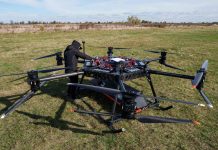
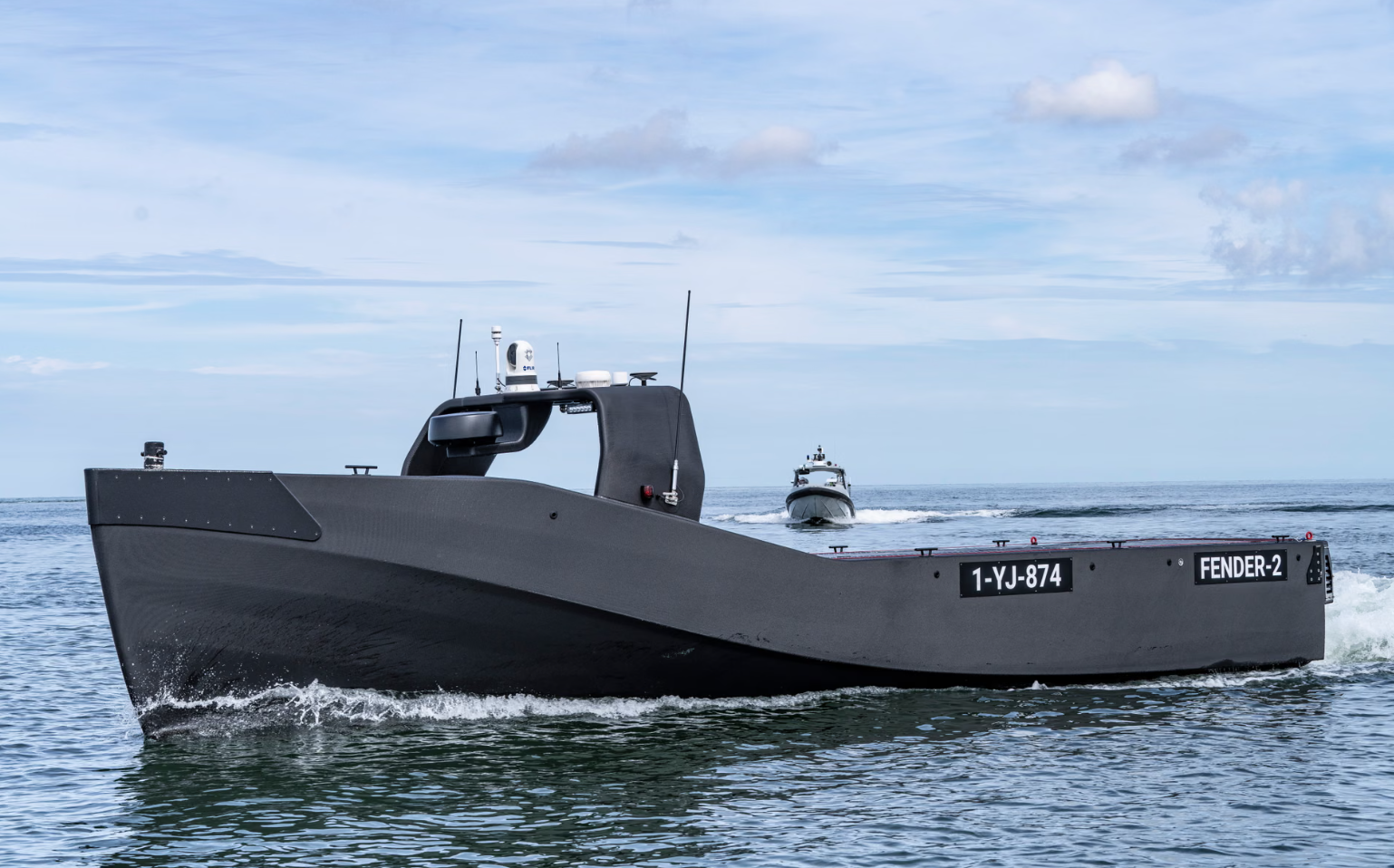
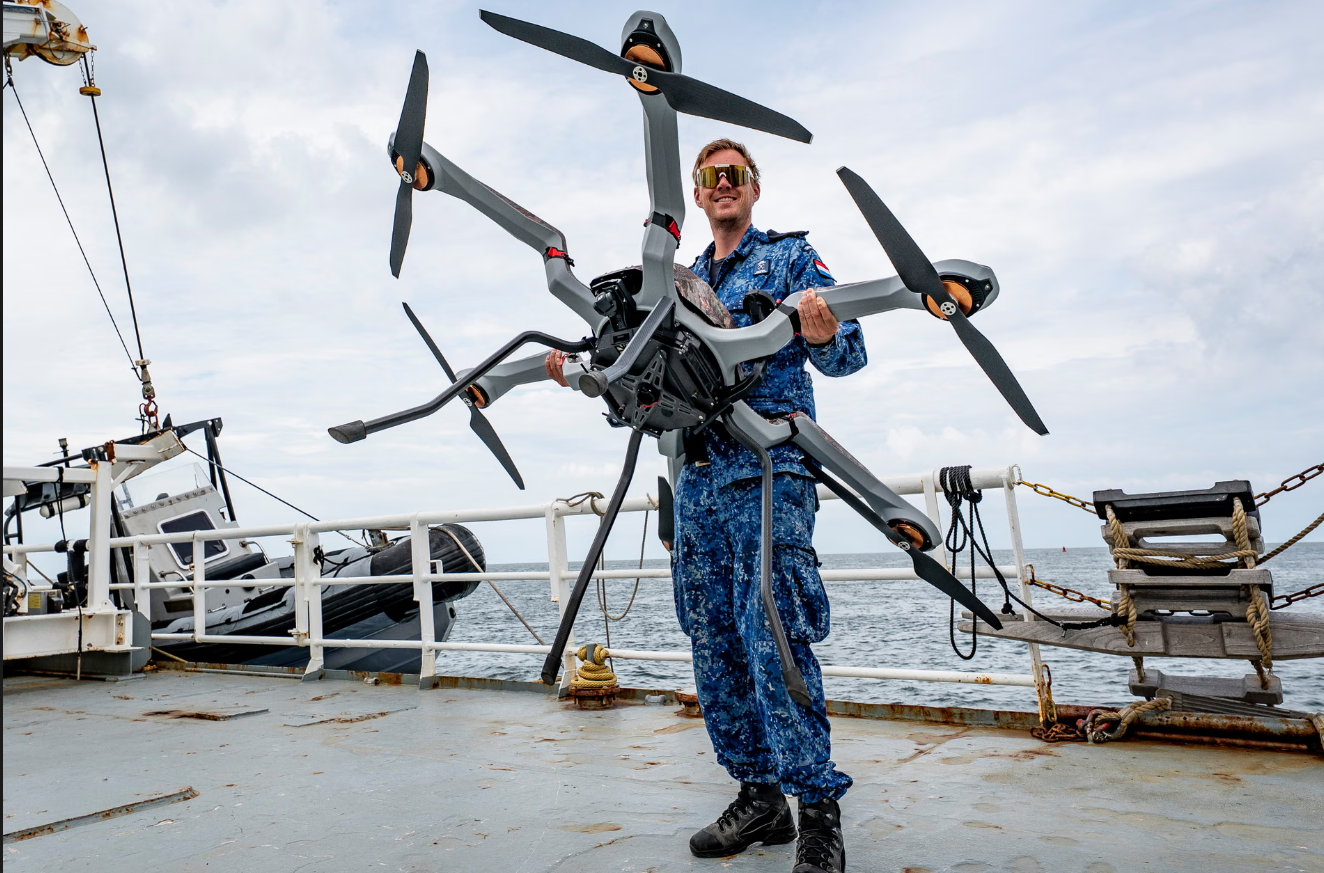
As part of the trials, the unmanned Defender 1 and Defender 2 boats can monitor a specific vessel. Their routes are determined by a computer system, and there are no people on board. At the same time, two Noa drones with carbon-fibre bodies and another aircraft flying at a higher altitude can be deployed for surveillance.
The GeoSea vessel, which was previously used to monitor the seabed around offshore wind farms, has become the test centre. It now serves as a base for drones, boats and a Lobster Robotics underwater vehicle designed to map mines.
The concept envisages a «system of systems»: new models of equipment can be replaced as and when necessary technological development. Head of the Expert Centre for Unmanned Systems, Captain Sjord Fenestra says that the fleet has been reorganising its operations for a year and a half now.
People must remain part of the decision-making process
The navy acknowledges the technical risks. Head of Software Integration Ferdinand Peters He pointed out that artificial intelligence can produce incorrect results, so the system should be used as a tool rather than being allowed to think in place of a human.
According to Fenster, the machine will not make the decision to open fire: a human will always be part of the decision-making process. He also drew attention to the issue of liability that arises as automation increases.
In the Netherlands, the Goalkeeper air defence system, which is capable of operating autonomously, has been in service for over 40 years. At the same time, the navy recognises that errors are possible even when people are planning an operation or gathering data.
A focus on autonomy and new specialisms
Unmanned systems should take on as many tasks as possible so as not to put people at risk, explains Fenestra. He also described some of these tasks as too monotonous for crews, whilst the demands in terms of the volume of information, speed and capabilities are increasing.
The Netherlands’ defence budget stipulates that, over the next five years, unmanned systems will carry out more than half of the work. An analyst Lee Willett considers that the Netherlands could serve as a model for other states cooperating on security matters in the North Sea and the Baltic Sea.
Senior Research Fellow at the Royal United Services Institute for Defence Studies Siddharth Kaushal points out that such platforms do not eliminate the need for personnel: instead, the demand for engineers is growing. They can reduce the length of time people spend at sea and alter the balance between different specialisms within the fleet.