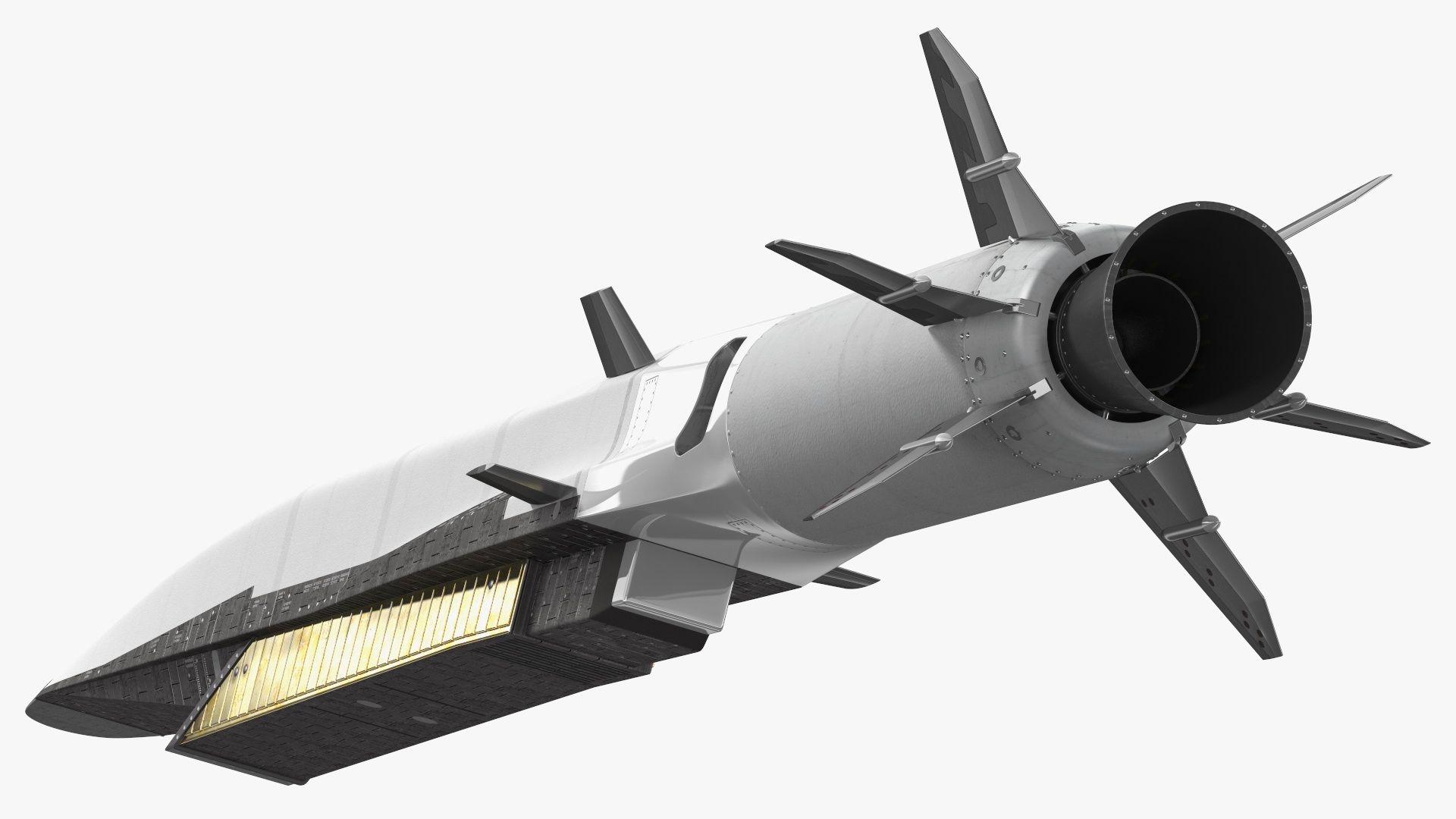
Russia developed the 3M22 «Zircon» as a hypersonic anti-ship missile designed to penetrate the robust defences of aircraft carrier strike groups. However, the weapon, which had been heavily publicised by the Kremlin, was not first tested against NATO navies, but against Ukrainian cities. The «Zircon» combines high speed, a complex flight path and a heavy warhead. From the moment a launch is detected to a potential strike, there may be only a matter of minutes. It is precisely this lack of time, rather than propaganda claims of «invisibility», that makes this missile particularly dangerous.
Briefly about the main points
- The 3M22 «Zircon» was developed as a hypersonic anti-ship missile.
- Russia claims a speed of up to Mach 9 and a range of over 1,000 km.
- The missile’s actual performance may fall short of Russian claims.
- The first confirmed use in Kyiv took place on 7 February 2024.
- Ukrainian Patriot systems have already intercepted missiles of this type.
- Russia is deploying «Zircons» as part of combined, large-scale attacks.
What is the «Zircon» missile?»
3M22 «Zircon» — a Russian missile originally designed to engage large surface vessels. It was intended to be launched from frigates, nuclear submarines and other platforms equipped with multi-purpose launchers.
During the war against Ukraine, Russia adapted this weapon for strikes against ground targets. A modified ground-based launcher, based on the «Bastion» coastal defence system, is being used for launches against Ukraine.
Most of the missile’s precise specifications are classified. The known characteristics are derived mainly from statements by the Russian authorities, so they should not be regarded as independently verified figures.
| Parameter. | Known and reported data |
|---|---|
| Index | 3M22 |
| Type | Hypersonic anti-ship cruise missile |
| Stated speed | Up to 8–9 strokes |
| Claimed range | Over 1,000 km |
| Cruising altitude | Approximately 30–40 km |
| Combat unit | Approximately 300–400 kg |
| Length | Approximately 8–10 metres |
| Main media | Ships, submarines and, presumably, land-based installations |
In 2019, he publicly attributed a speed of around 9 Mach and a range of over a thousand kilometres to the missile Vladimir Putin. These are figures claimed by the Kremlin, not the results of independent tests.
How the «Zircon» flies and why it is difficult to intercept
According to a widely accepted assessment, the rocket has two main stages. A solid-fuelled booster provides the initial acceleration and altitude gain, after which a direct-flow air-breathing jet engine is intended to fire.
For most of its flight path, the «Zircon» travels at a considerable altitude. As it approaches its target, the missile descends, manoeuvres and transitions onto its strike trajectory. This flight profile makes early detection and the calculation of the interception point more difficult.
The main hazardous characteristics of «Zircon»:
- a very short time between the detection of a threat and the strike;
- the ability to change course;
- high kinetic energy at the moment of collision;
- heavy combat unit;
- for use alongside ballistic missiles, drones and decoys.
Even if the warhead does not detonate, fragments of the missile and the interceptor travelling at high speed can cause damage to buildings, cars and infrastructure.
The 9 manoeuvres specified are not maintained throughout the entire flight
Russian propaganda describes the «Zircon» as a virtually invulnerable weapon. However, an analysis of the debris found in Ukraine and the flight paths has revealed a much more complex picture.
Experts from the Kyiv Scientific Research Institute of Forensic Expertise reported that, during the final stage of its flight, the missile under investigation was travelling significantly slower than the 8–9 Maches claimed by Russia. Representatives of the Air Force also explained that the Zircon’s speed decreases as it approaches its target.
This is important for air defence: the missile remains extremely fast, but as it descends, there is a brief window during which a modern air defence system can intercept it.
The claim that the plasma formed around a missile automatically renders it invisible to all radar systems is also an exaggeration. Hypersonic flight does indeed create challenging physical conditions for communication, guidance and detection, but it does not render the missile a completely invisible target.
When Russia first struck Ukraine with a «Zircon» missile
The first confirmed use of the 3M22 missile took place during the attack on Kyiv on 7 February 2024. Experts identified the characteristic markings 3L22 and 3V22 on the debris found, which correspond to components of the 3M22 missile.
The Kyiv Research Institute of Forensic Science identified the missile based on its markings, design features and the characteristics of its components. It struck an area where there were no military installations, damaging civilian infrastructure. The findings of the investigation were subsequently published by ArmyInform.
In March 2024, Ukrainian air defence forces intercepted two more missiles over Kyiv. Debris fell in the Pechersk district, causing damage to buildings.
In 2026, Russia began to use this weapon on a much larger scale. According to according to official figures from the Ukrainian Ministry of Defence, on the night of 2 June, the Russian Federation launched eight «Zircons», and during the attack on 15 June — a further six.
On the night of 1 August, monitoring sources again reported the possible use of «Zircons» during a massive attack on Kyiv. The Air Force is to determine the final number and types of missiles following an analysis of the trajectories and debris.
Can the Patriot shoot down a «Zircon»?»
Yes, perhaps. The Russian myth about the missile’s absolute invulnerability has already been disproved by combat experience.
To intercept such targets, missile defence systems equipped with suitable radars and high-speed missiles are required. First and foremost, this refers to the Patriot system with its interceptors PAC-3 CRI and PAC-3 MSE.
Unlike missiles with a conventional fragmentation warhead, the PAC-3 destroys the target through a direct kinetic impact. The interceptor must physically collide with the enemy missile at extremely high speed.
The Ukrainian Ministry of Defence has officially stated that the Patriot system has already shot down «Zircon» missiles. PAC-3 MSE missiles are capable of engaging complex ballistic and hypersonic targets; however, the number of such interceptors and the systems themselves is limited.
The problem lies not only in the speed of an individual «Zircon». Russia launches it alongside dozens of other missiles and hundreds of drones, in an attempt to overwhelm detection, tracking and interception systems all at once.
Foreign components inside a Russian missile
Despite the Kremlin’s claims that the 3M22 was developed entirely in Russia, components of foreign origin have been found in its electronic systems.
The War & Sanctions database maintained by Ukraine’s Main Intelligence Directorate lists American microelectronics, including amplifiers and programmable microchips, amongst the components of the «Zircon». The fact that such components end up in Russia does not necessarily mean they are supplied directly by the manufacturers: they may be procured via intermediaries, third countries and complex re-export chains.
This makes monitoring the circumvention of sanctions one of the ways of restricting Russian production of high-precision weapons.
«Zircon» is not a wonder weapon, but the threat remains high
Actual combat use has shattered the image of the «Zircon» as a guaranteed invulnerable missile. It can be detected and intercepted, and the performance figures claimed by Russia are not always corroborated by analysis of the debris.
At the same time, it would be dangerous to underestimate the 3M22. Its high speed leaves civilians and air defence systems with very little time to react; its heavy warhead is capable of causing widespread destruction; and its use in combined attacks increases the risk of a breach in the defences.
If a ballistic or high-speed missile threat is reported, you must take cover immediately. In the case of the «Zircon», there may not be enough time between the warning and a potential strike to find a safe place after the first explosions.