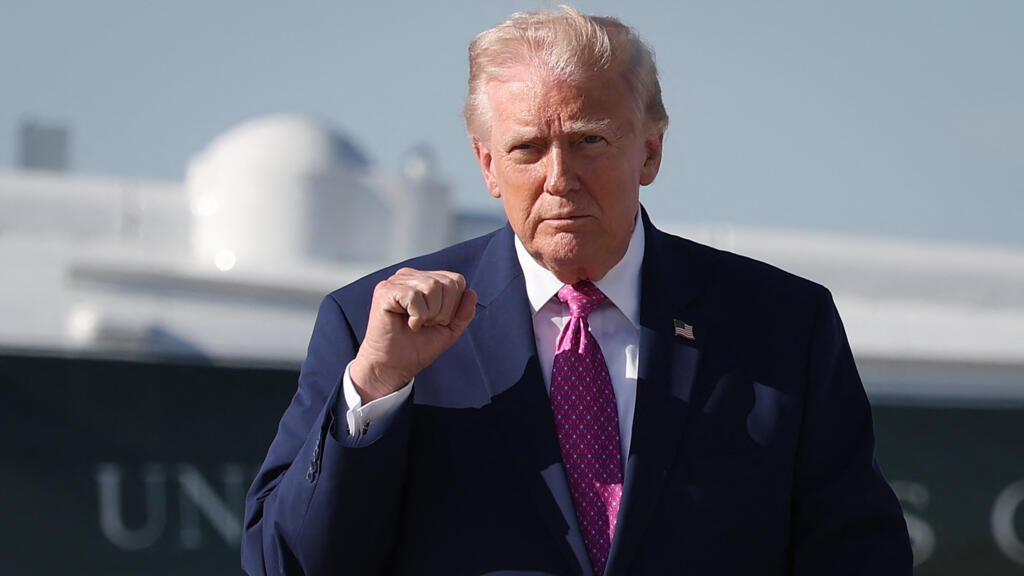
US President Donald Trump has stated that he will not launch a new strike against Iran for the time being. Washington is hoping for a swift agreement that will ensure the full reopening of the Strait of Hormuz and halt the development of Iran’s nuclear programme.
Briefly about the main points
- Donald Trump has postponed a new US strike on Iran.
- The decision depends on reaching an agreement with Tehran as soon as possible.
- The US is demanding that the Strait of Hormuz be fully reopened.
- The agreement is also intended to curb Iran’s nuclear programme.
- Tehran has threatened a decisive response to any further attacks.
- Kuwait has reported the destruction of Iranian attack drones.
The US is expecting a swift agreement
According to Trump, Iran and other Middle Eastern states have asked for time to finalise the negotiations. The future agreement is to provide for the immediate and full resumption of shipping through Strait of Hormuz, as well as the elimination of the nuclear threat posed by Tehran.
The US President stated that he had agreed to call off the planned attack on condition that an agreement was reached swiftly. Trump also wrote that Israel supports this decision, although the Israeli authorities have not yet commented on it publicly.
The US side is represented in the negotiations by a special representative Steve Witkoff, Secretary of State Marco Rubio and the President’s son-in-law Jared Kushner. At the same time, Trump stated that he has less and less trust in Tehran due to previous breaches of the agreements.
Iran has threatened a proportionate response
Minister of Foreign Affairs of Iran Abbas Araghchi During telephone talks with representatives from Turkey, Pakistan and Saudi Arabia, he warned of the consequences of any new US or Israeli strikes.
According to Araghchi, Tehran will respond decisively to any aggression. He also stated that the involvement of other states in the region in US or Israeli operations would result in a «proportionate response».
The Saudi Crown Prince Mohammed bin Salman held talks with Trump. According to an American official, he expressed concern and asked for clarification on Washington’s future plans regarding Iran.
Nournews, a publication linked to Iranian organisations, has warned that attacks on Iran’s energy infrastructure could lead to strikes on oil and gas facilities in Saudi Arabia, the United Arab Emirates, Qatar and Israel.
Kuwait has reported an attack by Iranian drones
The Kuwaiti army has announced that it has destroyed enemy drones launched by Iran towards several strategic sites in the country.
A government facility in northern Kuwait and the company’s civilian property on Bubiyan Island have been damaged. According to the Kuwaiti military, the damage was caused by debris from drones. There were no fatalities or injuries.
A further cause for concern is the activity of the Yemeni Houthis, who are threatening shipping in the Bab el-Mandeb Strait. This route is situated at the opposite end of the Red Sea from the Suez Canal and is of vital importance for oil exports.
The Strait of Hormuz remains the key issue
Most shipping companies are avoiding the Strait of Hormuz due to the threat of Iranian attacks. This route is one of the key corridors for the supply of oil and gas to the world market, so its de facto blockade has already had an impact on the global economy.
In July, benchmark Brent crude oil futures rose by 24%. Analysts polled by Reuters expect a further price increase throughout the year.
The British Maritime Trade Operations Centre has also received reports of two incidents off the coast of Oman. In one case, an unidentified projectile struck a tanker and damaged the engine room. The crew of the other vessel saw an explosion alongside the ship, but the tanker itself was not damaged.
The success of the talks will now depend on whether the parties can quickly agree on the terms for reopening the Strait of Hormuz and the mechanism for monitoring Iran’s nuclear programme. Should diplomacy fail, Trump may revert to plans for a new military strike.