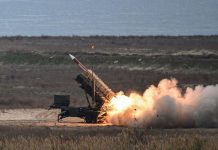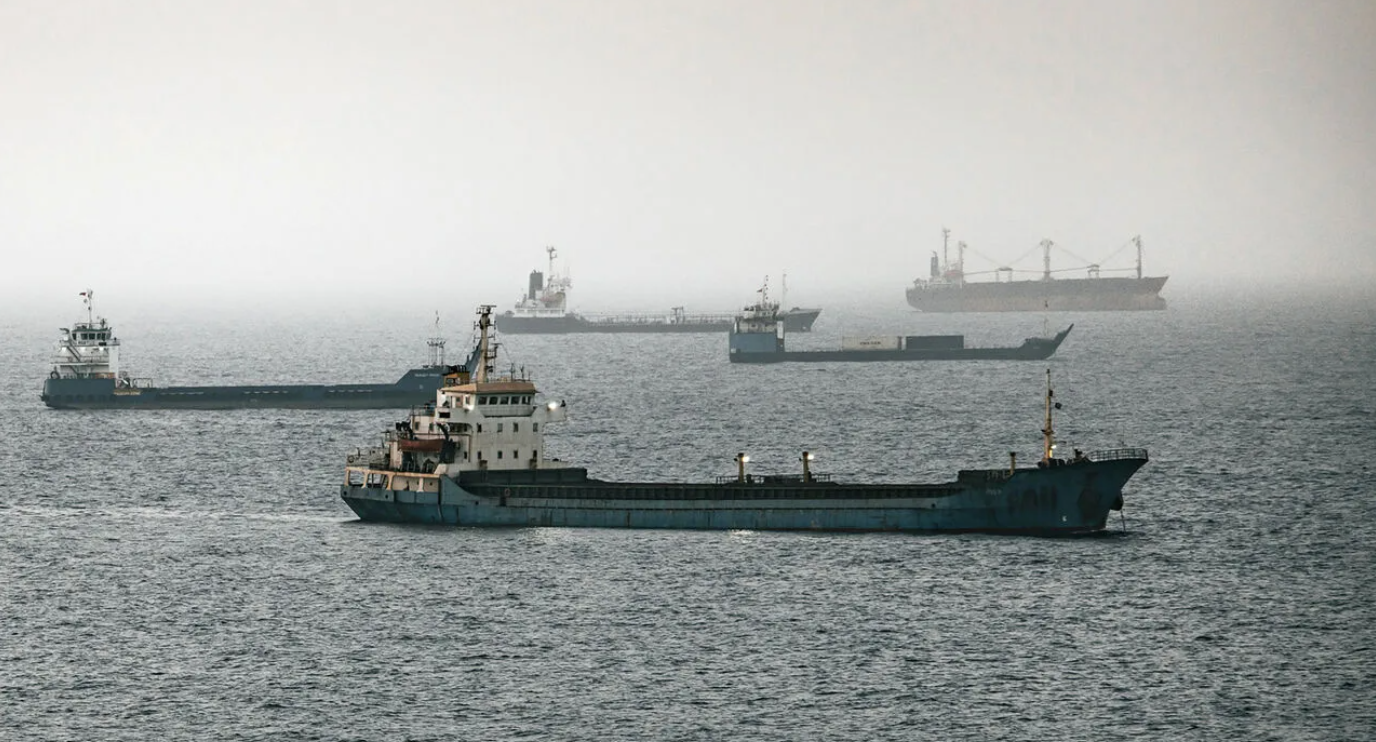
The oil market has once again come under pressure following attacks on tankers in the Strait of Hormuz, US strikes against Iran and the Houthis’ announcement of a blockade of Saudi ports in the Red Sea. On 23 July, Brent reached $102 per barrel, and on 27 July it was trading at around $92 — approximately 30% higher than at the start of the month.
Briefly about the main points
- Oil flows through the Strait of Hormuz have fallen from over 8 million to less than 2 million barrels per day.
- After peaking at $102, Brent fell to $92, but remains significantly higher than at the start of July.
- The Houthis have announced a blockade of Saudi ports in the Red Sea.
- Loading operations at the CPC terminal in the Black Sea have been suspended following drone attacks.
- Insurance for tankers in a conflict zone can amount to 12% of the vessel’s value.
The ceasefire has not restored traffic through the Strait of Hormuz
In June, the US reached an agreement with Iran to waive sanctions on its oil exports in exchange for security the passage of ships through the Strait of Hormuz. When the tankers rushed to leave the Persian Gulf, a temporary surplus emerged on the market: Brent futures fell to a pre-war level of $72 per barrel.
The current escalation has undermined this effect. Iran regarded the escorting of tankers by US ships along the coast of Oman — a waterway over which Tehran has no control — as a breach of the agreements. Following this, several tankers were attacked, as were vessels transporting oil between ports in Oman and the UAE, and ships waiting outside the strait.
At the start of July, more than 8 million barrels per day were passing through the Strait of Hormuz; now, the figure is less than 2 million. Oil is building up within the Persian Gulf, whilst supply outside the Gulf is shrinking. Asian refiners, who have purchased cargoes from the Gulf for the second half of the summer, fear significant delays or disruptions to supplies. In mid-July, the Emirati national oil company allocated just 8 million barrels to buyers in South Korea, Taiwan and Japan — compared with 20 million in a single tender in June.
The blockade in the Red Sea is narrowing the alternative route
Another restriction was the statement by the Iranian-backed Houthis regarding the blockade of Saudi ports in the Red Sea. The group described this as a response to Saudi Arabia’s blockade of ports under its control and to strikes on the airport in the Yemeni capital, Sana’a. The Houthis also claimed to have carried out drone and missile attacks on Saudi oil facilities; Saudi Arabia has not commented on these claims.
It was this route that served as a vital alternative supply route. From April, Saudi Arabia had been channelling an additional 2.5–3.5 million barrels per day via a pipeline to Yanbu on the Red Sea, and from there on to Asia via the Bab el-Mandeb Strait. Japan and South Korea have become particularly reliant on these supplies.
It is not known how comprehensive the blockade will be. The Houthis claim to have struck two Saudi vessels sailing between ports in the Kingdom, but allowed two Chinese tankers carrying Saudi oil to pass. According to Kpler, four tankers carrying Saudi cargo have already turned back. Vortexa recorded 10 passages of large tankers through the Bab el-Mandeb Strait on 23 July, compared with 17 two days earlier.
Logistics costs and risks are already on the rise
Taking the Suez Canal route is not a straightforward solution for fully loaded very large tankers: the canal is too shallow for them. Part of the cargo has to be transhipped onto smaller Suezmax-class vessels, which places an additional burden on ports. Some of the oil can be transported via Egypt’s Sumed pipeline, but this is expensive, and the journey to Asia is almost doubled — to around 50 days.
Military risks have already had an impact on crews and shipowners. On 15 July, India asked shipowners, managers and recruitment agencies to stop sending Indian seafarers through the Strait of Hormuz. According to a trader, war risk insurance premiums can now reach 12% of a vessel’s value, compared with around 0.25% before the war. Gulf countries, which had begun to increase production, are once again cutting back due to a lack of storage capacity.
The CPC shutdown and depleted stocks are creating a further shortfall
Pressure on the market is mounting even outside the Middle East. Between 17 and 20 July, Ukrainian drones Four tankers were attacked, which were being loaded at the Caspian Pipeline Consortium terminal in the Black Sea. The terminal typically handles around 1.5 million barrels per day of oil exports from Kazakhstan and Russia. Loading has been halted, and the CPC’s August tenders for oil have gone unanswered. Kazakhstan may reroute some of its exports via smaller pipelines, but Mediterranean refineries could face shortfalls of up to 1 million barrels per day.
The scope for mitigating further disruptions has also narrowed. China’s oil imports have fallen by more than 5 million barrels per day since February, whilst demand in China and many poorer countries has already declined significantly. Since March, the US has released over 100 million barrels from its strategic reserve; its level has fallen to its lowest since 1983, whilst commercial stocks are approaching their practical minimum.
These signs point to a tighter balance in the physical market: oil Brent Prices for delivery in the coming weeks are slightly higher than those for delivery in a month’s time. Petroleum products are also becoming more expensive: petrol in the US is approaching $155 per barrel, aviation fuel in Asia is approaching $160, and diesel in Europe is approaching $175.
What might be the next price movement?
As of 26 July, there had been no new US or Iranian strikes for two days, whilst Omani mediators were in Tehran. This leaves room for de-escalation. Earlier predictions of a sharp spike in prices at the start of the war with Iran did not materialise over the following four months.
However, according to estimates Jorge Leona According to Rystad Energy, unless shipping through the straits resumes quickly, Brent could exceed its 2022 intraday high of $139 and approach $150 in September. JPMorgan, which the report describes as one of the more conservative forecasters, believes that every additional month of disruption will add $7–8 to the price per barrel. This is a forecast, not a certainty: its realisation will depend on the duration of the conflict, access to reserves and the resumption of maritime traffic.