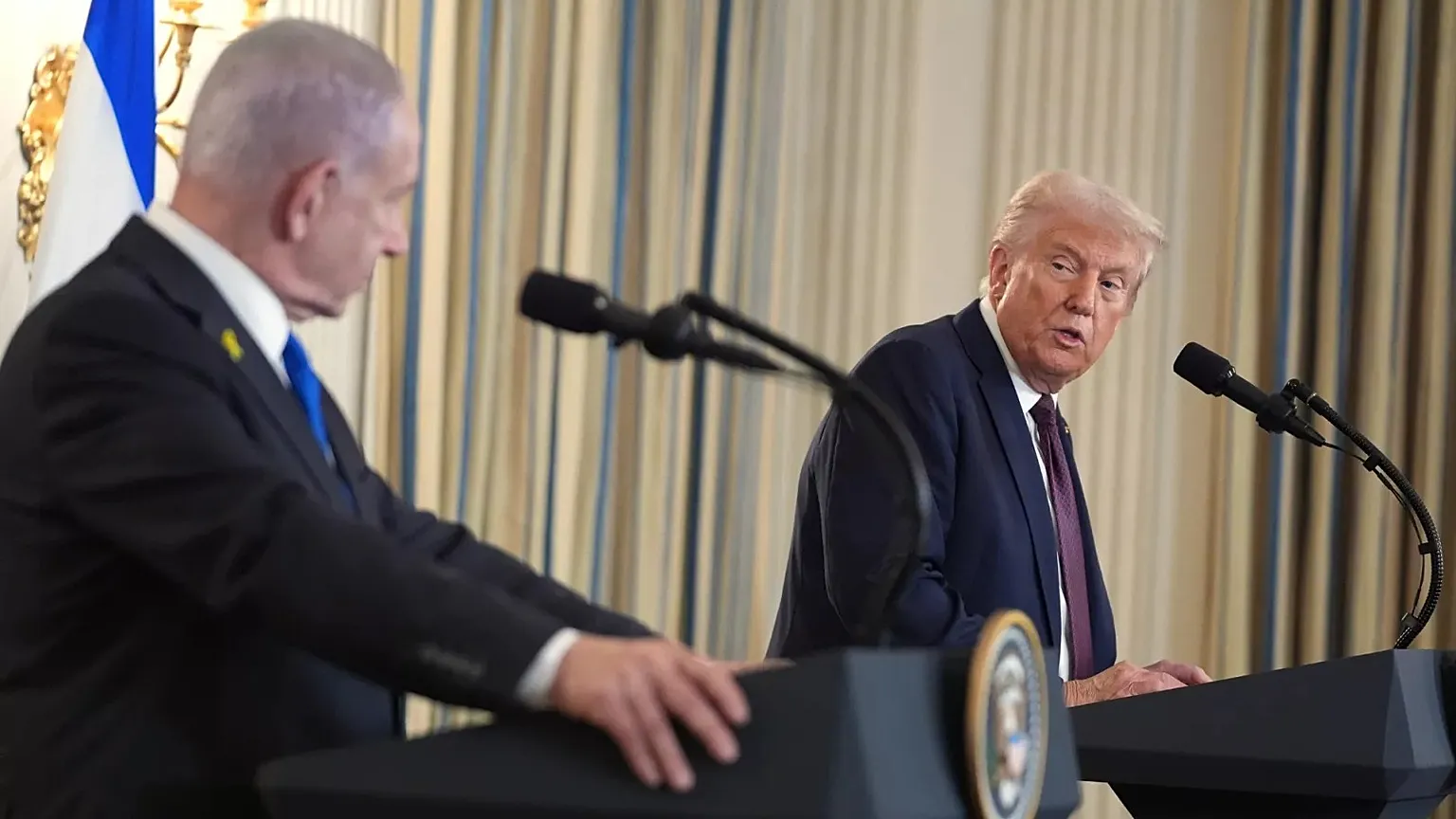
Israeli Prime Minister Benjamin Netanyahu has rejected the current version of the US 15-point plan for a settlement in the Gaza Strip. At a cabinet meeting on 9 August, he stated that Israeli troops would not leave the enclave until Hamas had completely laid down its arms. The group is prepared to work on the roadmap, but insists that the handover of weapons must be linked to steps taken by Israel.
Briefly about the main points
- Israel has not agreed to the current version of the US roadmap.
- Netanyahu is demanding the confiscation of all Hamas weapons, including small arms.
- Hamas is prepared to go ahead with the plan, but is setting conditions regarding Israel’s actions.
- Washington is proposing a phased withdrawal of forces as disarmament progresses.
- Consultations are ongoing, but moving on to the next stage is proving difficult.
Israel is insisting on the complete removal of weapons
Netanyahu He clarified that the requirement does not apply solely to heavy weaponry. HAMAS must hand over all its weapons, including light weapons, before the Israeli army begins its withdrawal from Gaza.
The Prime Minister did not announce that contacts with the US were to be severed. According to him, some of the American proposals are acceptable to the Israeli government, whilst he is prepared to object to others in the interests of Israel’s security.
Hamas is proposing a different sequence of steps
A Hamas spokesperson told the BBC that the group reaffirms its commitment to the agreement and is prepared to work hard to implement it. A senior spokesperson for the group Basem Naim told Reuters that Hamas is adhering to the roadmap agreed during the talks in Cairo.
At the same time, the group links the handover of weapons to Israel’s fulfilment of its obligations, in particular the cessation of air strikes and the withdrawal of troops. Naim stated that Hamas expects the mediators and the US to put pressure on Netanyahu’s government to honour the agreements.
The disagreement concerns the implementation mechanism: Israel is demanding disarmament as a precondition for the withdrawal of forces, whilst Hamas wants to link these processes together.
What mechanisms does the US roadmap contain?
On 31 July, the US President Donald Trump stated that the Peace Council he had established for Gases has reached an agreement on the complete disarmament of Hamas and other armed groups. The new document is intended to serve as a mechanism for implementing a broader peace plan.
The proposal envisages the handover of weapons and the dismantling of Hamas’s military infrastructure, the gradual withdrawal of Israeli forces, and the transfer of security control to international forces and a new Palestinian police force. For the civil administration and reconstruction of Gaza, it is proposed to establish a Palestinian technocratic administration with the support of the Peace Council.
At the end of July, the Israeli government approved the legal measures required to deploy the International Stabilisation Force to areas of the Gaza Strip not under the control of the Israeli army.
The dispute is holding up the transition to the next stage
In recent days, Israel has scaled back its military operations in Gaza under pressure from Washington. A spokesperson for the Peace Council Nikolay Mladenov stated that consultations on the new roadmap are continuing.
The US plan envisages a phased withdrawal of Israeli troops — sector by sector — as Hamas’s weapons are seized and rendered unusable. Until the parties agree on the sequence of these actions, the transition to the next stage of the agreements will be complicated.