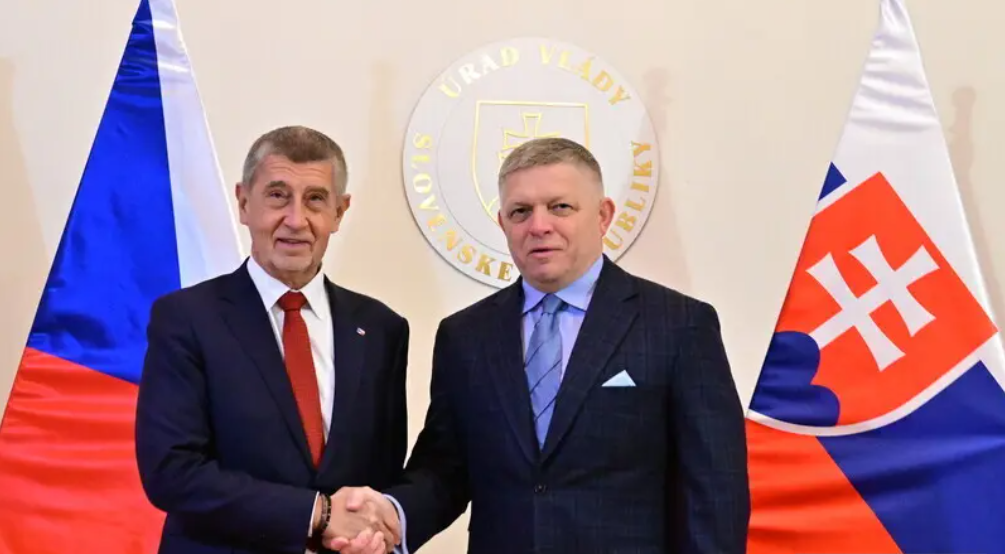
The Prime Ministers of Slovakia, Robert Fico, and the Czech Republic, Andrej Babiš, have refused to back new financial commitments to Ukraine amid a dispute with German Chancellor Friedrich Merz. Fico threatened to block the European Union’s multiannual budget if Berlin were to link its adoption to the allocation of additional aid to Kyiv. This was reported on 10 November by the Slovak news agency TASR following a joint press conference held by the heads of government of the Czech Republic and Slovakia in Bratislava.
- Fico threatened to block the EU’s seven-year budget in response to Germany’s stance.
- Babiš refused to provide guarantees for new loans to Ukraine.
- Ukraine is forecast to face a funding shortfall of 70 billion euros in 2027.
- Merz is calling for a fair distribution of financial support for Ukraine amongst EU countries.
Fico accused Merz of exerting pressure over funding for Ukraine
The Slovak Prime Minister stated that his country would not agree to Germany’s terms during negotiations on the European Union’s budget for 2028–2034. According to Fico, the issue of additional loans to Ukraine must be considered separately from the EU’s financial planning.
He emphasised that Slovakia has the same right of veto over the multiannual budget as Germany, and is prepared to exercise it.
«If the Federal Chancellor says he will block the EU budget because he wants all countries to support a 70 billion euro loan to Ukraine, I will tell him: no. Then I will block it too,» said Fico.
At the same time, the Slovak Prime Minister acknowledged the need for compromise between EU member states, but described the linking of budget negotiations to the funding of the war in Ukraine as unacceptable.
Babiš refused to guarantee new loans
Prime Minister of the Czech Republic Andrej Babiš He backed the position on the equal status of EU Member States. He emphasised that the Czech Republic’s vote in the European Council carries the same weight as that of the German Chancellor.
Babiš confirmed that Prague had previously refused to provide guarantees for a loan to Ukraine, and did not indicate any willingness to change this position.
According to him, Ukraine has received 520 billion euros in international aid since the start of the full-scale war. A further 100 billion euros is earmarked in the draft of the new EU budget.
These figures were quoted by the Czech Prime Minister himself. Babiš proposed that future funding should be directed primarily towards Ukraine’s post-war reconstruction, along the lines of the Marshall Plan.
Why did the dispute over 70 billion euros arise?
The standoff escalated following a letter from Friedrich Merz to the President of the European Council Antonio Costi. The German Chancellor is insisting that all EU Member States contribute to meeting Ukraine’s financial needs in 2027.
The projected funding shortfall for Ukraine stands at around 70 billion euros. At the same time, the European Union’s direct contribution is expected to amount to approximately 45 billion euros. It is therefore not a question of a new EU loan for the full amount of 70 billion that has already been agreed.
Merz regards the agreement on support for Ukraine as a prerequisite for further negotiations on EU financial matters, in particular the seven-year budget.
In December 2025, the European Union had already agreed to provide Ukraine with €90 billion in financial support. Slovakia, the Czech Republic and Hungary were granted exemptions from participating in the financial guarantees at that time and are now opposed to taking on new commitments.