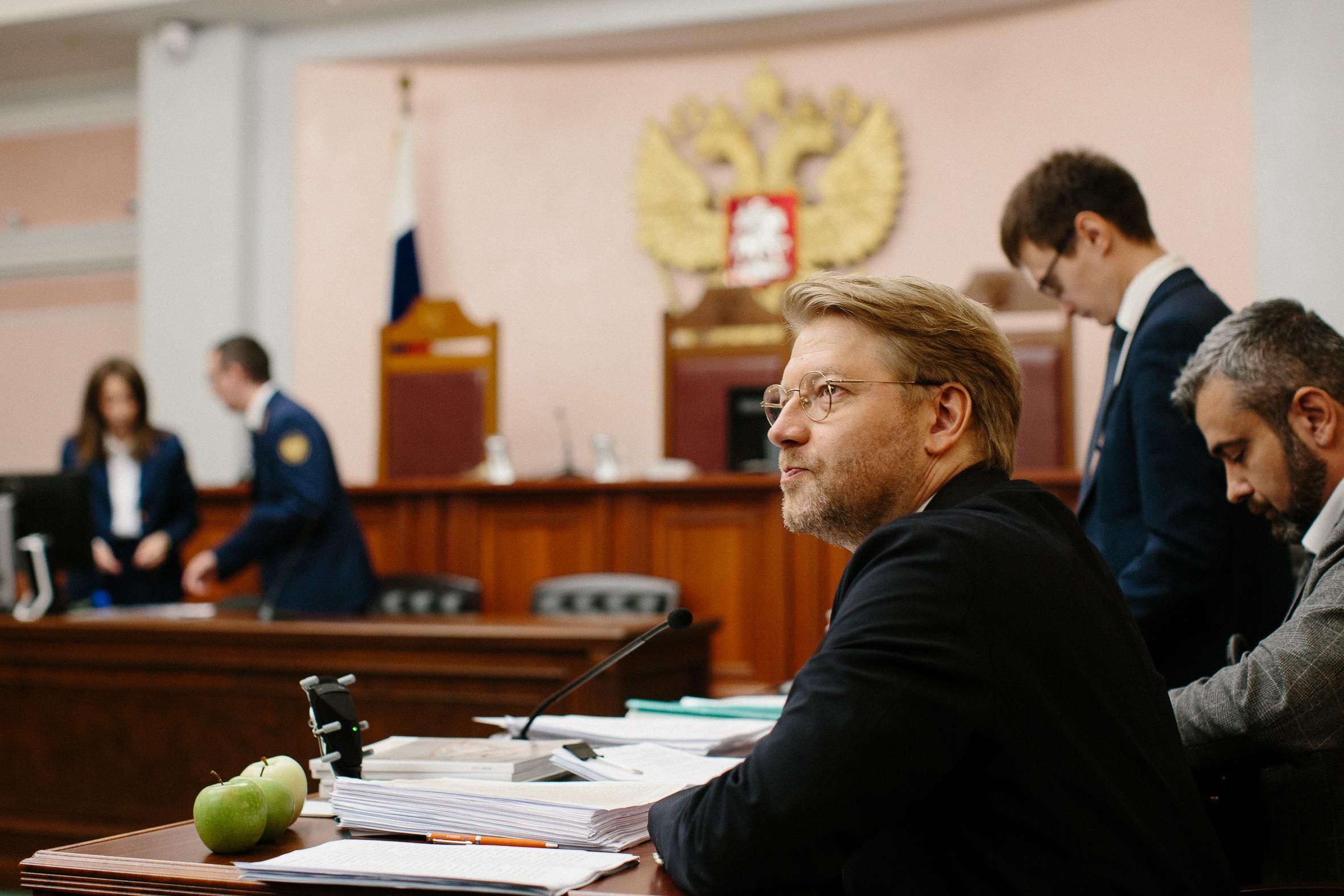
On the evening of 10 August, the Russian Supreme Court annulled the registration of the «Yabloko» party’s federal list for the State Duma elections, upholding a legal challenge brought by the pro-war «Rodina» party, which was supported by the Russian Prosecutor General’s Office. «Yabloko» was the only party admitted to the federal ballot that openly called for an end to the war against Ukraine and campaigned under the slogan «For Peace and Freedom».
Briefly about the main points
- A Russian court has annulled the «Yabloko» party’s federal list for the State Duma.
- The Russian Prosecutor General’s Office has backed «Rodina’s» lawsuit.
- The allegations included copyright infringement and alleged «extremism».
- The party intends to appeal against the Supreme Court’s ruling.
- The decision does not automatically revoke the registration of candidates in single-member constituencies.
The hearing lasted almost the whole day
The hearing at the Supreme Court of the Russian Federation was scheduled for 10:00, and the decision was announced at around 19:50 Moscow time. The lawsuit was filed on 7 August concerning the list of 269 candidates that the Central Electoral Commission had registered on 29 July.
During the draw for «Apple»… was allocated the second position on the ballot paper — after «United Russia». The party has announced that it will appeal against the court’s decision.".
The lawsuit referred to photos, songs and ChatGPT images
«Rodina» has raised several sets of allegations: possible copyright infringements, alleged illegal funding of social media campaigns, and «signs of extremism» in its posts and political stances.
With regard to copyright, the claimant referred to photographs, stills from the film *War and Peace*, and images depicting the aftermath of the atomic bombing of Hiroshima. The claims also concerned the phrases «May there always be sunshine» and «As long as there is no war», which were uttered in an interview with the party’s founder Grigory Yavlinsky.
Separately, «Rodina» claimed that OpenAI had allegedly infringed its rights through the use of images created using ChatGPT. Yabluko’s defence team described some of the arguments as legally absurd and emphasised that some of the material had been published as far back as 2016–2017.
Calls to end the war were labelled «extremism»
The political aspect of the lawsuit concerned the party’s anti-war statements. «Rodina» claimed that certain publications by «Yabloko» and the slogan calling for a ceasefire agreement might show «signs of extremism».
The claimant also referred to the party’s materials concerning the LGBT movement, which the Russian authorities have declared to be «extremist». The calls to cease hostilities mentioned in the claim were linked to Ukrainian territories which Moscow has unlawfully declared to be part of the Russian Federation: representatives of «Rodina» claimed that a ceasefire in the current situation would allegedly support a violation of «Russia’s territorial integrity».
Candidates in constituencies do not automatically lose their registration
According to estimates by Yabloko, around 500 party supporters gathered outside the Supreme Court building in Moscow, although the courtroom was designed to accommodate approximately 150 people. A police van was stationed outside the court. Before the hearing, party leader Mykola Rybakov urged supporters to attend and stated that the plaintiffs had cited, in particular, the party’s online support — posts, videos and user reactions.
The court ruling does not automatically invalidate the registration of Yabluko representatives in single-member constituencies or of candidates in regional elections. Prior to the ruling, the party had 135 candidates in single-member constituencies.