NATO has drawn up a new land defence concept in the event of a Russian attack on the Baltic states, reports *Bild*. According to the newspaper’s account, the plan involves halting missile strikes, establishing a drone defence barrier along the borders and disrupting Russian supply lines in the rear. The stated aim of the scenario is to push Russian forces back to the border.
Briefly about the main points
- Bild has described NATO’s defence plan for the Baltic states.
- The first stage should be to neutralise Russian missile systems.
- There are plans to set up an «autonomous zone» using drones at the borders.
- Special forces and robotic systems are to be deployed against Russian rear targets.
- The aim of the plan is to force Russian forces to retreat to the border.
Missile systems are to be the first target
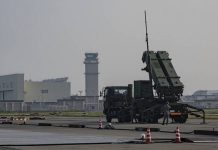
Pros. data According to *Bild*, the response to missile strikes, drone attacks and a tank offensive will begin with the cessation of missile fire. To this end, the Alliance plans to deploy fighter jets, missiles and UAVs against Russian missile systems.
The first location mentioned is the Kaliningrad Oblast. Following this, strikes against such systems are expected to extend to Russia’s rear areas. Kaliningrad is situated between Poland and Lithuania; in their 2026 assessment, the Lithuanian security services noted that Russia is deploying a marine brigade there, bringing its strength up to division level.
An unmanned barrier along the borders of Russia and Belarus
At the same time, an «autonomous zone» is to be established along the borders with Russia and Belarus. It is intended to act as a protective barrier, and the plan is to repel any Russian advance in this area using drones and other unmanned military vehicles.
The focus on such measures is in line with public technological priorities NATO. In June, the Alliance tested drones, counter-drone measures, robotic ground platforms and communications systems in Slovakia as part of an initiative to deter threats on the eastern flank. This is a test of technologies, not a publicly announced plan for their use in a specific operation.
Rear operations and an «air bridge» for robotic systems
Deep within Russia, according to *Bild*, special forces are to destroy key airfields, defence industry facilities, bridges and railway lines. The plan also envisages enlisting the help of Russians who oppose Vladimir Putin.
The publication describes the next element of the scenario as an «air bridge»: aeroplanes are to deliver drones and robotic systems to Russia for use in attacks on airfields and military bases. Bild states that the ultimate aim of this series of measures is to push Russian forces back to the border.