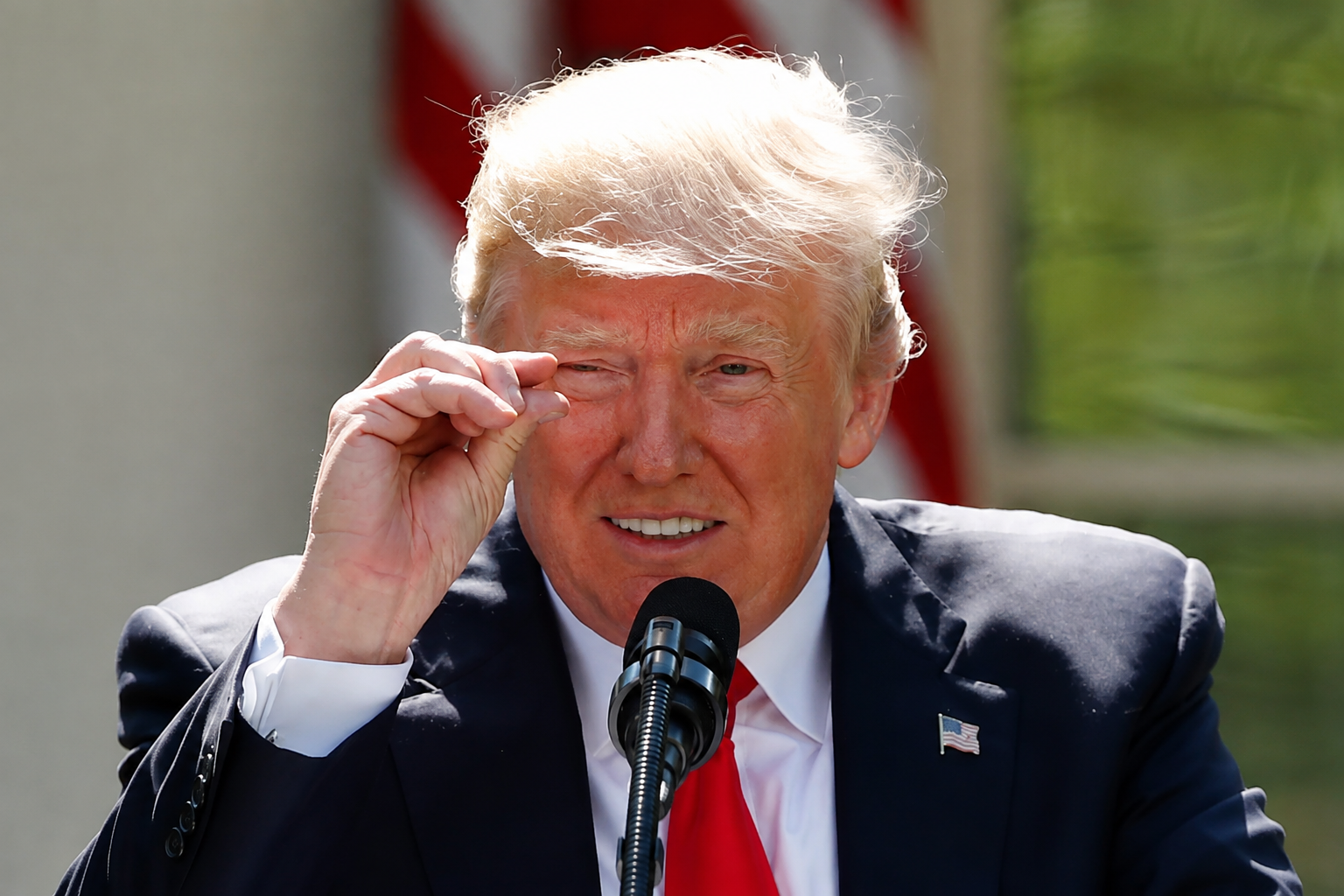
US President Donald Trump’s approval rating has fallen to 33% — the lowest level of his current presidency, according to a Reuters/Ipsos poll. 64% of those surveyed are dissatisfied with the president’s performance. At the same time, 80% of Americans believe that US involvement in the war with Iran will be a long-term affair; the conflict has led to a rise in petrol prices and heightened political risks for the Republicans.
Briefly about the main points
- Trump’s approval rating stands at 33%, whilst his disapproval rating is 64%.
- The figure matched the low for the first term, recorded in 2017.
- 87% Democrats and 71% Republicans expect a protracted war with Iran.
- Democrats are trusted more when it comes to the economy: 38% versus 35%.
- The Republicans’ lead on immigration has narrowed to two points.
The figure matched the all-time low set during the first term
A previous Reuters/Ipsos poll, completed earlier this month, showed Trump 35% approval. The difference of two percentage points is smaller than the margin of error of the new survey; therefore, it cannot be interpreted in isolation as a statistically significant shift.
The current figure matches the lowest level recorded during Trump’s first term as president, in December 2017. Upon his return to the White House in 2025, just under half the country approved of his performance.
Americans do not believe the conflict will end any time soon
A long-term continuation of US involvement in war with Iran 87% Democrats and 71% Republicans expect this to happen. Only 16% of those surveyed believe the conflict could end in a few weeks, although this was precisely the timeframe the President had cited at the start of the war.
Only one in five Americans considers the war to be justified; among Republicans, half of those surveyed share this view. At a rally in Garden City, New York, Trump stated that a «slightly» higher price of petrol is an acceptable price to pay to prevent Iran from acquiring nuclear weapons.
According to the International Energy Agency, approximately a quarter of global seaborne oil trade passed through the Strait of Hormuz in 2025. Restrictions on traffic through the strait, which remained largely in place during the conflict, had an impact on energy prices.
The economy is heightening the risks for the Republicans ahead of the election
Pros. data According to Reuters, the war has disrupted a fifth of global oil trade and caused a surge in petrol prices, putting pressure on American households. When asked about economic management, 38% of voters chose the Democrats, whilst 35% supported the Republicans’ approach. Democrats are also more often considered to be better prepared to manage the cost of living.
The Republicans are trying to hold on to their narrow majority in the House of Representatives in the 3 November congressional elections. The Democrats, for their part, are hoping to make a challenge for the Senate as well. Such national assessments reflect the overall campaign landscape, but do not constitute a forecast of results in specific states or constituencies.
The divide over immigration has also all but disappeared
40% registered voters consider the Republicans’ approach to immigration policy to be better, whilst 38% favour the Democrats’. This is the Republican Party’s narrowest lead during Trump’s current term: in January 2025, it stood at 26 percentage points.
Throughout this period, the Republicans maintained a more popular stance on immigration against a backdrop of a sharp decline in border crossings and a nationwide tightening of controls. At the same time, their position is being undermined by deadly clashes and a rise in the number of detainees, particularly children.
The Reuters/Ipsos online survey lasted four days and involved 1,166 adult US residents. Its margin of error is three percentage points either way.