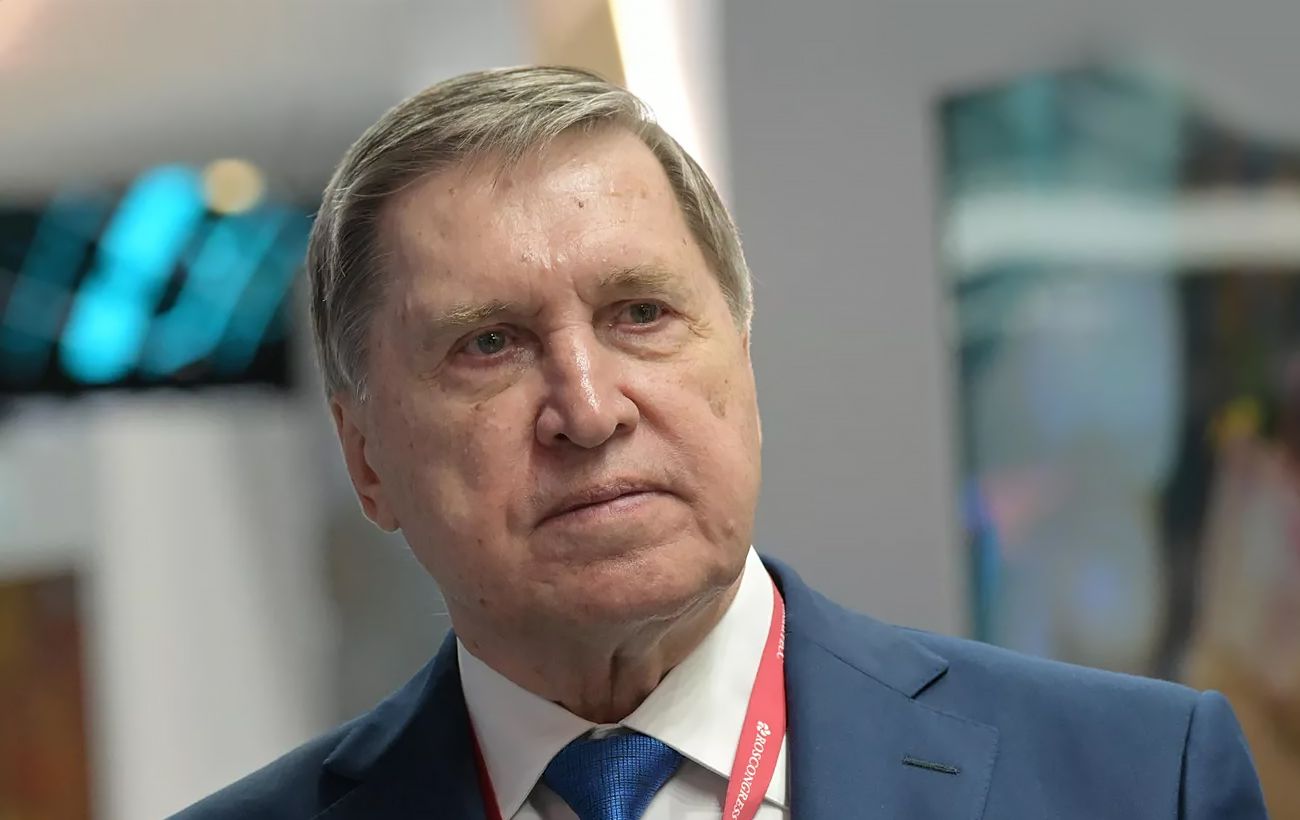
Russia does not agree to a «freeze» on the war against Ukraine along the current line of contact without a final political settlement. This was stated on 18 August by Yuri Ushakov, an aide to the President of the Russian Federation. The Kremlin’s public position is that Moscow links the cessation of hostilities to the fulfilment of its own political and security conditions.
Briefly about the main points
- Ushakov stated that Russia rules out a cessation of fighting along the current front line.
- The Kremlin is calling for a political agreement before a ceasefire.
- Lavrov and Galuzin had previously expressed the same view.
- Ukraine rejects Moscow’s demands regarding NATO and its territories.
- The EU, the UN and Ukraine’s partners regard a ceasefire as the first step in the negotiations.
Moscow is not considering a ceasefire without a political agreement
Responding to journalists« questions about the possibility of such a scenario, a Kremlin spokesperson said: »You know our position; it rules this out.” This refers to the freezing of the current line of contact and the cessation of active hostilities without a prior, broader agreement.
So, Moscow does not publicly recognise the regime ceasefire on the front line as an independent first stage of the settlement. Her approach involves prior agreement on the political terms.
Russian officials are consistently putting forward broader conditions
This statement follows on from the one previously made the Kremlin’s line. 14 August: the Russian Foreign Minister Sergey Lavrov He also ruled out a simple cessation of hostilities at the current positions and linked this to a «long-term, reliable and sustainable» settlement.
On 10 August, Mikhail Galuzin, Deputy Minister of Foreign Affairs of the Russian Federation, described such a scenario as unacceptable unless the so-called «root causes» of the war were addressed. The Russian authorities use this term to refer to their own political and security demands on Ukraine and the West.
Among the conditions for a ceasefire, the Kremlin had previously cited Ukraine’s refusal to NATO membership and territorial claims regarding the occupied and partially occupied regions of Ukraine. Ukraine does not accept them.
The Kremlin’s approach differs from the position of Ukraine and its partners
«The »Coalition of the Willing’, the European Council and the UN have publicly supported a complete ceasefire as a starting point for further substantive negotiations. In the coalition’s July statement, the line of contact was identified as the starting point for the ceasefire.
Within this framework, a ceasefire along the line of contact does not imply legal recognition of Russian control over the territories. The European Council has specifically emphasised that borders cannot be altered by force, and that the path to peace cannot be determined without Ukraine.
The difference lies in the sequence of steps: Ukraine’s partners are proposing to first establish a ceasefire and then discuss political issues, whilst the Kremlin is publicly setting political conditions prior to such a cessation of hostilities.