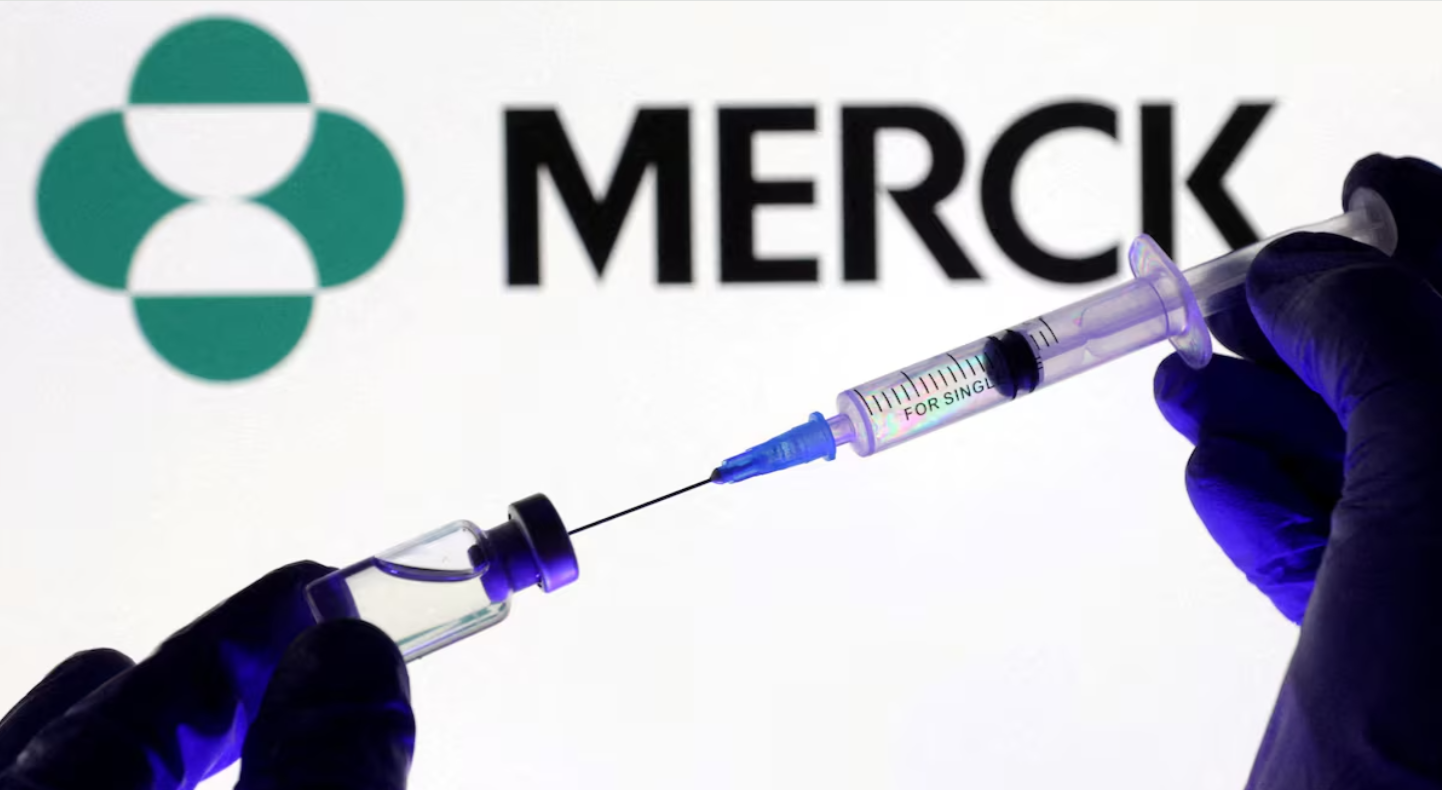
Moderna’s personalised mRNA therapy, Intismeran, when combined with Merck’s Keytruda, reduced the risk of melanoma recurrence and tumour spread in an interim analysis of a late-stage clinical trial. The comparison was made against treatment with Keytruda alone in patients who had undergone surgical removal of their melanoma. The result triggered a sharp rise in Moderna’s share price in pre-market trading.
Briefly about the main points
- The combination of Intismeran and Keytruda met the two key objectives of the study.
- The trial involved patients with high-risk melanoma who had undergone surgery.
- No new safety concerns were identified during the company’s investigation.
- Moderna shares surged by 90%, whilst Merck rose by 7.5%.
- The companies plan to discuss the results with the regulators in the coming months.
Personalised treatment was evaluated following the removal of the tumour
Intismeran is manufactured on the basis of an analysis of mutations in a specific patient’s tumour. It is not a preventive vaccine: mRNA therapy is designed to direct the immune response against individual tumour neoantigens, whilst Keytruda is used as an immunotherapy.
The trial involved 1,137 high-risk patients with stage IIB–IV melanoma who had undergone surgery. They were randomly assigned to two groups: one received up to nine doses of Keytruda in combination with Intismeran, whilst the other received Keytruda alone; treatment lasted for approximately one year.
The companies reported that the study did not reveal any new safety concerns.
The market has reacted positively to the outcome, and companies are preparing to engage in dialogue with the regulators
Moderna rose by 90% in pre-market trading to $118.61 per share, whilst Merck shares gained 7.5%. Moderna shares became the most talked-about on the Stocktwits forum for private investors, according to the platform.
This is the first positive result from a late-stage trial of an mRNA cancer vaccine. It is also the first such trial in which adding a therapy to Keytruda has proved more effective than Keytruda alone in people who have had melanoma removed.
In January, Moderna and Merck reported that, in a smaller, mid-stage study, the combination had reduced the risk of recurrence or death by 49% over five years. This figure is not based on the results of the current Phase III trial.
Head of Research and Development at Merck Dean Lee He told CNBC that the companies expect to begin negotiations with the regulators in the coming months. Intismeran is currently an experimental treatment, and Moderna and Merck have not yet decided on its price.
For Moderna, the programme’s success could become a new source of growth beyond vaccines against COVID-19. Merck is exploring long-term opportunities for its oncology business ahead of the expected loss of patent protection for Keytruda later this decade. Barclays had previously estimated potential sales of the melanoma therapy at around $3 billion by 2035; this is a forecast by analysts, not by the companies themselves. Moderna’s CEO Stéphane Bansel He pointed out that the therapy does not use the patient’s own cells. In his view, this could simplify the scaling up of production and help to reduce the cost.