The 2026 Nobel Prize in Physics has been awarded to the Belgian-American physicist Francis Galzen — one of the principal developers of the IceCube neutrino observatory in Antarctica. The Nobel Committee’s citation reads: ‘for his decisive contribution to the creation of IceCube and the discovery of high-energy neutrinos of astrophysical origin’. In essence, this refers to a technology that has given astronomers a new way of looking at the Universe — not through light, but through almost imperceptible particles capable of passing through the Earth with virtually no interaction with matter.
- Francis Galzen was awarded the 2026 Nobel Prize in Physics.
- He was honoured for his key role in the creation of the IceCube neutrino observatory.
- IceCube has provided the first conclusive evidence of the existence of high-energy neutrinos from space.
IceCube has turned a kilometre of Antarctic ice into a telescope
IceCube It bears little resemblance to a conventional observatory. There is no huge mirror or dome housing a telescope here. The main part of the facility is hidden under the ice at the South Pole.
Contained within approximately one cubic kilometre of transparent Antarctic ice is 5,160 digital optical sensors on 86 vertical lines. Some of the sensors are located at a depth of over two kilometres. Construction of the facility was completed in 2010.
At first glance, her task seems almost impossible — to catch neutrino. These elementary particles interact with ordinary matter to a negligible extent. Every second, vast numbers of them pass through people, buildings and even the entire planet without leaving any noticeable trace. It is for this very reason that neutrinos are often referred to as «ghost particles».
IceCube is looking for those rare moments when a neutrino does interact with matter within the ice. This results in a very faint flash of Cherenkov light, which is detected by the sensors.
A discovery that people had been waiting for for decades
Galzen He had been working on the idea of a neutrino telescope since the 1980s. Before IceCube, there was the AMANDA experimental facility, which demonstrated that Antarctic ice can indeed be used as a giant natural detector.
The breakthrough came following the launch of the full IceCube configuration. In 2013, an international team reported that 28 incredibly lively events, as recorded in data from 2010–2012. These could no longer be explained solely by neutrinos produced in the Earth’s atmosphere. This provided the first convincing evidence of a flux of high-energy neutrinos from astrophysical sources.
Even earlier, researchers had detected two particularly powerful signals with an energy of around one petaelectronvolt. Within the team, these events were even given names — Bert and Ernie
It was following these results that neutrino astronomy ceased to be primarily a theoretical prospect.
Why do physicists want to catch «ghost particles»?»
The main advantage of neutrinos is, at the same time, the main problem in detecting them. As they interact with matter only very rarely, neutrinos are able to escape from extremely dense regions of the Universe, from which ordinary light may not reach Earth.
They can provide information about processes occurring near black holes, active galactic nuclei, stellar explosions and other cosmic «particle accelerators». The Nobel Committee has described them as a kind of messenger from space, providing access to processes in distant galaxies.
Over the years, IceCube has already helped to link neutrinos to specific galaxies and to observe neutrino radiation from our Milky Way.
In other words, this isn’t just about another particle. Physicists have discovered yet another way of observing the Universe — alongside light, radio waves and gravitational waves.
Who is Francis Galzen?
Francis Galzen was born in Belgium, studied at the University of Leuven and obtained his PhD there. In 1971, he came to the University of Wisconsin–Madison to carry out research — and ended up staying there for a decade.
He is currently a professor at the University of Wisconsin–Madison and the principal investigator for IceCube. The observatory is run by a large international collaboration, which currently comprises over 450 scientists.
Even before the Nobel Prize, 2026 had already been a special year for Galcen: the American Physical Society awarded him its Medal for Exceptional Achievement in Research specifically for his contributions to neutrino astrophysics and IceCube.
Galzen will receive 12 million Swedish kronor
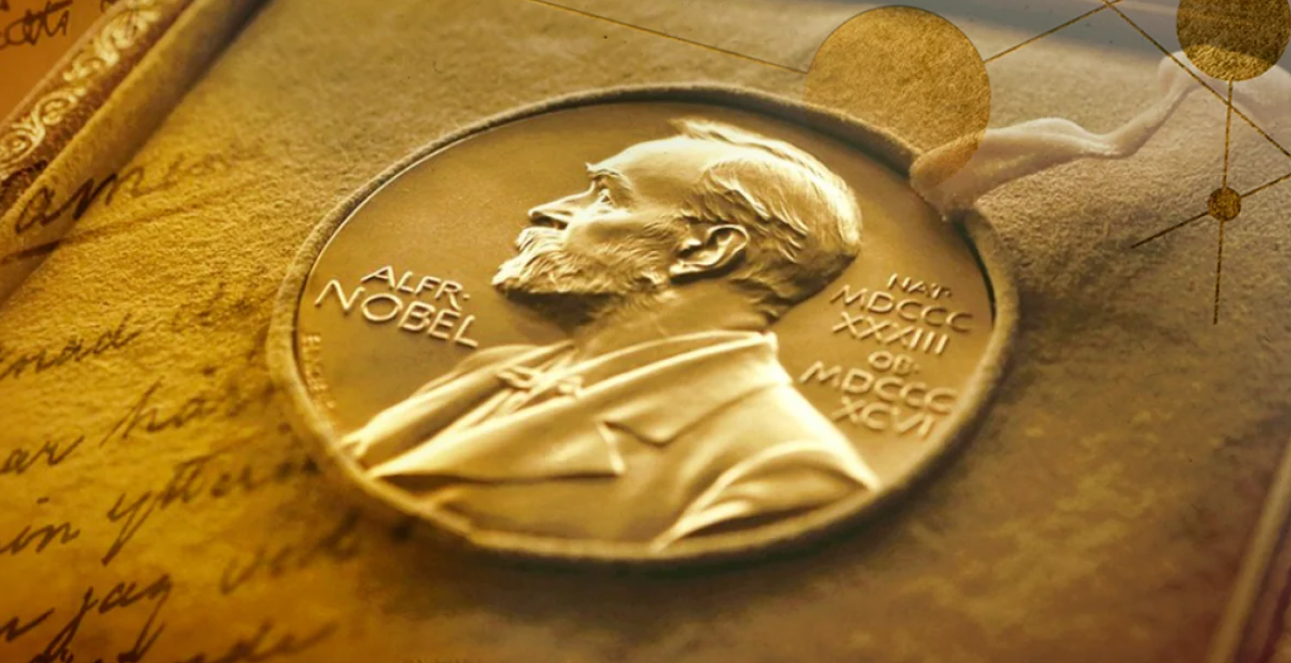
The monetary component of this year’s Nobel Prize in Physics amounts to 12 million Swedish kronor — approximately $1.2 million. As the prize was awarded to a single winner, the entire sum goes to Galtsen. The official presentation of the medal and certificate will take place 10 December in Stockholm, on the anniversary of Alfred Nobel’s death.