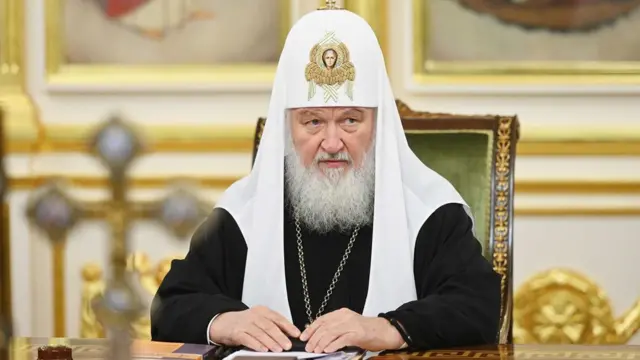
In widely circulated online clips, Archpriest Alexander Butrin of the Russian Orthodox Church is alleged to have called on Russians to be patient in the face of fuel shortages and not to direct their discontent towards the authorities. The full original recording of the speech is not publicly available, so the exact wording requires further verification. Against the backdrop of petrol shortages, these remarks have caused a public stir.
Briefly about the main points
- Butrin is said to have called on people not to protest because of fuel shortages.
- No full recording of the priest’s speech has been found in the public domain.
- Church sources confirm his status as a protopriest of the Russian Orthodox Church.
- Reuters reported that the shortage was worsening in at least ten regions of the Russian Federation.
- Russia has restricted exports of a number of types of fuel to the domestic market.
What is known about the widely circulated excerpts from the speech
In reports circulating online, Butrin is alleged to have called for people not to express aggressive discontent over fuel problems and not to turn it against officials. It is also claimed that the clergyman described people who publicly defend their rights as «unspiritual» and «unchurched».
At the same time, official information from the Moscow Metropolis confirms that Butrin has been an archpriest of the Russian Orthodox Church since 2009 and serves as a clergyman at the Church of the Icon of the Mother of God «Derzhavnaya» in Fryazino, Moscow Oblast.
Fuel shortages have affected at least ten regions in Russia
The practical consequences of the shortage include the unavailability of certain grades of petrol at filling stations, sales restrictions, queues and rising prices. According to a Reuters report dated 17 August, fuel restrictions or shortages have intensified in at least ten regions of the Russian Federation; some petrol stations in the Moscow Region had run out of petrol, although diesel remained largely available.
On 1 August, the Russian government introduced a temporary ban on the export of petrol, diesel and other types of fuel, which will remain in place until 31 January 2027. At the same time, from 1 September, direct producers are permitted to export diesel fuel, marine fuel and gas oil. The authorities have explained that these measures are necessary to stabilise the domestic market. The problems are attributed to a combination of factors, including disruptions to refining, seasonal demand and the distribution of fuel across regions.
Church rhetoric against the backdrop of the Russian Orthodox Church’s loyalty to the state
ROC Throughout the war, it has been closely linked to the Russian Federation’s state policy, and members of its clergy have repeatedly expressed public support for the Russian state and its military policy. The statements attributed to Butrin, however, relate to domestic economic difficulties and the public’s reaction to them.
There have been no recorded public reactions from the Moscow Metropolis, the Russian Orthodox Church or the Russian authorities specifically regarding these passages. The available information gives no reason to believe that the priest’s words were coordinated with the Kremlin or the church leadership; in the absence of a full recording, it is only appropriate to present them as statements attributed to Butrin.