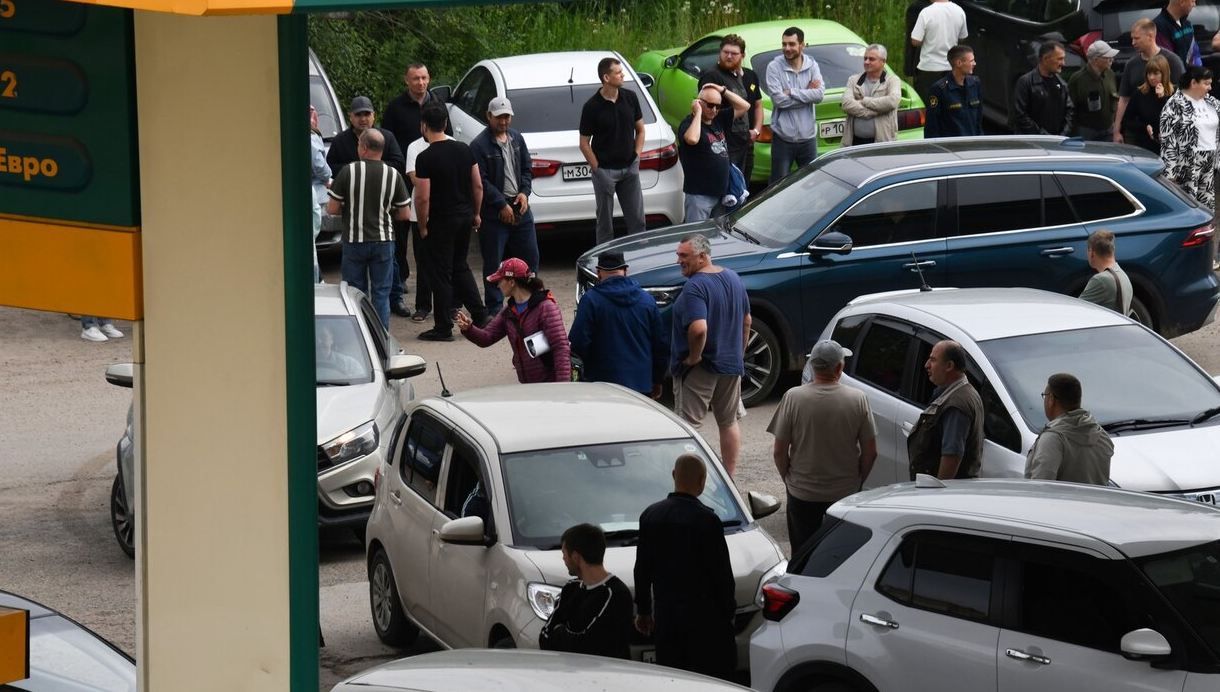
In the Russian towns of Lysva and Petrozavodsk, at least two deaths have been recorded among men who fell ill near or whilst queuing at petrol stations. An 80-year-old driver died in the Perm Krai on 16 July, and a 75-year-old man died in Karelia on 30 June. Against the backdrop of a fuel shortage in regions of the Russian Federation, there are queues, sales restrictions and some petrol stations have ceased operations.
Briefly about the main points
- An 80-year-old man died whilst queuing at a petrol station in Lysva on 16 July.
- Medical staff carried out resuscitation; the condition has been provisionally diagnosed as acute heart failure.
- A 75-year-old man died at a petrol station in Petrozavodsk on 30 June.
- Karelia reported that there were minimal stocks of fuel available for private petrol stations.
- Russia has restricted exports of petrol and diesel to support the domestic market.
Two cases in Lysva and Petrozavodsk
On 16 July, in Lysva, Perm Krai, an 80-year-old man fell ill in a traffic jam on the approach to a petrol station. The regional Ministry of Health confirmed to local media that an ambulance crew attempted to resuscitate him, but were unable to save him. The regional publication «Rifey», citing a local newspaper, reported that the preliminary cause of death was given as acute heart failure.
Another incident took place on 30 June in Petrozavodsk. The Russian Ministry of Internal Affairs confirmed to journalists the death of a 75-year-old pensioner at a petrol station. According to eyewitness accounts, the man was queuing for petrol, but no official medical report on the cause of death has been released.
Both incidents occurred at a time when drivers in a number of Russian regions are facing long queues at petrol stations. However, no direct causal link between the fuel shortage and the deaths has been officially established.
How the shortage is affecting petrol stations
At the end of June, the Karelian authorities stated that the available supplies of fuel for private petrol stations were minimal. Some petrol stations temporarily suspended operations, and the flow of traffic shifted to the Lukoil and Rosneft networks, where queues formed.
The region approached the federal government regarding a separate supply mechanism for private petrol stations, set up a crisis management centre and launched a chatbot to provide information on fuel availability. On 13 July, the authorities reported that petrol had begun to appear at only some petrol stations.
In early July, Ukrmedia News reported on sales targets and queues lasting several hours in many regions of Russia. By the end of June, restrictions of varying severity had been reported in more than half of the country’s regions.
A fall in processing volumes and export restrictions
According to Energy Intelligence, in June oil refining In Russia, production fell by 25% year-on-year to 3.95 million barrels per day, the lowest level in over two decades. Petrol production fell by 17% to 850,000 barrels per day.
The decline is linked to a series of Ukrainian strikes on oil refining and fuel infrastructure in the Russian Federation and occupied Crimea. The shortage is also being driven by seasonal demand and supply issues affecting private petrol stations.
Back in April, the Russian Government extended the ban on petrol exports to direct producers by 31 July. From 8 July, Moscow also banned the export of diesel until that date. Deputy Prime Minister of the Russian Federation Alexander Novak stated that the situation at petrol stations was causing concern amongst the public, and announced his intention to begin importing fuel in July.
Queues resulting from a shortage of resources
The combination of a fall in processing volumes, limited available capacity and the closure of some private petrol stations is concentrating demand on those petrol stations that continue to sell fuel. The example of Karelia illustrates this mechanism at a regional level: fewer available outlets mean longer queues for motorists.
The Russian authorities describe shortage temporary and non-critical. However, export restrictions, import plans and regional fuel allocation measures suggest that the problem goes beyond isolated supply disruptions.
Reviewed by the editors: Yuriy Butusov, Maksym Krus.