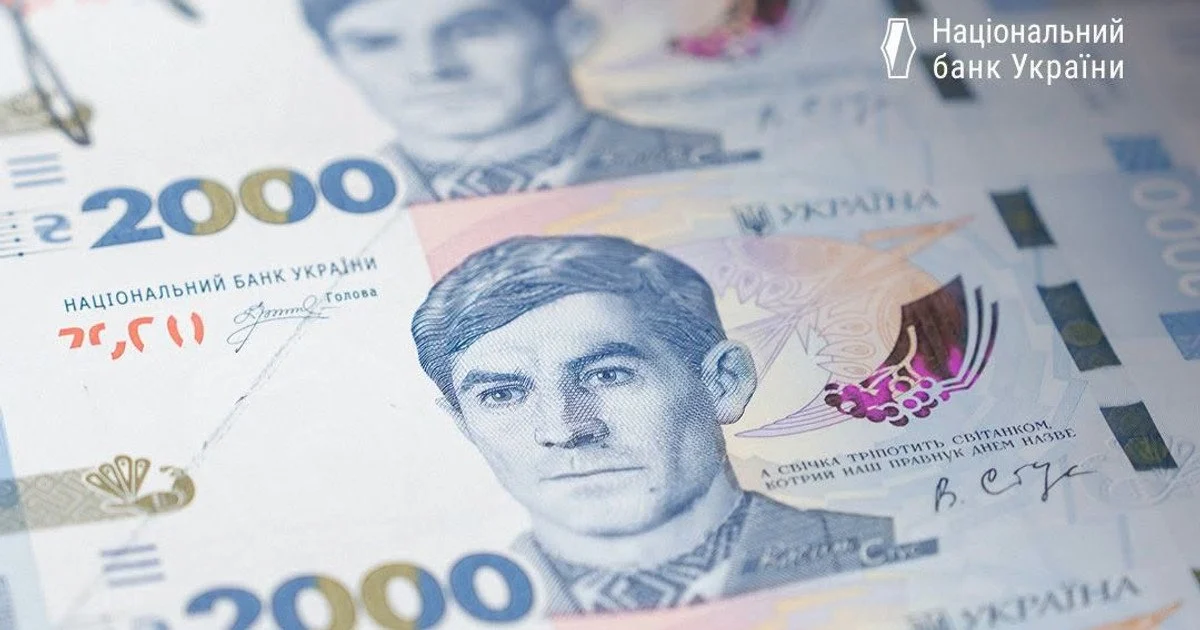
On 4 September 2026, the National Bank of Ukraine will put a 2,000-hryvnia banknote featuring a portrait of Vasyl Stus into circulation. It will become the highest denomination of the Ukrainian hryvnia, replacing the 1,000-hryvnia note in this role. The NBU reports that the new banknote features more than 20 security features, and there is no need to exchange existing banknotes specifically for the new one.
Briefly about the main points
- The new 2,000 hryvnia banknote will be introduced on 4 September.
- It will be the highest-denomination Ukrainian banknote.
- The obverse features a portrait of the poet and dissident Vasyl Stus.
- The protection features SPARK and Anima™ Colour tape.
- Other valid banknotes remain in circulation without being exchanged.
The design combines the figure of Stus with motifs from the dissident movement
The banknote’s main colour is blue, and it measures 75×166 mm. The reverse side features the building of the Faculty of Philology at Donetsk National University, where he studied Stus. The design also incorporates motifs from the Ukrainian dissident movement and a line from the poet’s work.
The launch date was chosen in light of two events in his life. On 4 September 1965, Stus took part in a protest against the repression of the Ukrainian intelligentsia, and on the same day in 1985, he died in a Soviet labour camp.
The strip changes from the Trident to the hryvnia symbol when the banknote is tilted
The security features include the optically variable SPARK and the new Anima™ Colour security strip. According to the NBU, this is the world’s first banknote to feature a polychrome animated «window» strip.
The ribbon is designed in shades of blue and yellow: as the angle of inclination changes, it creates an effect of movement, and the image of the Trident changes to that of the hryvnia symbol. When tilted, the SPARK element changes colour from purple to golden-green.
The new denomination is intended to simplify transactions involving large sums of cash
The decision on issue The NBU announced in July. Andriy Pyshny, Governor of the National Bank, explained that since the introduction of the 1,000-hryvnia note in 2019, there have been changes in prices, household incomes, the volume of cash in circulation and the structure of payments. According to him, the higher denomination is intended to facilitate large cash payments.
The regulator also expects to reduce the costs of printing, transporting, storing and processing banknotes. Banks have been given time to reconfigure their ATMs, payment terminals and cash-handling equipment. All current banknotes will continue to be used alongside the new banknote.