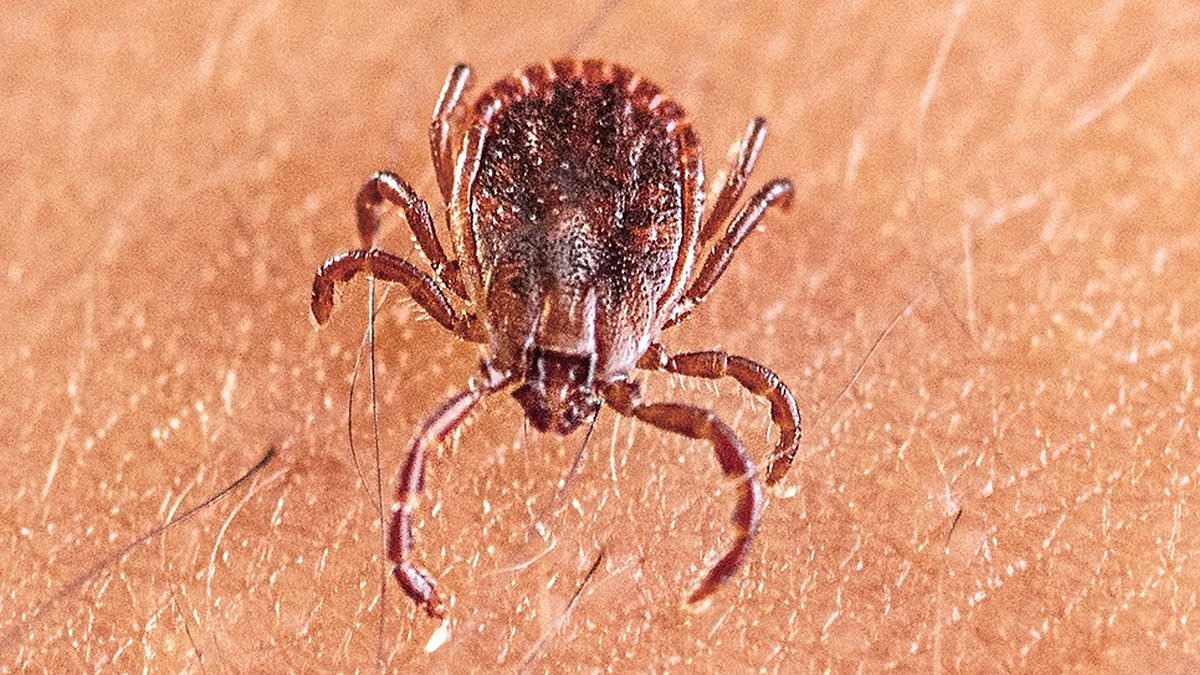
Chinese scientists have identified a previously unknown virus, ALTNV, which is transmitted via tick bites and is associated with febrile illnesses. The study was published in the *New England Journal of Medicine*. The study involved patients with a fever who had been in contact with ticks; the researchers emphasise that the discovery requires more precise diagnosis, but does not indicate the start of a new pandemic.
Briefly about the main points
- ALTNV has been detected in patients with a fever following tick bites.
- In the sample of patients, the virus was detected via RNA or IgM antibodies.
- All people with an isolated ALTNV infection have recovered.
- Deaths were recorded only in the group with co-infection with Dabie bandavirus.
- The publication does not link the virus to Wuhan or COVID-19.
The virus was discovered whilst investigating the causes of fever following tick bites
ALTNV belongs to the Orthonairovirus group. It came to the attention of researchers after some patients exhibiting symptoms of an infection associated with the Dabie bandavirus tested negative for that pathogen. The virus was isolated from a patient’s serum, grown in cell culture, and its characteristics confirmed by laboratory methods.
Researchers analysed samples from 3,163 patients and found that ALTNV 10.4% — based on viral RNA or IgM antibodies. Among those who tested negative for Dabie bandavirus, 15.1% tested positive for ALTNV. These figures do not reflect the prevalence virus among the general population of China, as the study focused on people with a fever and a recent history of contact with ticks.
The isolated infection had a milder course than the co-infection
The most common symptoms of ALTNV were weakness and fatigue, digestive problems, a drop in platelet count and elevated levels of aminotransferases — enzymes whose levels may rise in the event of inflammation or tissue damage, particularly to the liver.
Among patients infected with ALTNV alone, 84% experienced fatigue, 80% had gastrointestinal symptoms, 38% had thrombocytopenia, and 36% had elevated aminotransferases. All of them made a full recovery.
Separately, the researchers described 38 people with concurrent infection with ALTNV and Dabie bandavirus. In this group, respiratory and renal complications were more common, and seven patients died. Such cases do not prove that ALTNV is the specific cause of the high mortality rate.
The pathogen’s RNA was found only in some of the ticks tested
In 15 provinces across China, scientists tested 47,428 ticks and detected ALTNV RNA in 1.3% of the samples. The highest prevalence was recorded in the species Haemaphysalis longicornis, known as the Asian long-horned tick.
Laboratory experiments have shown that this species is capable of transmitting the virus to mice. Researchers have also observed that the virus persists between the tick’s developmental stages and is passed on to its offspring. However, this does not mean that every Asian long-horned tick is a carrier of ALTNV.
The publication provides no grounds for linking ALTNV to Wuhan
The study was carried out in several regions of China, and the map of cases where RNA was detected shows them in the northern and eastern parts of the country, particularly in the Anhui and Shandong regions. The scientific study does not identify Wuhan as the place of origin or source of the virus; therefore, direct parallels with the origin COVID-19 incorrect.
The detection of ALTNV does not signify the start of a pandemic. The practical significance of this discovery is that it should be taken into account during the differential diagnosis of febrile conditions following tick bites, particularly when tests for Dabie bandavirus are negative. Scientists are continuing to study the distribution and characteristics of the new pathogen.