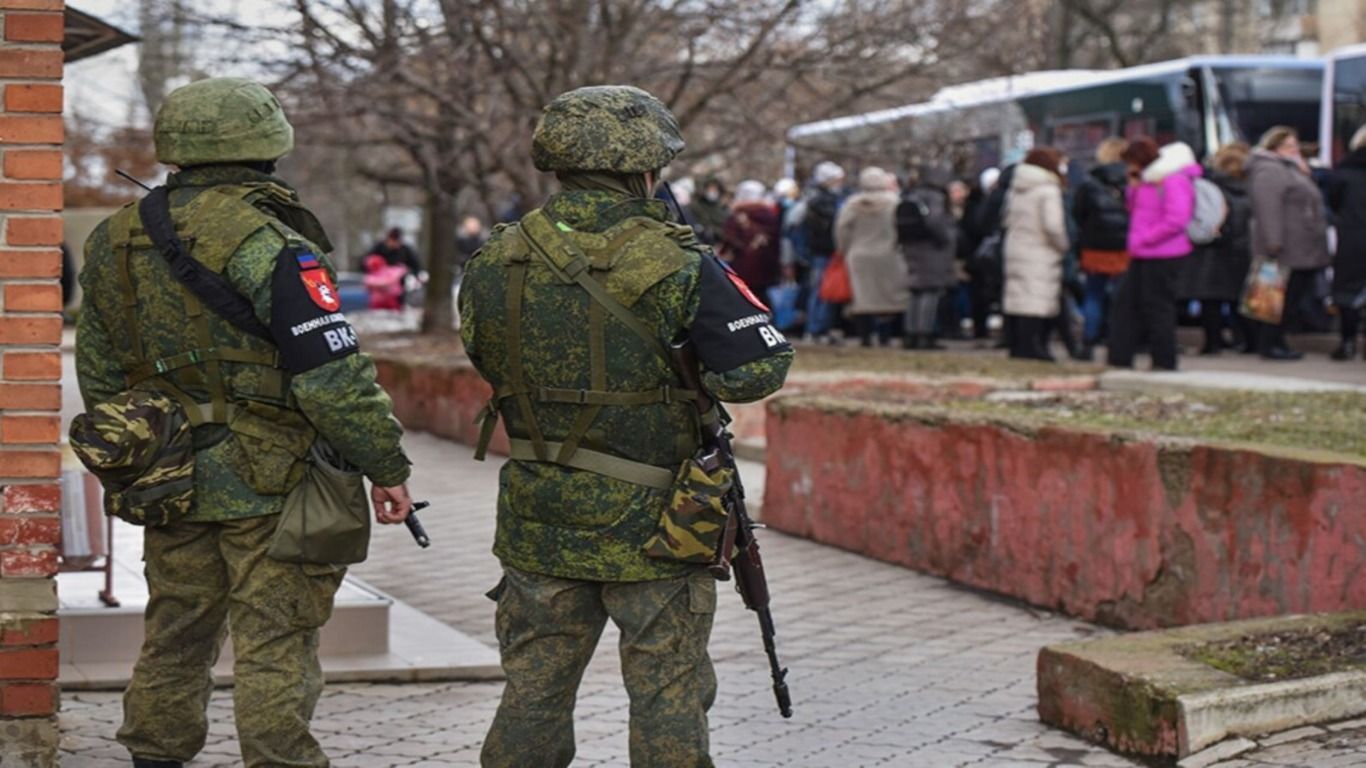
Ukraine’s Foreign Intelligence Service has warned that there is a high probability that Russian security services will carry out high-profile provocations and terrorist attacks under the «banner of Ukraine» in the temporarily occupied territories during the period of the illegal elections to the Russian State Duma. The intelligence service has urged civilians to avoid crowds and locations associated with the vote between 17 and 21 September.
Briefly about the main points
- The Security Service of Ukraine has issued a warning about possible Russian terrorist attacks carried out «under the Ukrainian flag».
- Intelligence agencies link the risks to illegal voting in the Russian State Duma.
- The period from 17 to 21 September has been identified as the most dangerous.
- Residents of the temporarily occupied territories are advised not to visit polling stations or crowded places.
- The Central Election Commission of Ukraine does not recognise any legal consequences of the vote.
What objective does the intelligence service say the Kremlin is pursuing?
According to the SZRU’s assessment, The Kremlin may use a fabricated escalation to discredit Ukraine in the eyes of its Western partners and the derailment of the peace process mediated by the US. The intelligence report cites other possible objectives, including justifying repressive policies towards the local population and the need for another wave of mobilisation in Russia.
The SZRU notes that the Russian authorities have resorted to bloody provocations during electoral or politically significant events and have used them to exert psychological pressure, intensify repression and create pretexts for escalation. Among such incidents, the intelligence service cites the explosions in residential buildings in Russia in 1999, the hostage-takings at Dubrovka and in Beslan, as well as provocations in the occupied territories between 2014 and 2024.
What scenarios are possible on polling days?
The active phase of the illegal voting in the occupied parts of the Zaporizhzhia, Kherson, Donetsk and Luhansk regions, as well as in Crimea, is scheduled for 18–20 September. The Security Service of Ukraine has outlined several possible scenarios that could be used to level accusations against Ukraine.
- Bombing of polling stations or ballot collection points outside working hours to create a media image of destruction.
- Acts of sabotage targeting transport or infrastructure used to transport members of electoral commissions.
- Attacks on collaborators — heads of the occupying election commissions or candidates who demonstrate loyalty to Russia.
Which places are civilians advised to avoid?
The intelligence service advises residents of the temporarily occupied territories to avoid, as far as possible, places where people gather, such as polling stations, administrative buildings used for voting, and the occupiers’ military infrastructure.
The Security Service of Ukraine warns that Russian intelligence services may disregard civilian casualties if this serves their political objectives. The intelligence service considers any gathering of people during this period to be a potential target for Kremlin provocations.
What is the status of Russia’s campaign in the occupied territories?
The Central Election Commission of Ukraine has recognised the preparation and the holding of elections to the State Duma of the Russian Federation in the temporarily occupied territories are illegitimate. The Commission stated that the relevant protocols, mandates and results would have no legal effect.
According to the Central Election Commission, Russia is organising a vote in the occupied parts of four regions, in the Autonomous Republic of Crimea and in Sevastopol. The occupying authorities have unlawfully established 11 single-member constituencies there; in the four partially occupied regions, voting for the State Duma will take place in these constituencies for the first time.
The Ukrainian Central Election Commission has called on international partners not to recognise the results of the election, not to send observers, and to consider imposing sanctions on those involved in organising it.