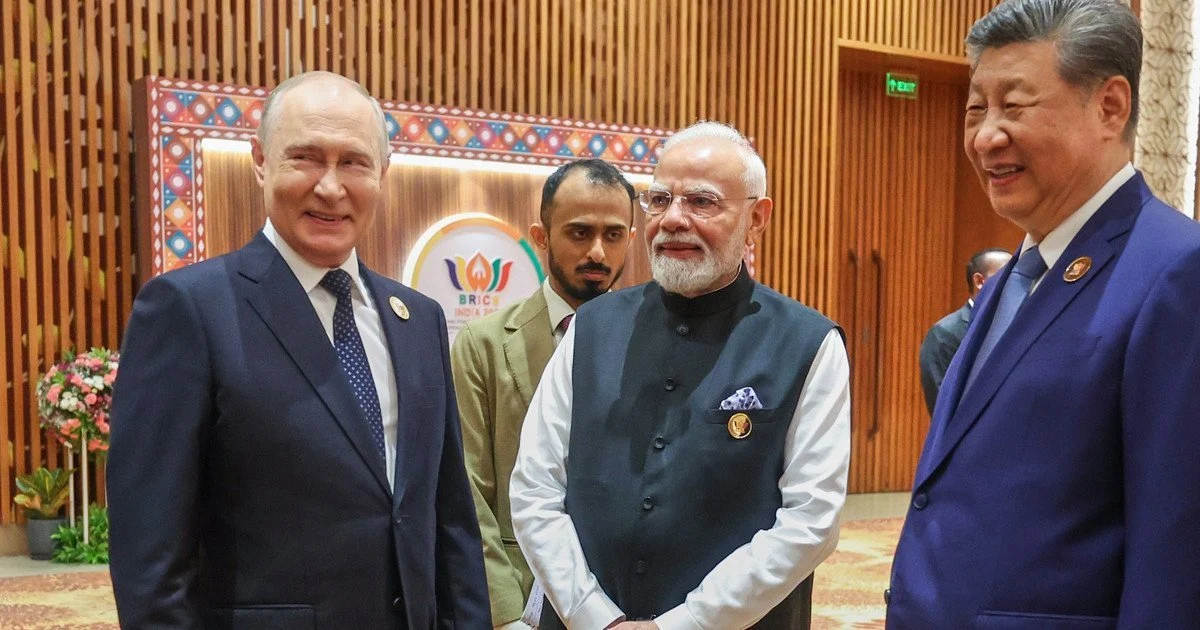
Negotiators from the BRICS countries agreed on a draft joint declaration at the summit in New Delhi, condemning unilateral aggression by any state. According to Reuters, citing four sources, the document is not expected to name any specific countries. The group’s leaders, including Vladimir Putin and Xi Jinping, are expected to give their final approval to the text on 12 September.
Briefly about the main points
- The draft statement condemns unilateral aggression by any state.
- No direct accusations against specific countries are expected in the text.
- The compromise was complicated by differences between Iran and the UAE.
- Since May, India has been holding consultations with a view to bridging differences.
- Sources speaking to Reuters do not expect the statement to have any significant geopolitical implications.
Disagreements between Iran and the UAE complicated the negotiations
The most contentious issue in the negotiations was the conflict in the Persian Gulf between Iran and the United Arab Emirates. It was precisely the difference in their positions that was one of the main obstacles to developing a common approach within the organisation.
In May, the BRICS foreign ministers’ meeting in New Delhi concluded without a joint statement due to these differences. Following this, India held lengthy consultations in an attempt to bridge the differences between the participants ahead of the leaders’ summit.
The summit is taking place against the backdrop of escalating tensions in the Middle East
In New Delhi, apart from Putin and Xi Jinping, the President of Iran was present Masoud Pezeshkian, President of the Republic of South Africa Cyril Ramaphosa and the Crown Prince Abu Dhabi: Khaled bin Mohammed bin Zayed Al Nahyan.
The meeting is taking place against a backdrop of escalating tensions the situation in the Middle East and the resumption of tit-for-tat attacks between the US and Iran following six months of war. For India, the summit is of particular significance given its complex relations with the US, Russia, Israel, Iran and the Arab states of the Persian Gulf.
Modi is promoting BRICS unity and the reform of international institutions
Prime Minister of India Narendra Modi stated that BRICS has moved beyond its formative stage and must now translate unity and consensus into tangible results for the world. He called for the role of Global South countries in shaping international decisions to be strengthened, as they often find themselves on the front line of crises but remain sidelined from key processes.
Modi also supported reforming the UN Security Council and granting permanent seats to India and other emerging centres of influence. New Delhi aims to focus BRICS’ work on economic cooperation, trade and the removal of barriers to business.
Xi Jinping, for his part, stated that the organisation should «stand on the right side of history» and contribute to the establishment of a fairer and more equitable international order.
The scale of the merger and a cautious assessment of the implications of the announcement
BRICS comprises Brazil, Russia, India, China, South Africa, Egypt, Ethiopia, Indonesia, Iran and the UAE. Established in 2009, the group is viewed by its members as a counterweight to the global order, which, in their view, is largely determined by the US and its Western allies.
The BRICS countries account for over 40% of the world’s population and nearly a quarter of the global economy. They are seeking greater influence over international rules and the reform of the World Bank, the International Monetary Fund and the World Trade Organisation.
Sources speaking to Reuters believe that the agreement on a joint statement is unlikely to significantly alter the geopolitical situation. At the same time, for BRICS, this demonstrates the ability of its various members to reach a common position on an international crisis.